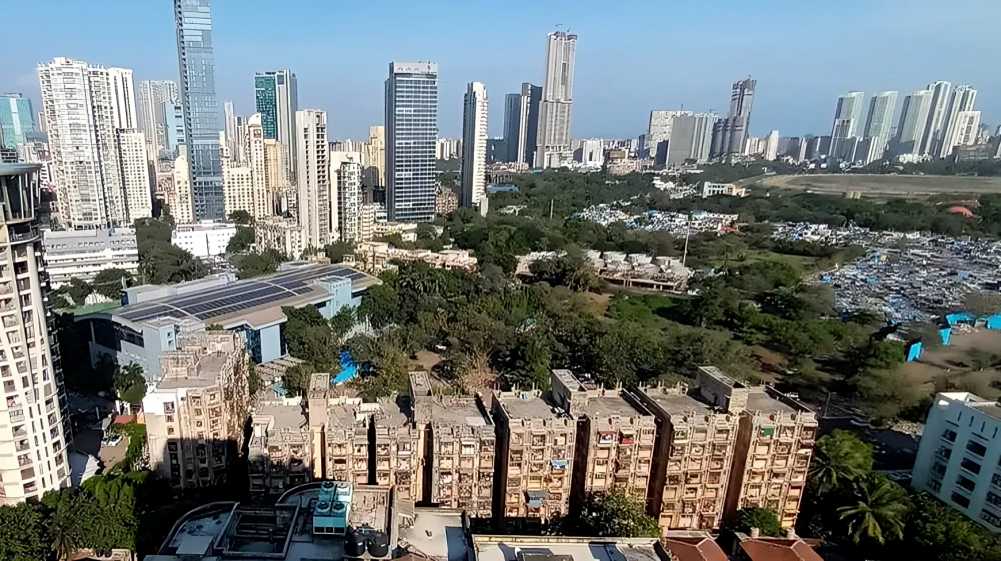


Mumbai has never lacked housing demand. What it increasingly lacks is policy alignment with the realities faced by first-time and lower-middle-income buyers. Even after modest improvement, Knight Frank’s affordability index shows that an average Mumbai household still spends 47–48% of its income on home loan EMIs. This is lower than the 50% plus levels seen earlier, but it remains far above the globally accepted comfort benchmark of 30%. When nearly half of income is committed to EMIs, caution is not pessimism—it is prudence.
This is why first-time buyers are pausing. Not because aspirations have weakened, but because affordability comfort has not kept pace with prices. Buyers are waiting for fiscal signals that acknowledge this reality and make ownership financially sustainable rather than emotionally aspirational.
The supply landscape reinforces this wait. Across Mumbai Metropolitan Region (MMR), estimated 2.5–3 lakh residential units remain unsold last year. A sizeable portion of this inventory sits in the premium, luxury, and ultra-luxury segments, with ticket sizes typically starting at Rs 2.5 crore. Industry estimates indicate that 20–25% of unsold stock lies in this category, a segment that naturally absorbs demand slowly and serves a limited buyer base.
At the same time, housing that matches first-time buyer budgets has steadily shrunk. Affordable and mid-income homes account for only 15–18% of new launches today, compared to over 35% a decade ago. Over the past five years, developers have responded rationally to market pressures: construction costs have risen by 30–40%, land prices have climbed, and compliance costs have increased. Premium housing offers better margin visibility, while mass housing has become increasingly tight. The outcome is not a supply shortage, but a supply mismatch.
Policy definitions have unintentionally deepened this mismatch. The current affordable housing cap of Rs 45 lakh, combined with a 60 sq. metre carpet-area limit for metros, no longer reflects Mumbai’s pricing realities. Even in suburban and extended suburban locations, a basic 2BHK typically exceeds this threshold. Recognising this gap, ANAROCK and NAREDCO have proposed revising the cap to Rs 75–85 lakh for the MMR, while retaining carpet-area norms of 60–90 sq. metres. This is not about redefining affordability upward; it is about updating benchmarks that costs have already overtaken. Such a revision could expand eligible housing supply from roughly 18% of launches to over 40%, bringing policy back in sync with demand.
Demand-side incentives tell a similar story of stagnation. The Rs 2 lakh home loan interest deduction under Section 24(b) has remained unchanged since 2014, while the Rs 1.5 lakh principal deduction under Section 80C is more than a decade old. In a city where home prices and loan sizes have risen sharply, these limits offer limited relief. Raising the interest deduction to Rs 3.5–4 lakh would not inflate demand; it would simply restore relevance and reduce EMI stress for salaried first-time buyers.
Supply-side encouragement is equally critical. The expiry of the 100% tax holiday under Section 80-IBA in 2021 removed one of the most effective incentives for affordable housing. Between 2016 and 2021, this provision helped developers, bridge the margin gap between affordable and mid-income projects and led to a surge in mass-housing launches. Reintroducing it for a time-bound approval window of 24–36 months could revive supply momentum. Each year without such support, industry estimates suggest, keeps nearly 1.5 million households from entering formal homeownership.
Credit support completes the affordability equation. Earlier versions of the Credit-Linked Subsidy Scheme (CLSS) under PMAY reduced effective interest rates by up to 6.5% for EWS and LIG borrowers and 3–4% for middle-income groups. These reductions were often decisive. Expanding CLSS under PMAY-U 2.0 by raising subsidy limits, increasing eligible loan amounts to Rs 8–10 lakh for EWS/LIG and Rs 15–18 lakh for MIG, and simplifying disbursement could again translate intent into ownership. An annual outlay of Rs 10,000–15,000 crore could support 1.5–2 million first-time buyers over five years.
Infrastructure investment strengthens all of the above. Faster metro expansion, suburban rail upgrades, and ring roads under PM Gati Shakti and the National Infrastructure Pipeline can unlock peripheral markets and ease land cost pressures over time.
Mumbai’s first-time buyers are not waiting for prices to fall. They are waiting for fiscal policy to recognise where demand truly sits. Budget 2026 has the opportunity to restore that alignment—and with it, confidence in Mumbai’s promise of homeownership.