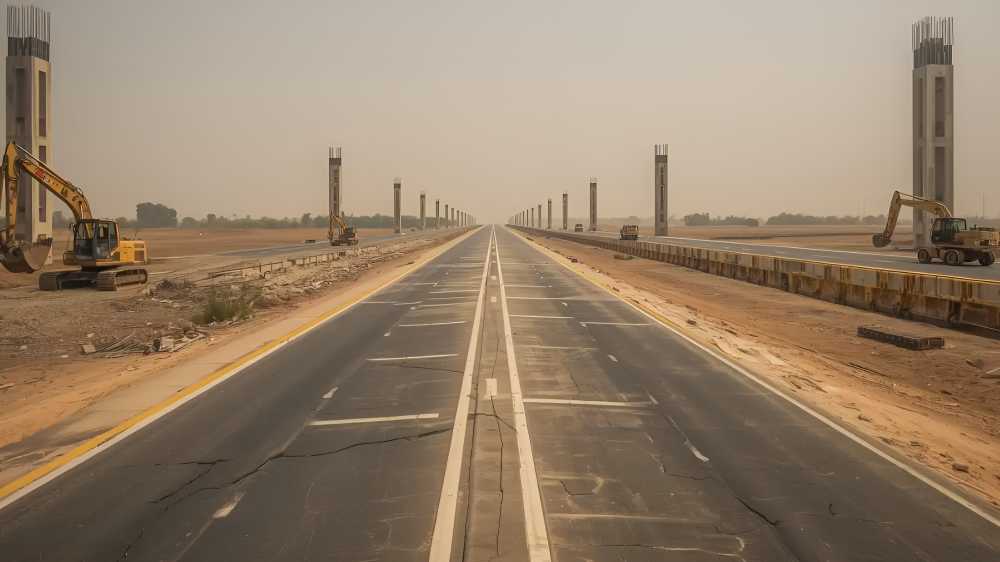

December 18, 2025: Three relatively short road stretches in Gujarat, together spanning just 87 km, have emerged as a critical bottleneck for the 1,386-km Delhi–Mumbai Expressway, one of India’s largest infrastructure projects with an outlay of over Rs 1.04 lakh crore. Despite being awarded nearly four years ago, these segments have seen limited progress, raising concerns within the National Highways Authority of India (NHAI) and the Ministry of Road Transport and Highways (MoRTH).
The delayed sections fall under Packages 8, 9, and 10 of the Vadodara–Virar stretch—Jujuwa–Gandeva, Karvad–Jujuwa, and Talsari–Karvad. All three packages were awarded in 2021 to Pune-based Roadway Solutions India Infra Ltd (RSIIL). While most other portions of the expressway in Gujarat are close to completion, less than 20 per cent of work has been completed on these stretches.
Due to persistent delays, NHAI had scrapped two of the contracts in March 2023 and invited fresh bids. However, RSIIL emerged as the lowest bidder again and was re-awarded the contracts in November 2023. The lack of progress since then has prompted NHAI to consider issuing ‘cure period’ notices, a step that could eventually lead to termination or debarment if breaches are not addressed.
The situation has triggered concern at the Centre. A MoRTH official reportedly said the contracts should not have been re-awarded. A senior NHAI official, however, defended the process, saying, “We cannot stop them from participating. The company quoted the lowest amount and was declared L1. The rule is that L1 must be declared the winner.”
RSIIL has blamed the delays on the non-availability of land, with its director, Navjeet Gadhok,e calling the earlier terminations “illegal” and denying any default. NHAI, however, has rejected this claim, citing non-performance, contractual disputes, and litigation as major hurdles.
The Delhi–Mumbai Expressway spans six states and is divided into 53 packages. Of the total project cost of Rs 1,03,636 crore, about Rs 71,718 crore has already been spent, and several stretches are operational. Yet, delays on just 87 km continue to hold up the full completion of this landmark corridor.