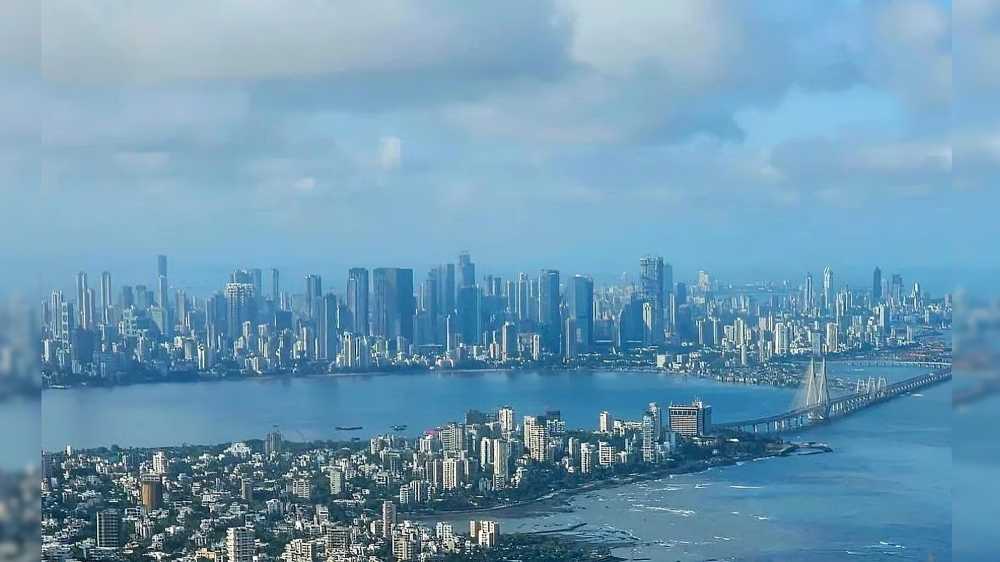

December 29, 2025: Mumbai’s skyline is soaring at an unprecedented pace, but urban planners warn that this vertical expansion is unfolding without the checks needed to ensure liveability, cohesion and long-term functionality. Across the city, high-rise towers are rising with little regard for neighbourhood context, infrastructure readiness or visual harmony. Unlike many global cities that regulate height and building mass at a precinct level, Mumbai permits vertical construction almost everywhere, except in aviation-restricted zones. The result is a fragmented urban form where low-rise homes stand abruptly beside luxury towers, creating stark visual and functional contrasts.
A telling example can be seen in Santacruz, where a modest cottage built in 1931 is now overshadowed by a newly constructed high-rise. Planners say this reflects a broader dilution of town planning principles that once prioritised light, air and proportion. “Today, planning has been reduced to an arbitrary and ad hoc level with no correlation to infrastructure,” says Atul Kumar, founder trustee of the Art Deco Mumbai Trust. “And there is no attempt to make it aesthetically viable.”
Experts argue that the glittering skyline masks a deeper policy issue, where commercial gains often override urban considerations. Architect and planner Rahul Mehrotra has described the phenomenon as being driven by “impatient capital”, where speed and financial returns take precedence over sustainable city-making.
Concerns have intensified over repeated increases in floor space index (FSI), which critics say are not aligned with road capacity, public transport or open spaces. “There is no control on the height or shape of buildings coming up on threshold spaces like waterfronts, open spaces, prominent vistas etc. Ad hoc decisions are taken mostly to benefit builders,” says architect and urban planner Chandrashekhar Prabhu. The impact is already evident in worsening traffic congestion and shrinking public realms.
Urban historians note that Mumbai once followed more balanced norms. In the early 20th century, building heights and spacing were regulated to ensure equitable access to light and air. “This was determined by the 63.5-degree rule; the minimum open space between two buildings and the maximum height,” Kumar explains.
Urban designer Harshad Bhatia recalls a time when areas like Malabar Hill were defined by treetops rather than towers. “Buildings like Usha Kiran, Woodlands and Kanchanjunga rose higher than the treetops and were called ‘skyscrapers’ then… What were once considered iconic skyscrapers seem lost amid newer, taller neighbours,” he said. While the skyline may appear impressive from afar, Bhatia cautions, “But come up close and what you saw is not what you get.”
Planners warn that unchecked vertical growth could prove costly. “Therefore, this present trend of indiscriminate high-rise development, though policy-driven, is foolhardy. Continuing this mindless building spree will be a self-induced disaster in the years ahead.”
Comparisons with cities like New York highlight the contrast. “For instance, when it comes to very tall towers going up next to low-rise buildings or neighborhoods, the city relies on ‘contextual zoning’,” says architect Arzan Sam Wadia, adding that such measures help maintain balance. Mumbai, critics say, appears to be moving in the opposite direction as its skyline continues to climb.
Source: The Economic Times