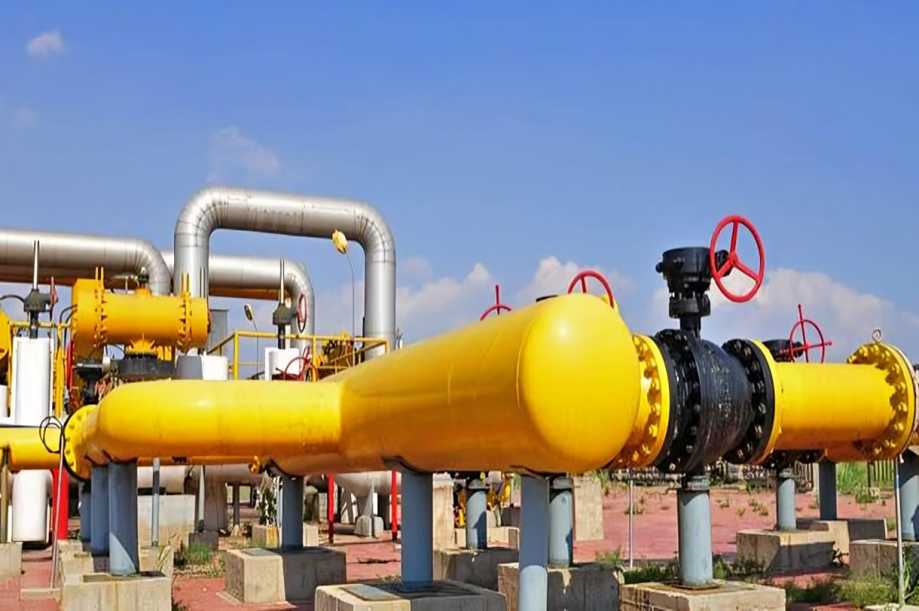

January 19, 2026: GAIL (India) Ltd has completed the Mumbai–Nagpur Natural Gas Pipeline (MNPL), a 694-km trunk line developed along Maharashtra’s Samruddhi Mahamarg expressway, marking a first-of-its-kind infrastructure integration under the PM GatiShakti initiative, according to a PTI report. The project represents a departure from conventional pipeline development, with most of the alignment confined to a narrow utility corridor running alongside the expressway.
The pipeline has been laid largely within a three-metre-wide strip, roughly equivalent to the width of a footpath, while expressway construction continued simultaneously. This required non-traditional engineering methods and close coordination with the Maharashtra State Road Development Corporation, which executed the highway project through multiple construction packages. Officials said nearly 96% of the pipeline was installed within this constrained corridor, influencing both design and execution strategies.
The 24-inch diameter pipeline has a capacity of 16.5 million standard cubic metres per day and is designed for bi-directional gas flow. It is nearing full operational readiness and is expected to play a key role in expanding the natural gas footprint across the state.
Construction challenges were most pronounced in the Western Ghats, especially near Fugale hill, where steep slopes, rocky terrain, dense forest cover and heavy monsoon rainfall complicated execution. To overcome these conditions, engineers deployed a hybrid technique combining horizontal directional drilling with a thruster system, enabling nearly one kilometre of pipeline to be pulled through sharp elevation changes. Such an approach has been rarely used in India.
The project also faced disruptions during the pandemic and delays linked to forest clearances across 10 districts. Officials said work schedules were recalibrated to sustain progress, supported by daily coordination meetings that aligned 16 expressway packages with three pipeline sections. This collaborative model is now being seen as a reference for future linear infrastructure projects.
Once operational, the MNPL is expected to significantly improve access to natural gas in Maharashtra. It will support city gas distribution networks across 16 districts, cater to around 95 lakh households, supply over 1,700 CNG stations, and provide fuel for sectors including power generation, fertilisers and manufacturing.