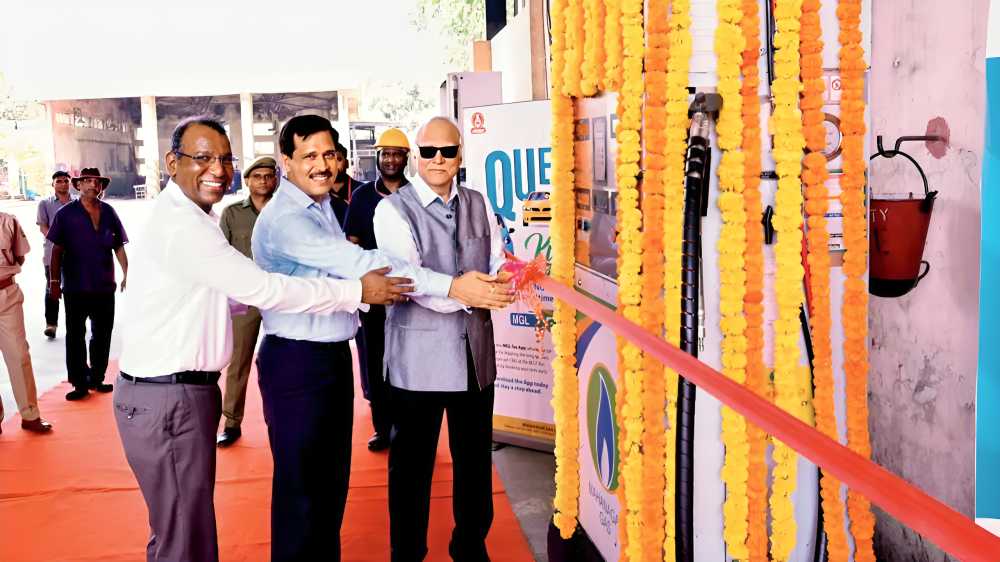

December 4, 2025: Mumbai’s public transport landscape is facing renewed scrutiny as BEST’s aggressive shift toward a fully electric fleet raises concerns over the city’s substantial but now underused CNG infrastructure. Mahanagar Gas Ltd (MGL) had spent years creating a robust CNG ecosystem—with pipelines, high-capacity dispensers, and investments across 15 depots—yet these facilities now operate at only 17% capacity. Despite having the ability to fuel over 4,000 buses daily, the system remains largely idle due to BEST’s transition to electric buses.
The CNG network had proved its worth during the November 2025 gas crisis, when dedicated pipelines allowed BEST depots to receive priority supply and resume CNG bus operations swiftly. Currently, BEST operates 1,295 wet-leased CNG buses, including 629 full-sized non-AC vehicles and 666 midi AC buses run by private operators Mateshwari Urban Transport and Daga Group.
Officials and experts now question whether a city lacking an integrated transport policy can afford such disjointed planning. Many warn that eliminating CNG buses would leave best-in-class fuel infrastructure serving only private vehicles through the MGL Tez scheme, which opened depot-based CNG pumps to the public. An official noted, “During last month’s crisis, the dedicated system ensured that BEST was a priority customer… But with the declining CNG fleet and promises to go 100 per cent electric, these dedicated fuel points would be rendered useless for public transport buses.”
Experts argue that the city must avoid policy decisions made in silos. Transport analyst AV Shenoy said, “With the global shift toward electric mobility accelerating, BEST’s ambition to go green is commendable. But the question remains: at what cost, and with what coordination?” Bus expert Shubham Padave added that while electric buses are promising, charging time, high procurement costs, and technological uncertainties suggest BEST should retain some CNG buses until systems mature.
Government officials clarified that the transition to electric buses is not mandatory but encouraged through central incentive-based schemes and Maharashtra’s EV Policy 2025, which mandates 40% electric buses for state undertakings in major urban areas.
As concerns grow over charging delays, battery dependence on China, and capital-intensive procurement, experts argue for a balanced fleet. Many believe Mumbai must prioritise safety, reliability and efficient use of existing infrastructure before phasing out CNG completely.
Source: Mid-day