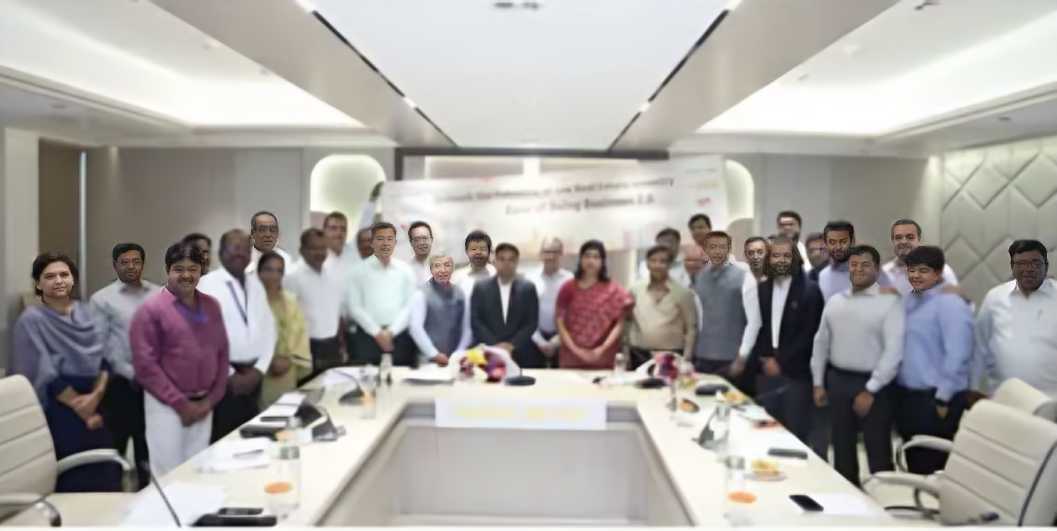

December 26, 202: The District Collectors of Mumbai City and Mumbai Suburban have convened a joint meeting with leading real estate industry bodies to address long-standing challenges related to land administration and revenue procedures. According to reports, the meeting brought together Aanchal Goyal, District Collector, Mumbai City, and Saurabh Katiyar, District Collector, Mumbai Suburban, along with a Joint Task Force comprising representatives from CREDAI-MCHI, NAREDCO, the Builders’ Association of India (BDA), and PEATA. Senior officials from both Collectorates were also present.
Setting the agenda, Goyal underlined that several issues raised by the industry—particularly royalty applicability, procedural delays, and duplication of surveys—require systemic reforms. She said both Collectorates are aligned on introducing clear, SOP-driven mechanisms to simplify processes, reduce ambiguity, and ensure uniformity while maintaining statutory compliance. Katiyar noted that a joint platform allows for coordinated governance and consistent decision-making across City and Suburban jurisdictions. He added that proposals such as unified physical surveys, streamlined amalgamation and subdivision processes, and improved transparency in land records would be examined through a structured institutional framework for time-bound implementation.
Industry representatives highlighted concerns related to royalty on excavated soil, especially where material is not transported off-site, short validity periods, discrepancies in excavation quantity calculations, and delays in approvals. The Collectors assured stakeholders that simplified and time-bound SOPs for royalty permissions would be rolled out. Delays in amalgamation and subdivision proposals were also discussed, with assurances that dedicated SOPs would be introduced to significantly reduce processing timelines.
A key reform proposed was a single, unified physical survey that could be used across multiple processes—such as non-agricultural permissions, demarcation, amalgamation or subdivision, and amenities handover—thereby eliminating duplication and repeated site inspections.
Sukhraj Nahar, President, CREDAI-MCHI, stated that the joint commitment to SOP-driven processes and unified surveys signifies practical, time-bound reforms aimed at improving the ease of doing business while strengthening governance. Kamlesh Thakur said SOP-led clarity would enhance predictability across the sector. Representatives from BDA and PEATA echoed that streamlined approvals would help reduce procedural redundancies.
The Joint Task Force stated that a steering committee, comprising officials from the Collectorates and related departments, would be formed to translate discussions into on-the-ground reforms and recommend policy changes as required.