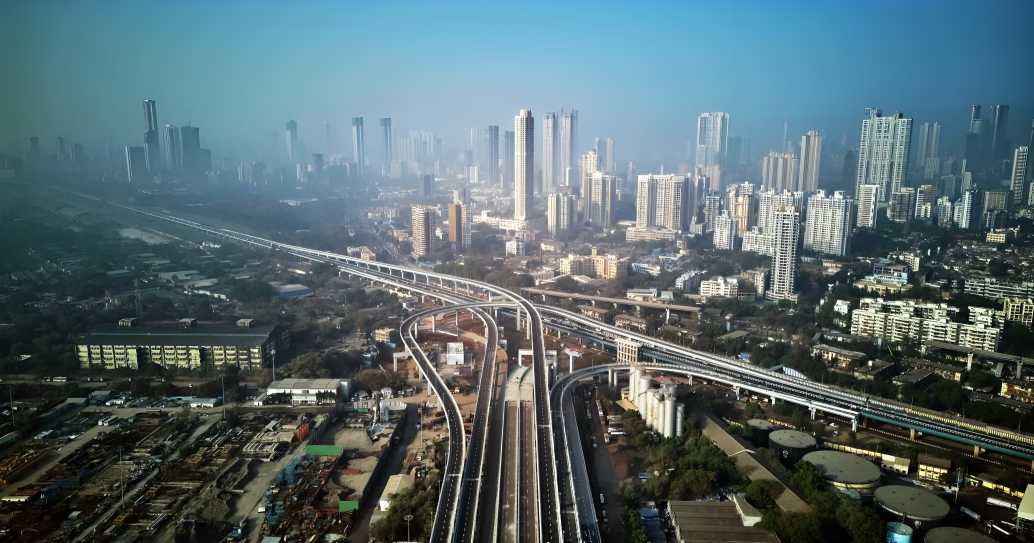

January 5, 2026: Mumbai’s push for infrastructure-led growth is entering a more environmentally accountable phase, with closer scrutiny now being applied to air pollution generated at construction sites across the metropolitan region. As air quality levels in several parts of the city slip back into the ‘moderate’ range, concerns are growing about the cumulative impact of large-scale infrastructure activity on public health and urban liveability.
The Mumbai Metropolitan Region Development Authority (MMRDA) has initiated continuous, real-time monitoring of construction dust at major project locations, including metro corridors, casting yards, and concrete production facilities. This marks one of the most coordinated efforts by a regional planning body to measure pollution directly at worksites, rather than relying solely on citywide air quality readings. Urban planners believe such site-specific monitoring is essential in dense cities like Mumbai, where construction-related emissions are often localised but widespread.
The monitoring programme focuses on PM2.5 and PM10 particles, which are known to pose serious respiratory and cardiovascular risks. Multiple sites across central Mumbai, the western suburbs and extended suburban corridors are now being assessed daily, particularly in areas with sustained construction activity and high population exposure. The data collected is being used to evaluate contractor compliance and identify sites requiring corrective measures.
This move follows intensified action by municipal authorities against contractors failing to implement mandatory dust-control practices. Experts note that the alignment between municipal enforcement and regional monitoring reflects a shift in urban governance, where environmental performance is becoming as important as project timelines.
MMRDA’s project guidelines already require contractors to earmark funds for pollution mitigation, including dust suppression systems and mechanised cleaning. Officials say ongoing reviews will assess how effectively these measures are being implemented, with penalties likely for repeated violations.
Environmental scientists point out that weather patterns such as reduced rainfall and temperature inversions can worsen dust accumulation, amplifying the impact of construction emissions at the neighbourhood level. Urban health experts argue that transparent reporting and responsive site management will be key to ensuring real improvements.
As Mumbai expands its transport and infrastructure network, the challenge will be balancing speed with sustainability to support healthier and more resilient urban communities.