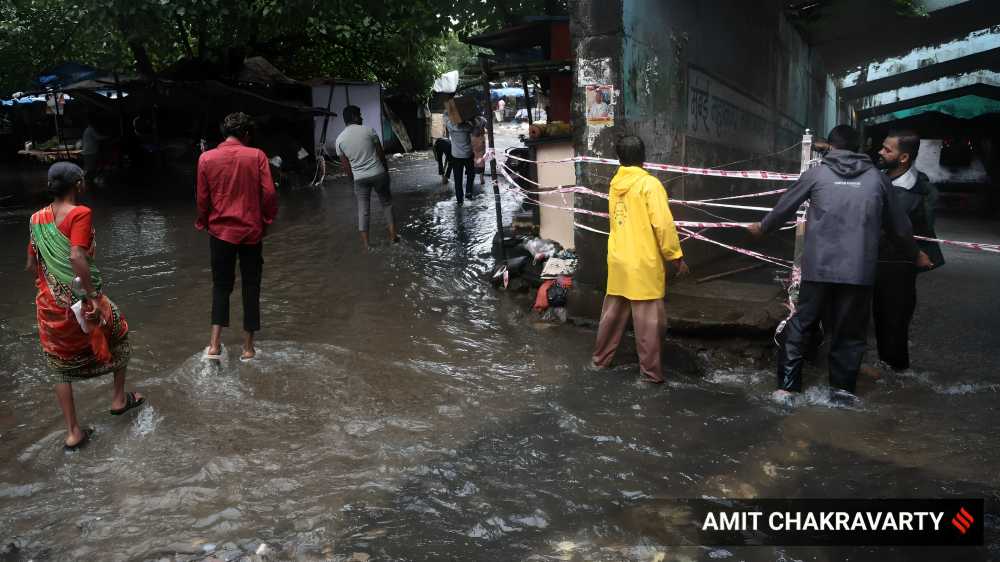

January 7, 2026: Mumbai’s battle with waterlogging resurfaces every monsoon, once again exposing the city’s fragile urban infrastructure. Despite being India’s financial capital, intense rainfall routinely brings daily life to a halt, flooding streets, disrupting transport, and affecting businesses and households alike. The problem is not new, yet its scale and frequency have worsened over the years.
Currently, Mumbai’s stormwater drainage system is designed to handle rainfall of up to 55 mm per hour. However, changing climate patterns have led to a rise in extreme rain events, with precipitation often exceeding this threshold within a short span. When rainfall crosses this limit, the drainage network struggles to cope, resulting in rapid water accumulation across low-lying areas. As a result, even a few hours of heavy rain are enough to trigger widespread waterlogging.
Year after year, the monsoon exposes the mismatch between Mumbai’s outdated drainage capacity and present-day rainfall intensity. Roads turn into temporary streams, suburban rail services slow down or stop, and emergency services face delays. What was once limited to a few vulnerable pockets is now spreading to newer areas, creating fresh flooding hotspots every season.
Although recent years have seen growing concern over issues such as air pollution, waterlogging remains one of Mumbai’s oldest and most persistent civic problems. It continues to demand significant financial outlays from the Brihanmumbai Municipal Corporation (BMC) every year for desilting, maintenance, and temporary mitigation measures. Yet, these efforts often provide only short-term relief rather than long-lasting solutions.
Mumbai’s recurring monsoon flooding underscores the urgent need for a comprehensive and future-ready approach to urban water management. With climate change intensifying rainfall patterns, the city can no longer rely on infrastructure designed decades ago. Unless drainage systems are upgraded, natural waterways restored, and urban planning aligned with emerging climate realities, waterlogging will remain an annual crisis—one that repeatedly brings India’s financial capital to a grinding halt.