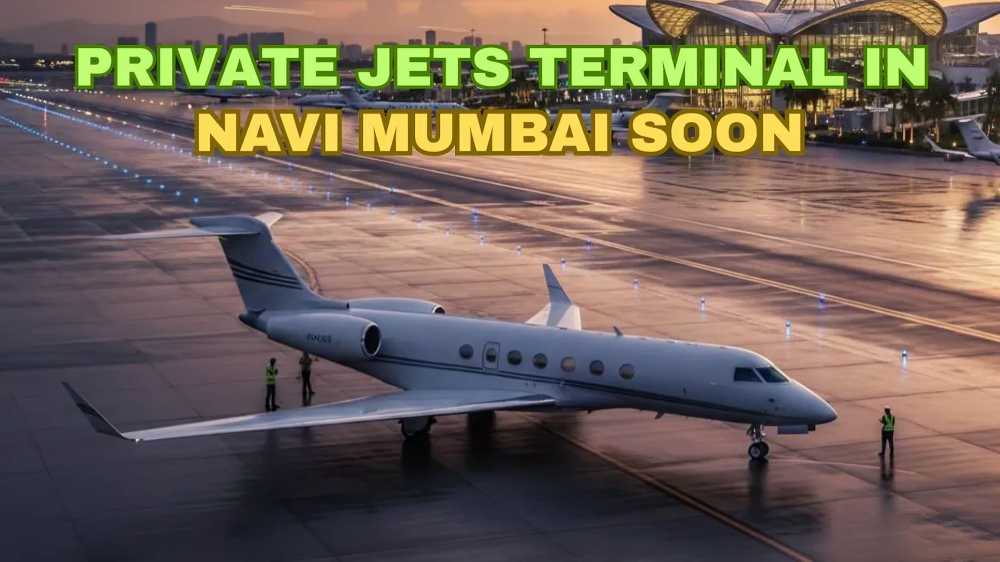

January 9, 2026: Soon after commencing commercial operations in December 2025, the Navi Mumbai International Airport (NMIA) is preparing to emerge as a major centre for private aviation in India. Adani Airports Holdings Ltd (AAHL) plans to shift all private aviation activity currently handled at Mumbai’s Chhatrapati Shivaji Maharaj International Airport (CSMIA) to a dedicated General Aviation (GA) complex at NMIA, significantly altering the region’s aviation landscape.
According to current timelines, the private jet terminal and the broader GA facilities at NMIA are expected to be fully operational by September 2026. While commercial passenger services resumed on December 25, 2025, construction is underway to develop hangars, maintenance zones and a specialised terminal catering exclusively to business jets, charter aircraft and VVIP travellers. From late 2026, CSMIA is expected to prohibit overnight parking for smaller commercial and private aircraft, making Navi Mumbai the permanent base for such operations.
The upcoming GA complex is positioned to be among the largest and most advanced in the country. It will feature a dedicated VVIP terminal designed for privacy, fast processing and discreet movement of high-profile passengers. Initial operations are expected to begin with 23 to 25 hangars, with long-term plans to expand capacity to nearly 90 aircraft parking positions. A helipad will also form part of the facility, enabling quick transfers to South Mumbai and major business districts.
The shift is largely aimed at easing congestion at Mumbai airport. Once the Navi Mumbai terminal is operational, private jets at CSMIA will be limited to pick-and-drop movements, after which aircraft will need to ferry to NMIA for parking and maintenance. AAHL has also flagged that several existing hangars at CSMIA will be removed due to safety and obstruction concerns.
However, industry bodies such as the Business Aircraft Operators Association have raised issues around higher operating costs, additional fuel burn from ferry flights, and logistical challenges of managing crews and maintenance across two airports.
With runways and taxiways already operational, construction activity is now focused on hangars and the VVIP terminal. Over the long term, NMIA—officially named Loknete D.B. Patil International Airport—is envisioned as a twin-airport system with CSMIA and a future aviation hub capable of handling up to 90 million passengers annually, alongside robust private aviation infrastructure.
Source: Magic Bricks