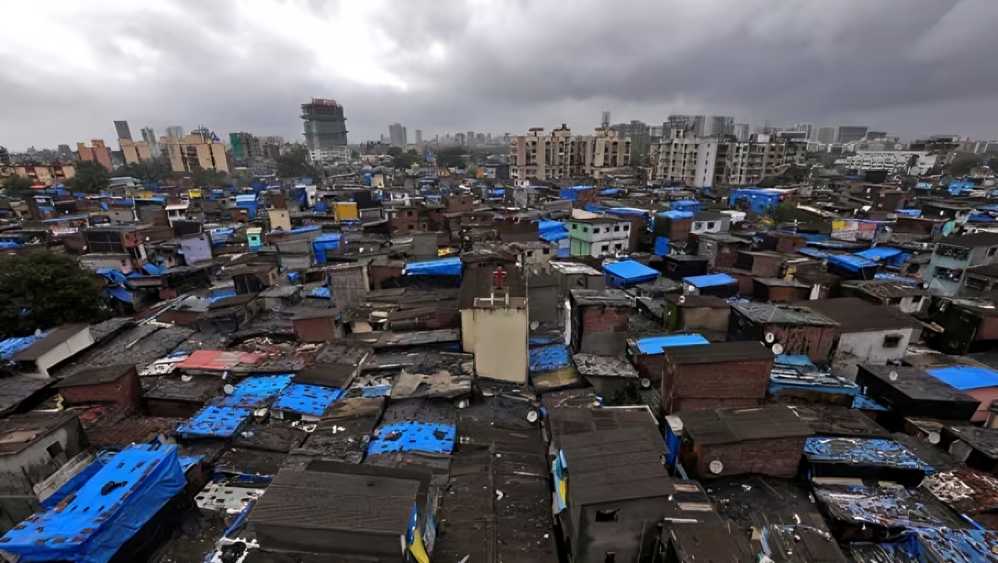

January 14, 2026: As campaigning for the long-delayed Brihanmumbai Municipal Corporation (BMC) elections entered its final day on Tuesday, Dharavi residents highlighted unresolved issues around redevelopment, arguing that political attention often peaks during elections but fades afterwards, leaving critical concerns about livelihoods, workspaces, and implementation unaddressed.
Redevelopment in Dharavi has been discussed for more than two decades. Residents from areas such as Kumbharwada, a historic pottery hub, and Dharavi Koliwada, home to Mumbai’s original Koli fishing community, said current plans focus largely on housing while overlooking the spaces necessary for work. Mithul Chauhan, a potter whose family has been in Kumbharwada for over a century, said, “Redevelopment is not the problem. The planning is.”
Under the proposed rehabilitation plan, homes measuring 325 to 350 sq feet are to be offered, compared to existing rooms of roughly 100 sq feet. While larger homes are welcomed, residents argue that losing manufacturing and workspace threatens livelihoods. Chauhan’s pottery unit spans 1,500 sq feet across multiple levels, accommodating clay preparation, firing, storage, and transport. “If we are given a 350-square-foot room or shop, where will work happen?” he asked. “Once production stops, it does not restart easily.” Residents stressed that kilns cannot be relocated quickly, supply chains depend on daily operations, and disruptions could permanently halt businesses.
The Koli community in Dharavi Koliwada also voiced concerns over identity and livelihood, noting that fishing access has been restricted due to land reclamation and many now rely on garages, transport services, and small-scale businesses.
Delays and procedural gaps exacerbate frustrations. Repeated redevelopment surveys over 20 years have yielded little follow-up, according to residents like Gyanprakash Yadav, a 51-year-old potter. Civic issues, including shared electricity connections and uniform allocation of 350-square-foot homes regardless of current size, further complicate the situation. “What does ownership mean then?” asked Abhayraj, a local resident.
As the election campaign concludes, Dharavi residents demand clear, written redevelopment plans with defined timelines, dedicated workspaces, and transparent allocation criteria, emphasizing that sustainable redevelopment must preserve both homes and livelihoods, beyond electoral promises.
Source: Mumbai Mirror