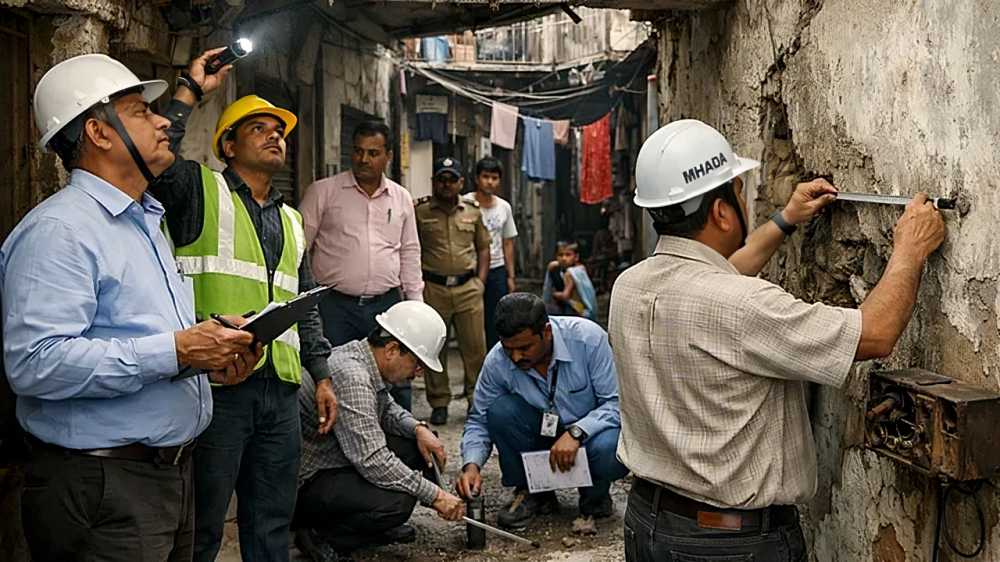

January 15, 2026: Mumbai is set to witness a large-scale structural safety exercise as the Maharashtra Housing and Area Development Authority (MHADA) prepares to audit nearly 13,091 cessed buildings across the city. According to a Hindustan Times report, the move is aimed at reducing risks to residents and pedestrians, particularly before the onset of the 2026 monsoon, when ageing structures are most vulnerable to damage and collapse.
Cessed buildings are those constructed before 1969 in South and Central Mumbai. Tenants in these properties pay a repair cess to MHADA, intended to fund maintenance and structural upkeep. However, decades of low rentals, delayed interventions, and limited reinvestment have led to severe deterioration. Many of these buildings are over 80 years old, and only a small proportion have undergone comprehensive structural assessments. Each monsoon season, incidents of partial collapses underline the fragile condition of these properties.
Comprehensive Structural Review
This initiative marks a shift from routine inspections to a more detailed, citywide audit. The Mumbai Building Repairs and Reconstruction Board (MBRRB), MHADA’s dedicated wing for cessed structures, will oversee the process. The Board plans to appoint external consultants through tenders to conduct structural evaluations and recommend whether buildings require repairs or complete redevelopment.
The exercise is expected to cost around ₹40 crore, with an estimated average of ₹90,000 per building, varying by size and complexity. Priority will be given to buildings showing visible signs of distress. In previous monsoon inspections, MHADA had classified 96 buildings as unsafe for occupation, leading to tenant relocations.
Redevelopment Hurdles
Post-audit, MHADA is likely to accelerate redevelopment under Section 79(A) of the MHADA Act, which allows intervention in privately owned cessed buildings for repairs or reconstruction. While the audits are expected to increase the number of buildings marked for redevelopment, challenges remain. Tenant consent, relocation issues, funding constraints, and procedural delays continue to slow progress.
Despite these hurdles, the large-scale audit represents a significant step toward improving safety in Mumbai’s ageing housing stock and strengthening the city’s preparedness for future monsoons.