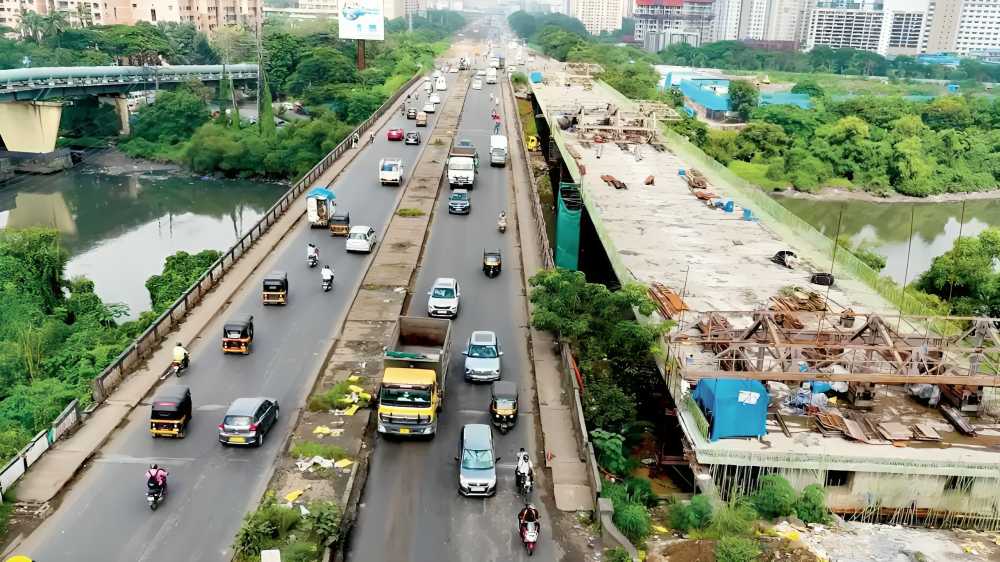

Commuters and freight operators travelling along the Mumbai–Nashik highway could soon experience long-awaited respite as the widening of a critical stretch between Thane and Vadape moves closer to completion. The upgrade, aimed at easing congestion and improving access to the Mumbai–Nagpur Samruddhi Expressway, is expected to substantially cut travel times on one of the Mumbai Metropolitan Region’s busiest and most strained corridors.
The project targets a long-standing bottleneck that has affected both passenger traffic and commercial movement since construction began in mid-2021. Once fully operational, the expanded highway is expected to strengthen regional connectivity, support smoother logistics flows and reduce pressure on parallel urban roads that currently absorb diverted traffic. The corridor is particularly important for freight movement, given its role in linking Mumbai with northern Maharashtra and industrial zones beyond.
According to project officials, significant progress has already been achieved on the 28.8-kilometre Majiwada–Vadape stretch. More than 80 per cent of the main carriageway has been widened from four lanes to eight, marking a major step towards restoring uninterrupted traffic flow. Work on ancillary infrastructure has also advanced, with most of the planned service roads now completed and ready for use. The remaining sections are expected to be finished within the current quarter, keeping the project aligned with its final delivery schedule.
Beyond lane expansion, the highway upgrade includes several grade-separated structures designed to remove conflict points that have historically slowed traffic. Multiple flyovers and creek crossings are nearing completion, while work continues on a railway overbridge that is expected to be delivered shortly after the main carriageway is operational. In addition, a series of underpasses at village and neighbourhood access points is being developed to improve local connectivity and enhance pedestrian safety along the corridor.
Urban transport planners note that the significance of the Mumbai–Nashik highway extends well beyond daily commuting. The route serves as a vital economic spine, supporting the movement of goods from warehousing, manufacturing and agri-logistics hubs, particularly around Bhiwandi. With traffic volumes projected to increase following the operationalisation of the Samruddhi Expressway, the widening is seen as critical for ensuring long-term resilience of the regional road network.
At present, motorists often spend close to two hours navigating the under-construction stretch, especially during peak periods dominated by heavy freight traffic. The concentration of logistics parks around Bhiwandi has further intensified congestion, affecting travel reliability for both commuters and businesses. Authorities overseeing the project believe the expanded capacity will significantly ease these delays and improve predictability for time-sensitive cargo movement.
Officials have also indicated that tolling infrastructure will form part of the project’s financial recovery model, reflecting a broader shift towards user-funded highway development. While toll operations have not yet commenced, authorities argue that higher travel speeds, lower fuel consumption and reduced emissions from idling traffic will help offset the additional cost for most users.
From a sustainability standpoint, transport experts caution that capacity expansion alone may not deliver lasting benefits. As the highway nears completion, focus is expected to shift towards traffic management, road safety measures and better integration with public transport. Ensuring that improved connectivity translates into balanced and inclusive economic growth across the metropolitan fringe will be key to maximising the long-term impact of the Mumbai–Nashik highway upgrade.
Source: Urban Acres