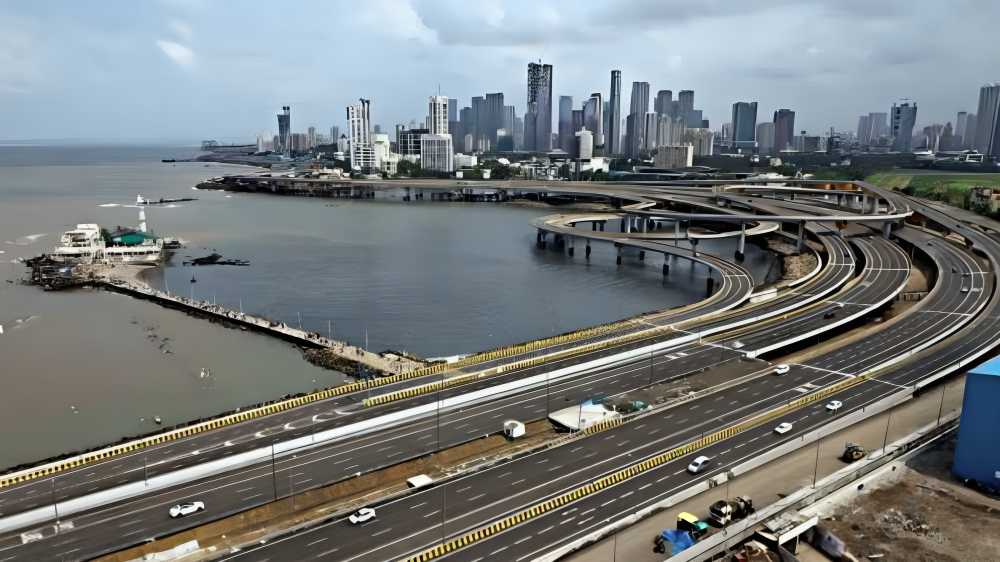

A group of 119 architects and urban planners under the Mumbai Architects Collective (MAC) has written to Municipal Commissioner Bhushan Gagrani and Maharashtra Chief Minister Devendra Fadnavis raising objections to the proposed redevelopment of the Mumbai Coastal Road open spaces and the Mahalaxmi Racecourse. The letter flags concerns over flood vulnerability, rising project costs, environmental impact, land governance and lack of an integrated development framework for the 298-acre contiguous public landscape.
“These concerns are not ideological; they are technical, environmental, and fiscal. They relate directly to the long-term safety, resilience, and public character of Mumbai,” the MAC stated in their letter.
The objections follow Gagrani’s presentation of the masterplan at a citizens’ dialogue hosted by the South Mumbai Resident’s Association, outlining the transformation of 70 hectares along the coastal road into landscaped green zones with civic amenities such as nature trails, indigenous forests, pickleball courts, amphitheatres and Miyawaki gardens. The proposal also includes converting 112 acres of the Mahalaxmi Racecourse into a public botanical garden with a multi-level underground recreational and sports facility.
The MAC cautioned that extensive subterranean construction beneath the Racecourse could damage Mumbai’s climate resilience. “By replacing permeable marshland with three levels of concrete basements, the project fundamentally undermines the city’s “Sponge City” capacity, reducing groundwater recharge and significantly increasing monsoon runoff. Furthermore, natural maidans are low-carbon assets requiring minimal capital expenditure and maintenance. They do not require the intensive ventilation systems, mechanical lighting, or high energy security infrastructure that underground facilities inevitably demand. This is not simply a park enhancement; it is major concretised infrastructure construction beneath critical natural ground that embeds long-term structural and environmental risks for the city,” the MAC said in their letter.
The group further argued that underground parking should be developed under existing roads rather than beneath natural flood-absorbing land. “A planning approach that prioritises thousands of car bays over public transport connectivity risks reinforcing an elite-access model, rather than strengthening inclusive, city-wide mobility” the letter stated.
“We wish to reiterate that we are not opposed to improving public access or creating world-class open spaces. Our concern is the proposal to build extensive underground infrastructure beneath one of the city’s last large natural grounds – a site that functions as critical climate infrastructure in a flood-prone coastal city. The Racecourse is not vacant land; it is a living system that protects Mumbai,” the MAC said.
Source: The Indian Express