Let’s be clear, the Rs 80,952.56 crore Budget for 2026–27 presented by the Brihanmumbai Municipal Corporation (BMC) is not just another civic document. It is a directional blueprint. Nearly Rs 48,164 crore, close to 60% of the total outlay, has been earmarked for capital expenditure (Capex). That scale of asset creation signals intent. The question, however, is whether the allocation mix truly aligns with Mumbai’s long-term urban and real estate needs.
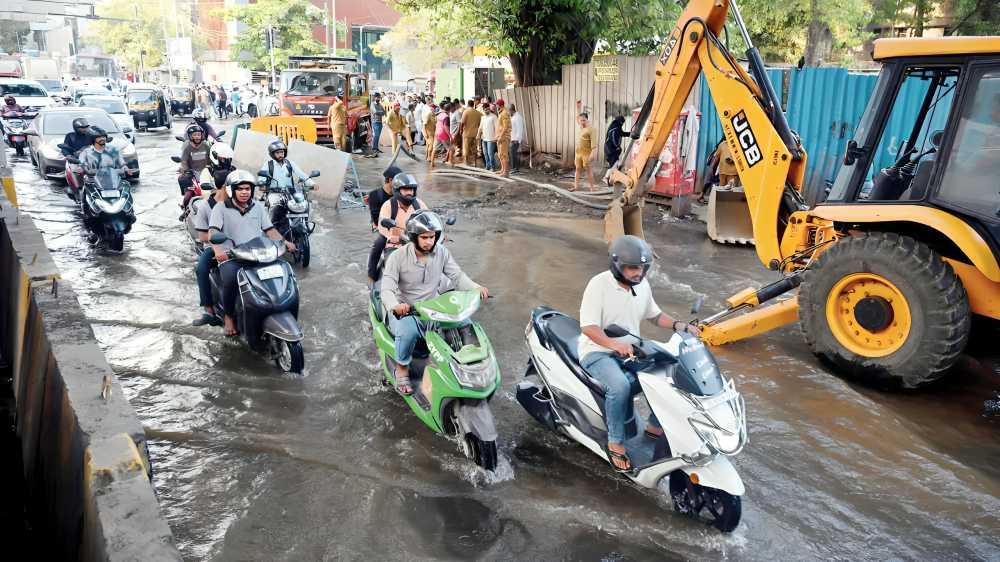
Infrastructure remains the clear centrepiece. Rs 5,690 crore has been earmarked for sewage treatment and disposal, and Rs 5,520 crore has been allocated for the cement road programme. On paper, both are foundational investments. In practice, they are decisive for redevelopment economics. Sewage capacity determines whether higher FSI can be sustainably granted in older suburbs. Without upgraded underground networks, vertical growth becomes a regulatory and environmental risk. Similarly, cement concretisation reduces maintenance cycles and improves arterial durability in high-density zones. If delivered efficiently, these allocations can directly support redevelopment viability and property value stability. If delayed, they risk becoming sunk costs without multiplier impact.
Large transport projects further shape the narrative. Rs 4,000 crore has been set aside for the Coastal Road (North), while Rs 2,650 crore has been earmarked for the Goregaon–Mulund Link Road. A water conveyance tunnel has received Rs 2,324 crore, alongside continuing provisions for long-term water security measures such as desalination and the Gargai Dam. These are not incremental upgrades; they are structural interventions. Connectivity defines micro-market expansion in Mumbai’s land-constrained geography. Every new link road or tunnel redraws the city’s investment map. Yet the real estate upside will depend on synchronised execution, partial connectivity rarely unlocks full valuation gains.
However, the budget also reveals fiscal dependence on the property market. Property tax collections are projected at Rs 7,000 crore, while development plan premiums and related charges are expected to exceed Rs 12,000 crore. Simultaneously, premiums on Additional FSI and TDR have been revised upward for residential and commercial projects. From a revenue standpoint, this strengthens municipal finances. From a developer’s standpoint, it raises input costs. Unless approvals are streamlined and infrastructure is delivered on schedule, higher premiums could compress margins and push end-user prices upward. The city cannot rely on real estate as a funding engine without ensuring regulatory efficiency.
Education infrastructure, though smaller in comparison, deserves closer attention. Rs 4,248 crore has been allocated to the education department. In a budget dominated by engineering and transport, this allocation signals recognition that urban competitiveness is not built on roads alone. School infrastructure, digital upgrades, and civic education facilities shape neighbourhood desirability. For residential markets, proximity to quality public education remains a long-term demand driver. The allocation is substantial, but its impact will depend on modernisation outcomes rather than expenditure volume.
The broader takeaway is this: Mumbai’s real estate trajectory will not be decided by sentiment cycles, but by infrastructure credibility. Capital-heavy budgets create expectation. If sewage upgrades, link roads, and water security projects are executed within timelines and cost estimates, they will unlock redevelopment in aging precincts and expand investable corridors across the MMR. If execution falters, higher premiums and rising costs may dampen momentum.