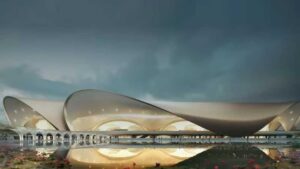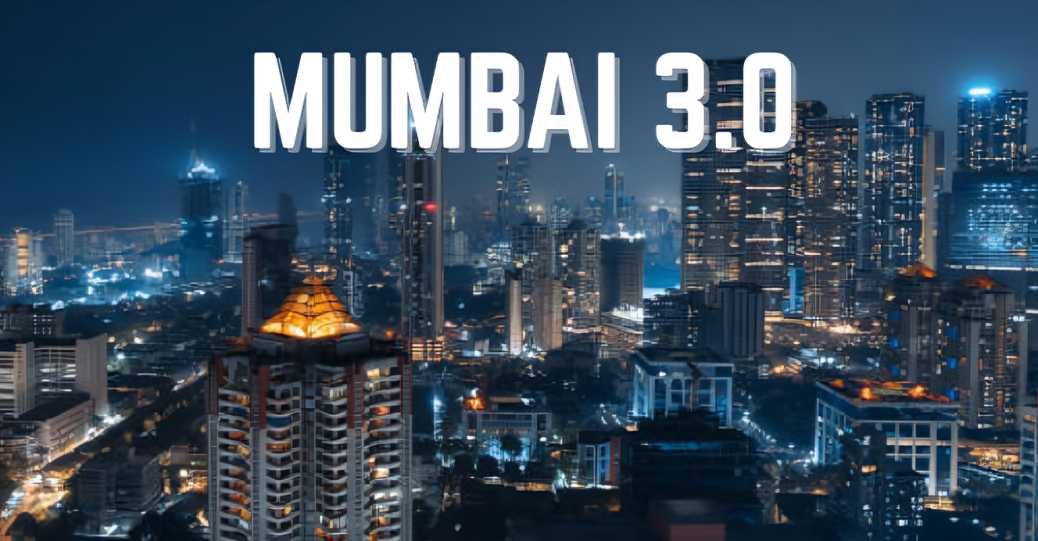

The Maharashtra government has advanced plans for a large-scale urban extension with the approval of the land policy framework for the Third Mumbai project on February 10, 2026. The proposed development, located near the Mumbai Trans Harbour Link, marks a significant step toward creating a new metropolitan centre across the harbour in Raigad district.
Conceived as a response to mounting pressure on Mumbai, the project aims to ease congestion, manage rising real estate prices and address infrastructure constraints by building a planned city from the ground up. Policymakers have increasingly looked at satellite-city models to distribute growth more evenly, and Third Mumbai is positioned as the most extensive effort in that direction.
The new urban zone, officially titled Karnala-Sai-Chirner (KSC) New Town, will cover approximately 323 square kilometres across 124 villages in Uran, Panvel and Pen talukas. The initiative will be implemented by the Mumbai Metropolitan Region Development Authority along with the New Town Development Authority. Beyond residential supply, the city is being structured as an integrated economic hub supporting industrial, commercial, educational and healthcare activity.
To reduce delays often associated with land acquisition, the state has introduced a flexible framework. Under a land pooling model, participating landowners will receive 22.5 percent of their original holding as a serviced plot. Smaller holdings may receive financial compensation instead. Those opting out will be compensated under the 2013 Land Acquisition Act. Alternatives such as Floor Space Index and Transferable Development Rights have also been incorporated. A pass-through provision will allow select industries to begin operations before full infrastructure completion.
The policy also seeks to draw domestic and international capital through joint ventures and special purpose vehicles. Priority allotment mechanisms have been outlined for foreign direct investment proposals that meet defined thresholds. Dedicated zones for education institutions, hospitals and data centres are proposed to align urban planning with sectoral growth.
Improved connectivity is expected to underpin the project’s success. Planned infrastructure includes Metro Line 8 and the Virar-Alibaug Multimodal Corridor, strengthening links with the wider metropolitan region. As activity accelerates, areas such as Ulwe, Dronagiri and Panvel are already witnessing heightened real estate interest, reflecting expectations that Third Mumbai could reshape development patterns across Raigad and beyond.
Source: Realty Plus