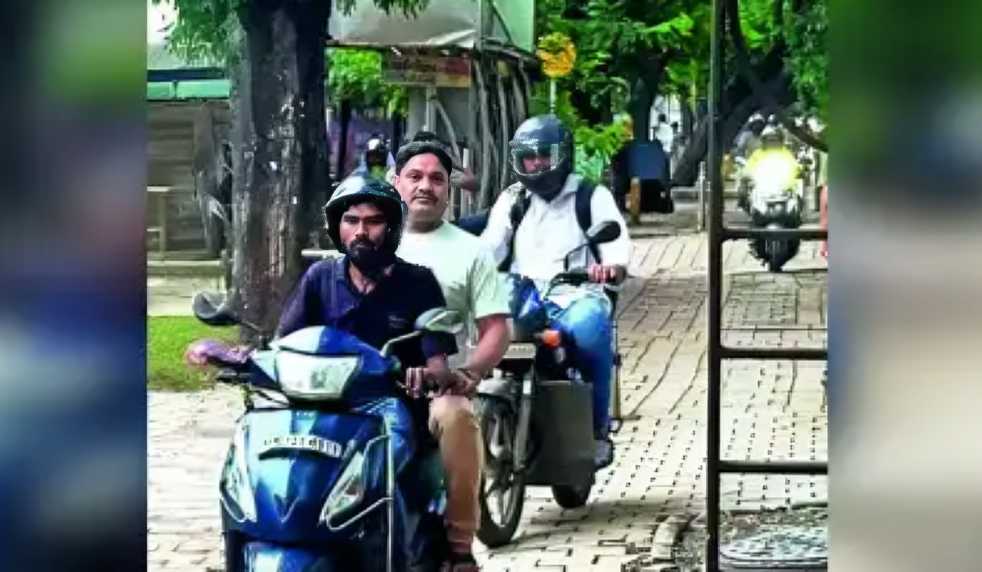

The Brihanmumbai Municipal Corporation (BMC) has issued a ₹384 crore tender to install bollards at entry and exit points of footpaths across Mumbai in an effort to prevent two-wheelers from riding onto pavements. The initiative forms part of the civic body’s Universal Footpath Policy, aimed at making pedestrian infrastructure safer and more accessible, including for persons with disabilities.
However, the move has triggered fresh debate among accessibility advocates and urban planners. Critics argue that poorly spaced bollards in several locations are creating barriers for wheelchair users. Narrow gaps between metal posts often make it difficult, and sometimes impossible, for wheelchairs to access pavements.
Urban planner Pankaj Joshi said the idea of bollards itself is not problematic but stressed the importance of following proper technical guidelines. Referring to standards issued by the Indian Road Congress, he said the posts must be installed in a way that stops vehicles without obstructing pedestrian movement. “If the bollards are installed in a technical manner, it can work,” he said, adding that the varying width of footpaths across the city makes uniform design difficult.
The issue previously reached the Bombay High Court after a complaint from Shivaji Park resident Karan Shah, who argued that installations meant to stop motorcycles were also blocking wheelchairs. Following an email he sent to advocate Jamshed Mistry, the court took suo motu cognisance of the matter on September 29, 2023, appointing Mistry as amicus curiae and seeking responses from the civic body and the Maharashtra government.
In March 2025, the court directed the state to address accessibility issues on urban roads and sidewalks, expressing concern that newly installed poles were obstructing the movement of persons with disabilities.
Amid criticism, BMC officials say the design is being reconsidered. Additional Municipal Commissioner Abhijit Bangar said the corporation is exploring a staggered arrangement of bollards rather than a straight alignment.
“We have decided to install bollards in an alternate, staggered layout rather than a straight alignment. This will prevent entry to two-wheelers while allowing wheelchairs to move easily onto the footpath,” Bangar said.
While the redesign may offer a solution, activists say meaningful consultation with disability groups will be crucial as the city rolls out the project.
Source: Mumbai Mirror