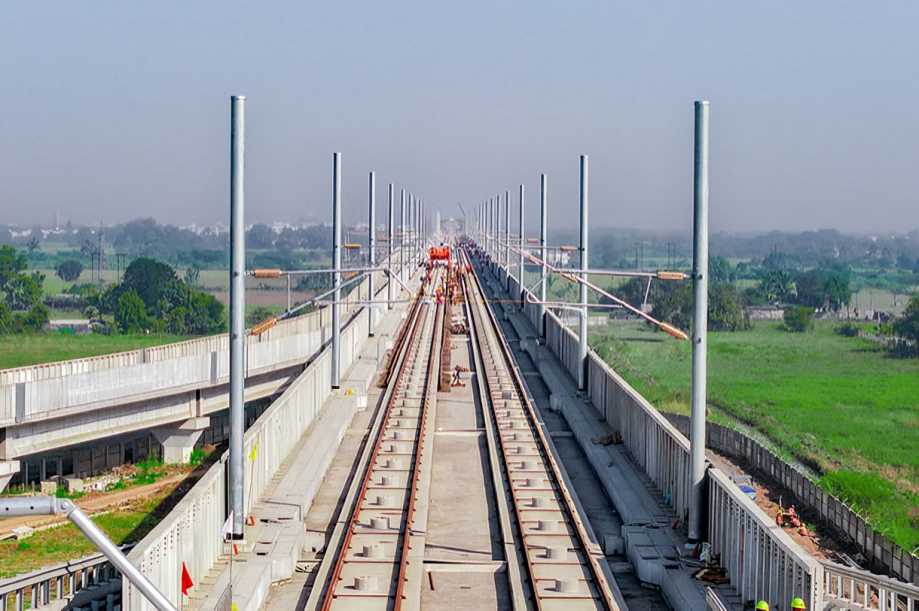

The Union government is set to absorb an additional financial burden of around Rs 90,000 crore for the Mumbai–Ahmedabad High-Speed Rail project, opting not to seek further funding from the Japan International Cooperation Agency (JICA) despite a significant escalation in project costs, according to a report by The Economic Times.
The 508-km bullet train corridor, which was initially estimated to cost about Rs 1.1 lakh crore, is now projected to require approximately Rs 1.98 lakh crore—an increase of nearly 83%. The sharp rise in expenditure has been attributed to delays in execution, logistical hurdles and other implementation-related challenges.
Sources familiar with the matter said the Ministry of Railways is preparing to submit a revised cost estimate to the Union Cabinet for approval. The ministry is also expected to approach the Finance Ministry to secure additional budgetary support in order to bridge the funding gap and keep the project on track.
Currently, JICA is financing nearly 81 per cent of the original project cost through an Official Development Assistance (ODA) loan. The loan carries a highly concessional interest rate of 0.1 per cent per year and a repayment period of 50 years, including a 15-year moratorium.
However, officials indicated that the government is not planning to seek any further borrowing from JICA under the existing arrangement to cover the increased cost of the project.
During a recent webinar focused on seven proposed high-speed rail corridors covering more than 4,000 kilometres—estimated to require investments of about Rs 16 lakh crore—Railway Board Chairman Satish Kumar discussed potential funding models for upcoming bullet train projects.
The Railway Board is evaluating multiple financing approaches, including multilateral funding, Special Purpose Vehicles (SPVs) and joint participation between the Centre and state governments.
Additionally, authorities are considering Transit Oriented Development (TOD) along these corridors to generate non-fare revenue streams and enhance the financial sustainability of the projects.
BEML CMD Shantanu Roy said domestic manufacturing of bullet trains has commenced, with the PSU building the first two indigenous sets.
He noted that speeds could eventually rise from 280 kmph to 350 kmph. Standardisation across construction, signalling and rolling stock is also being examined to drive efficiency and economies of scale.
Source: Swarajya