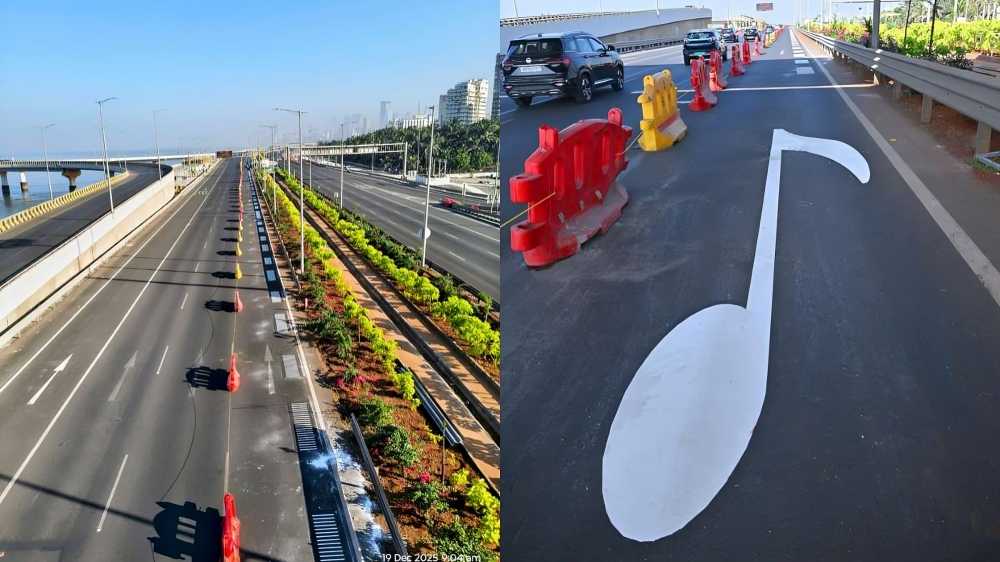

A musical road feature installed along the Mumbai Coastal Road has come under scrutiny after residents from nearby neighbourhoods complained of persistent noise generated by passing vehicles. The civic administration has now ordered a technical review to assess the sound levels produced by the installation.
The musical road was introduced as a road safety measure designed to encourage motorists to maintain regulated speeds. The technology involves specially designed grooves on the road surface that produce musical notes when vehicles drive over them at a particular speed. Similar systems have been deployed internationally as behavioural nudges aimed at improving driving discipline.
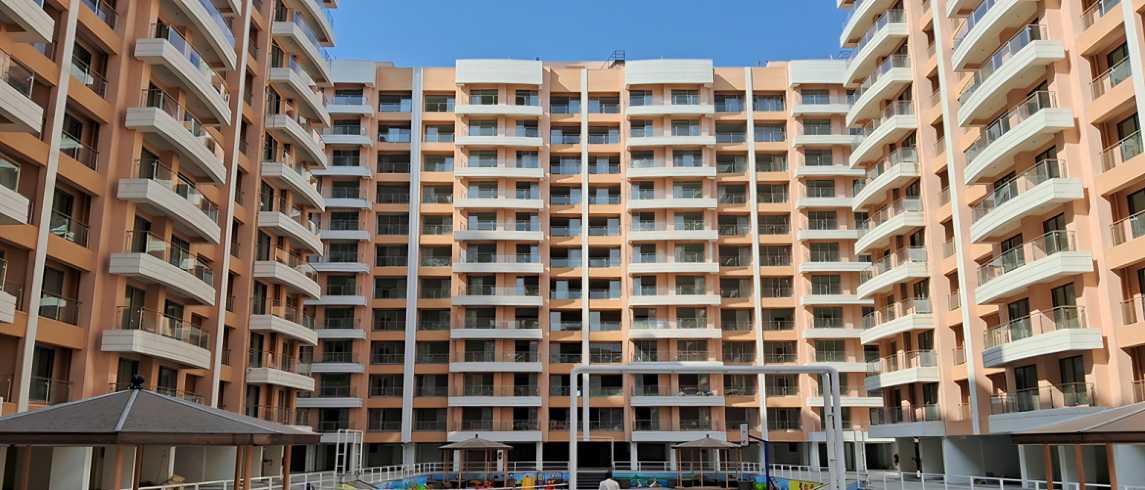
However, residents of the Breach Candy area say the continuous sound generated by vehicles passing over the grooves has become a source of disturbance throughout the day. Local community representatives have submitted a petition to the Brihanmumbai Municipal Corporation (BMC), urging authorities to intervene and modify the installation.
Municipal officials confirmed that a consultant has been appointed to conduct a detailed decibel study to evaluate the acoustic impact of the feature. The study will record sound levels at different times of the day to determine whether the noise exceeds permissible limits for residential zones.
Urban infrastructure experts note that musical roads are generally implemented on highways or in sparsely populated regions where noise has minimal impact on nearby residents. In dense metropolitan environments like Mumbai, however, such innovations require careful planning as residential buildings are often located close to major road infrastructure.
Planners say the issue highlights the broader challenge of introducing experimental road designs in crowded urban settings. The coastal road itself is one of Mumbai’s most significant transport infrastructure projects, intended to reduce congestion along the western shoreline and shorten travel times between the city’s southern and northern areas.
Experts also point out that coastal environments can amplify sound transmission across open waterfronts, increasing the likelihood that noise from road installations will travel to nearby residential clusters.
Residents say the sound is particularly noticeable during peak traffic hours when vehicle movement increases along the corridor. Environmental specialists warn that prolonged exposure to repetitive noise can affect quality of life in neighbourhoods situated close to major transport routes.
The BMC has said that the results of the acoustic study will determine the next steps. Possible options include modifying the grooves, limiting the feature’s operating hours or redesigning the installation to minimise sound impact.
Urban policy analysts say the episode offers an important lesson for future infrastructure experiments in Indian cities, where innovative design solutions must be carefully balanced with environmental considerations and community concerns.
Source: Urban Acres