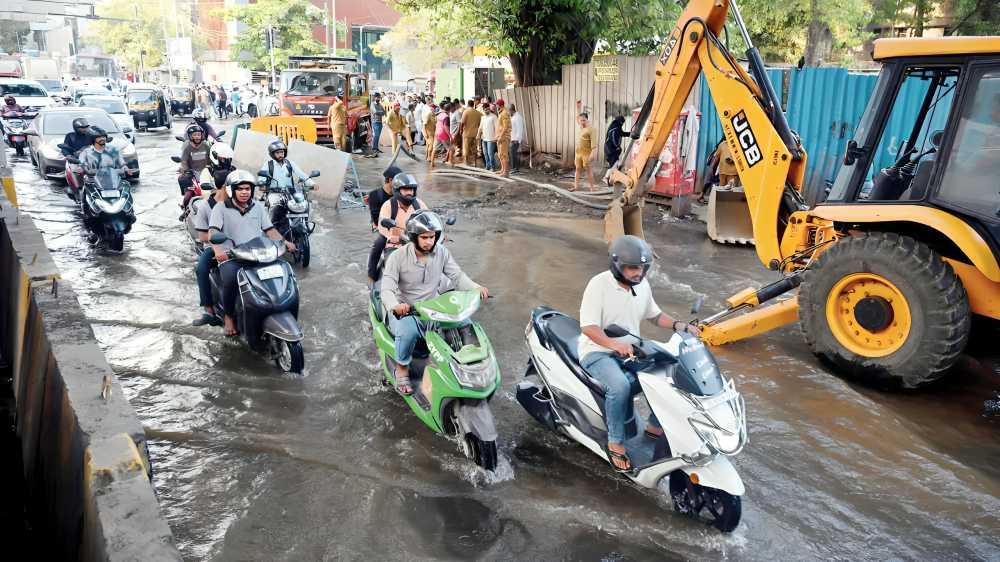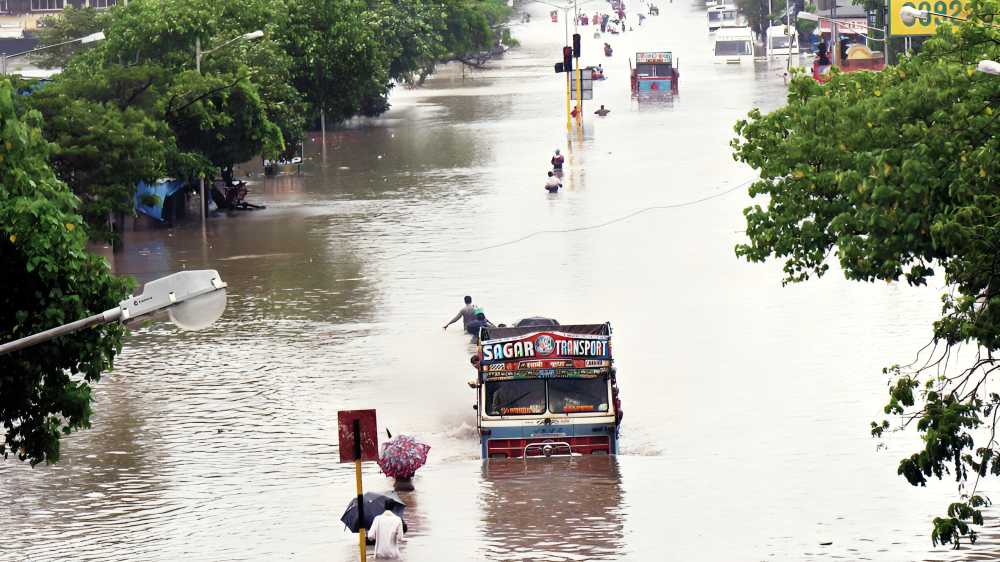

The Brihanmumbai Municipal Corporation has proposed a Rs 10,000-crore flood mitigation plan aimed at tackling chronic waterlogging in Mumbai and has submitted it to the National Disaster Management Authority (NDMA) for funding support. The city is among three metros—alongside New Delhi and Ahmedabad—selected under the Urban Flood Risk Management Programme (UFRMP).
The proposal comes amid growing concerns over increasingly erratic and intense rainfall patterns, particularly in low-lying areas. Mumbai’s drainage network spans 3,404 km, yet flooding remains a persistent issue. On average, the city records around 16 days annually with rainfall exceeding 100 mm. In the past decade, high-intensity rainfall events within four-hour windows have occurred 28 times, with average intensity rising from about 131 mm to 182 mm over six years. Currently, more than 35% of the population lives within 250 metres of flood-prone zones.

Data from the civic body shows that out of 498 identified flooding spots, 391 have already been addressed, while 52 are expected to be resolved before the upcoming monsoon. However, at least 29 locations are still likely to experience waterlogging this season, and 26 sites require coordination with multiple agencies.
The BMC’s plan combines structural and non-structural measures. Proposed interventions include expanding stormwater drainage capacity, building retention and detention basins, setting up pumping stations at Mahul and Mogra, and rejuvenating rivers. Nature-based solutions such as bio-swales, sponge parks, permeable pavements, and mangrove restoration are also part of the strategy, alongside IT-based monitoring systems and public awareness initiatives.
“Since NDMA’s core principle is ensuring robust non-structural measures along with structural measures, we have also focused on nature-based solutions for flood mitigation. Many such solutions can be implemented for urban areas, such as increasing the amount of land where earth is exposed, for water retention, including public open spaces, making open spaces mandatory in private developments, road medians, and permeable footpaths. We await approval,” said Abhijit Bangar.
With central approval pending, the project is seen as a critical step toward strengthening Mumbai’s resilience against recurring floods.
Source: Mid-day