
A distant geopolitical conflict is now showing up on Mumbai’s construction sites and, increasingly, in property price tags. Disruptions around the Strait of Hormuz have begun to significantly raise the cost of building homes in the city, as longer shipping routes, higher freight charges, and supply delays impact key construction materials. For a market already operating under tight supply conditions, the ripple effects are now moving from project budgets to buyer pricing.
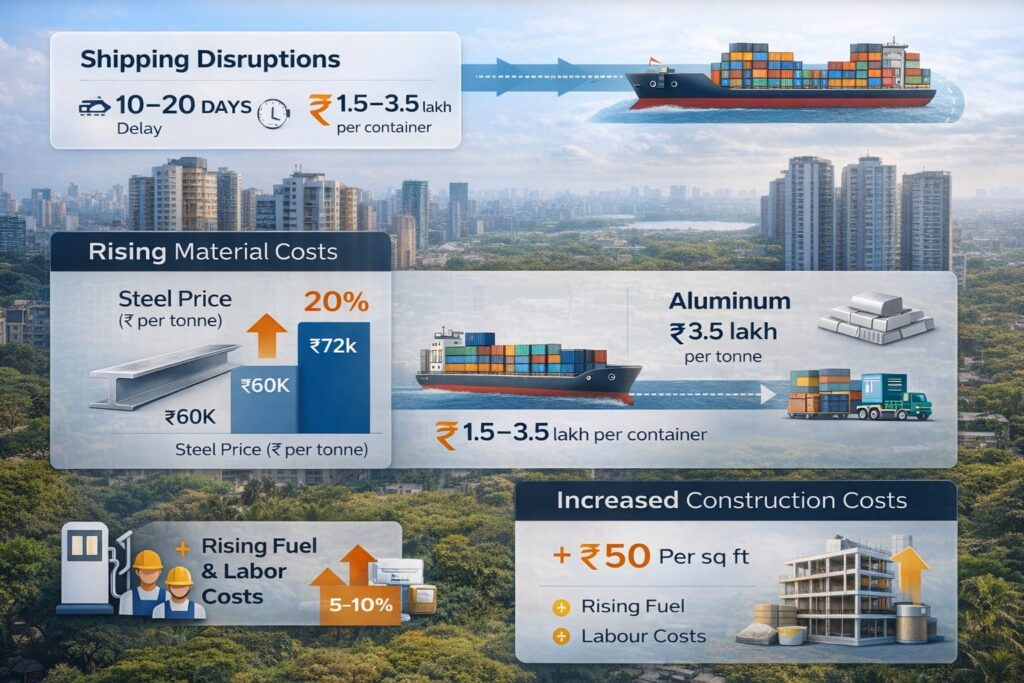
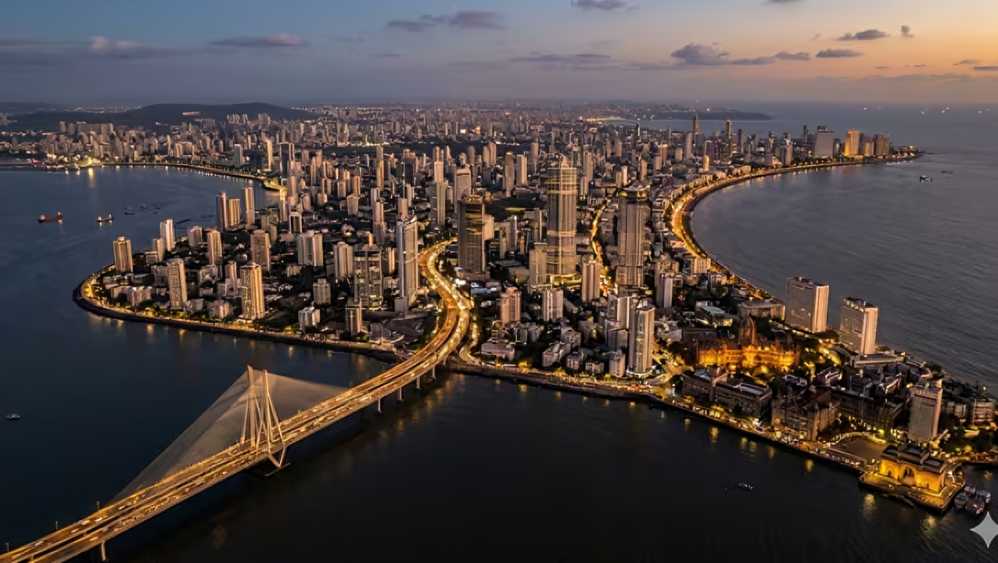
(This is an artificial intelligence (AI)-generated image for representational purpose)
According to industry estimates, rerouting of cargo vessels has added 10–20 days to delivery timelines and increased freight costs by Rs 1.5–3.5 lakh per container, sharply raising the landed cost of materials such as steel, aluminium, and imported finishes.
The impact is most visible in steel, a core input for Mumbai’s high-rise construction. Prices have surged by nearly 20% to Rs 72,000 per tonne, adding roughly Rs 50 per sq ft to overall construction costs. Aluminium prices have also climbed to around Rs 3.5 lakh per tonne, while imported luxury materials are becoming significantly more expensive due to logistics disruptions.
Hira Ludhani, Director, Evershine Group, said the impact is already visible at the project level and cannot be ignored.

“The global conflict has landed directly on Mumbai’s construction sector. Steel is up 20%, sitting at Rs 72,000 a tonne. Hormuz-rerouted shipping is adding weeks to material delivery and lakhs per container in surcharges. These are real pressures, and any developer who says otherwise isn’t watching their project costs closely enough,” he added.
Beyond materials, developers are also dealing with rising fuel and labour costs, further increasing overall project budgets and tightening margins.
Karishma Julka, Founder and Director, Plinth Realty, a real estate company in the luxury real estate space, pointed out that the pressure is coming from multiple directions at once.

“The current geopolitical climate has tightened global supply chains. In Mumbai’s high-stakes real estate market, rising freight costs, steel prices, and imported material expenses, along with shipment delays, a depreciating rupee, and fuel-driven labour inflation, are placing pressure on developer margins,” she said.
Despite these cost pressures, demand, especially in the premium and luxury segments, remains strong. Developers have been able to pass on a part of the increase, with property prices in several projects rising by 5–10% without significantly affecting sales.
Julka added that buyer behaviour is also evolving in response to the current environment. “Despite these challenges, the premium and luxury segments continue to show strong resilience, particularly from NRI buyers who view the weakening rupee as an opportunity. These buyers are prioritising execution certainty and developer credibility over price fluctuations. This has triggered a ‘flight to quality’, where well-located projects with strong developer integrity continue to see demand.”
However, the situation is less favourable in the mid-income and affordable segments, where buyers are more sensitive to price increases and rising EMIs. Developers in these categories have limited flexibility to pass on higher costs, leading to margin pressure and slower project momentum.
Dr. Prashant Thakur, Executive Director & Head – Research & Advisory, ANAROCK Group, cautioned that the sector could face prolonged disruption if global conditions remain uncertain.

“The Strait of Hormuz blockade since early March 2026 has hit the sector hard with exploding material costs, supply delays, and potentially delayed and even stalled projects,” he said.
He further explained the scale of the disruption, noting that “forced reroutes of ships carrying construction materials around the Cape of Good Hope have added anywhere between 10–20 days to shipping times and as much as Rs 1.5–3.5 lakh per container to the costs.” Importantly, the impact is unlikely to reverse immediately even if tensions ease. “Even if the Gulf situation improves quickly, a full reset will take anywhere between 1 to 3 months. Much of the damage to 2026 is, so to speak, cast in steel and concrete,” Thakur added.
Even as costs rise, Mumbai’s real estate market continues to demonstrate resilience, supported by strong underlying demand, limited land availability, and ongoing redevelopment activity across the city.
Hira Ludhani highlighted this structural strength, “After 65 years and serving 85,000+ families, we know one thing: Mumbai’s need for housing and redevelopment is a permanent reality, not a temporary trend. Prices for materials go up and down, but the city’s housing shortage remains. In times like these, people look for developers they can trust, those who have a long history of actually delivering what they promise.”
At the same time, developers are adapting their strategies to manage volatility. This includes increasing reliance on domestic sourcing, improving project planning, and adopting more efficient construction practices.
Dhruman Shah, Promoter, Ariha Group, said the disruption is also pushing the sector towards innovation.

“Global conflicts are presenting new challenges for the construction sector, but they are also driving innovation and efficiency. Developers are exploring alternative materials, adopting modern construction technologies, and optimising project timelines to maintain quality and delivery standards.”
The emerging picture is one of a market adjusting to higher costs rather than slowing down. While global events are making construction more expensive and stretching timelines, Mumbai’s real estate fundamentals, driven by demand and supply constraints, remain intact.
For now, the message is clear: global disruptions are raising the cost of building homes, and in a city like Mumbai, that cost is steadily finding its way into property prices.