
The Mumbai Metropolitan Region Development Authority has begun steps to secure loans worth Rs 10,100 crore for two major infrastructure developments in the Mumbai Metropolitan Region (MMR), ahead of the 2026–27 financial year. Officials familiar with the development said the authority is preparing to undertake its largest-ever borrowing programme, with the proposed loans accounting for 42.59% of its Rs 23,711.16-crore budget target for the upcoming fiscal.
The funds will be directed towards the Mumbai–Samruddhi Expressway connector and the Shilphata Junction flyover. “The MMRDA is looking to secure the loans preferably from a bank or a domestic financial institution/ consortium, on a floating interest rate basis,” an official said, requesting not to be identified.
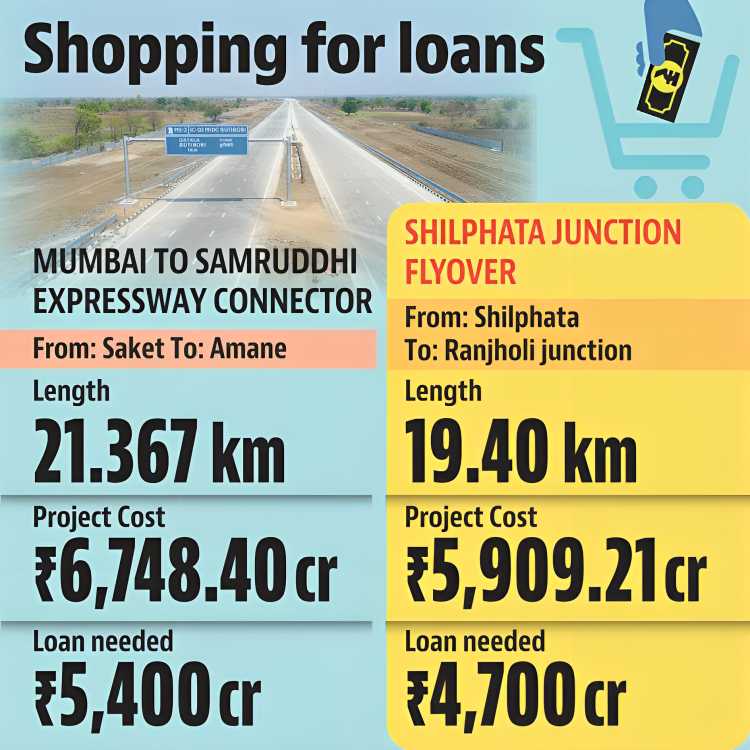
Of the total borrowing, Rs 5,400 crore is earmarked for the expressway connector, while Rs 4,700 crore is allocated to the Shilphata flyover. The estimated costs of these projects stand at Rs 6,748.40 crore and Rs 5,909.21 crore, respectively, with funding structured at a debt-to-equity ratio of 80:20.
According to officials, the loan tenure is expected to be 25 years, including a five-year moratorium on both principal and interest from the first disbursement. Repayments are likely to be scheduled on a quarterly or bi-annual basis.
The 21.367-km elevated connector linking Saket in Thane to Amane is expected to ease congestion on the National Highway 3, where traffic has surged due to industrial growth and expanding logistics activity around Bhiwandi. Meanwhile, the 19.40-km Shilphata flyover, connecting Shilphata to Ranjnoli, is aimed at improving access between Kalyan, Bhiwandi and nearby regions witnessing rapid population growth and rising vehicular movement.
MMRDA plans to rely on toll collections from both projects, along with allocations from the Urban Transport Fund provided by the Maharashtra government, to service the debt.
Earlier, while presenting its budget in March, officials had indicated a greater dependence on land monetisation and borrowing, with planned debt significantly higher than the Rs 15,548.17 crore raised in 2025–26.
Source: Hindustan Times