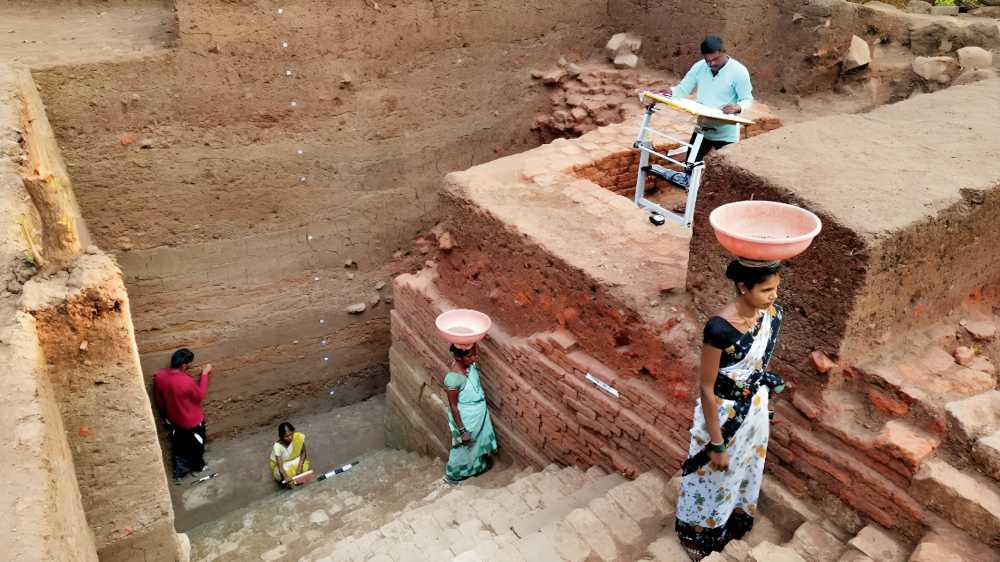

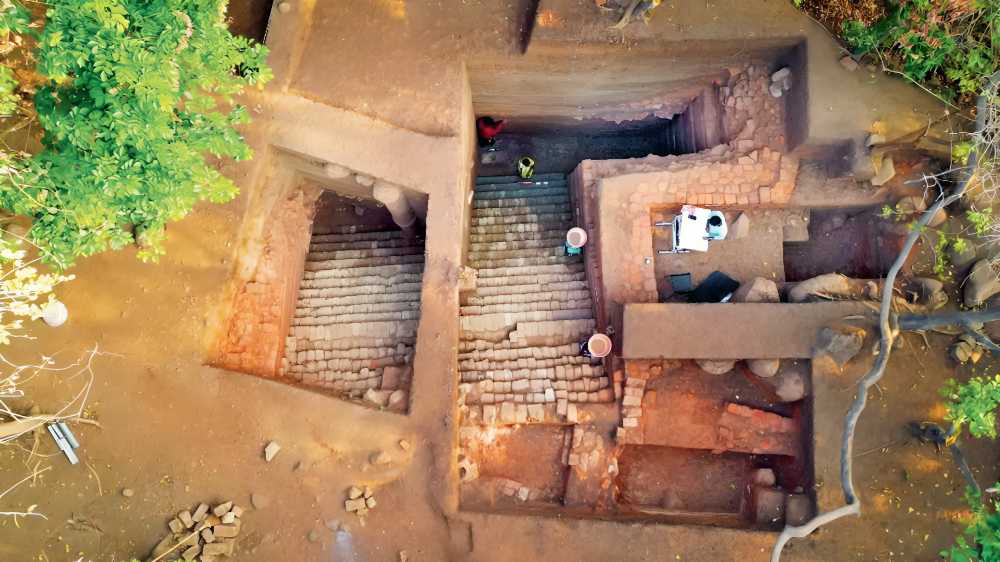
A stone-and-brick reservoir estimated to be over 1,500 years old has been discovered on Elephanta Island, shedding light on how early settlers managed drinking water in a region marked by heavy rainfall and rocky terrain that struggles to retain water.
While Elephanta is globally recognised for its rock-cut cave monuments, this newly uncovered structure stands apart as an engineered system rather than a carved one, indicating a distinct approach to infrastructure planning.
“This clustering of caves on islands is not incidental; island cave sites repeatedly occur in zones of intense movement, exchange and patronage. Across western India, caves functioned not only as religious spaces but also as institutional nodes embedded in mercantile networks,” said Dr Abhijit Ambekar.
Key Findings
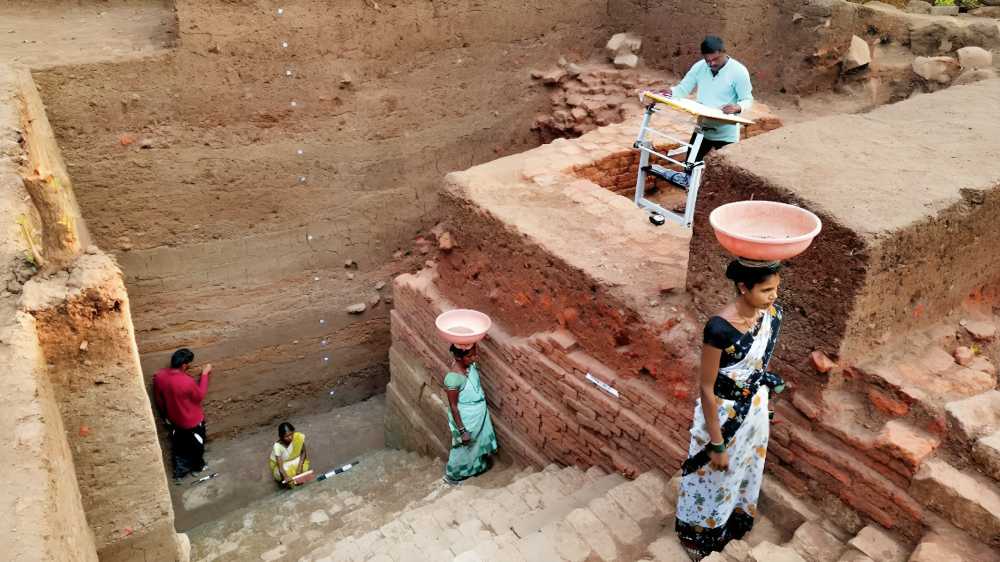
- A large T-shaped stepped reservoir designed to collect and store rainwater
- Excavation initiated by the Archaeological Survey of India in November 2025
- Discovery of Indo-Mediterranean (Roman) amphora fragments, imported ceramics, and glass
- Artefacts tracing links to regions such as present-day Turkey, Syria, Kuwait, Israel, and Egypt
What It Indicates
The findings suggest that Elephanta was once part of an extensive maritime trade network, connecting it to distant regions across the ancient world.
Structure Details
- Age: Around 1,500 years
- Type: T-shaped stepped reservoir
- Material: Stone and brick
- Length: 14.7 metres
- Depth: 5 metres
- Steps: 20
- Function: Rainwater storage and regulation
The system appears to have addressed water shortages that arose after the monsoon season.
Expert Insight
An official from the ASI highlighted that several cave complexes already exist on Mumbai’s mainland, including the Kanheri Caves, Mahakali Caves, Mandapeshwar Caves, and Jogeshwari Caves. Despite this, Elephanta evolved into a major centre, underlining its strategic importance as a trade hub.
Why It Matters
The discovery highlights advanced water management techniques adapted to monsoon conditions and difficult geography. It also reflects long-term planning for water security and reinforces the idea that Elephanta was both a religious and economically active site.
“This means Elephanta was not an isolated ritual space but part of wider maritime movement,” the ASI noted.
Source: Mid-day