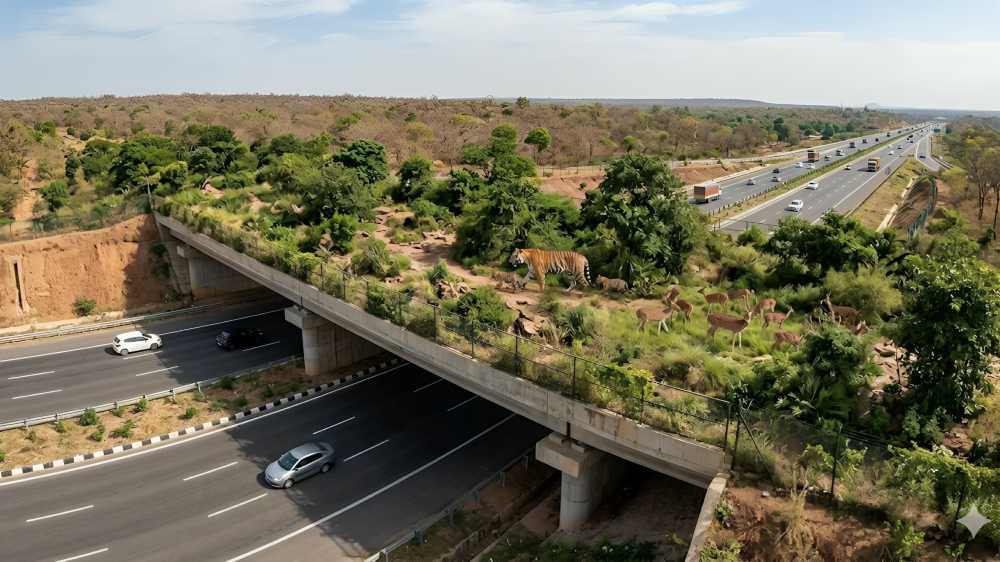

The Mumbai-Delhi Expressway is setting a new benchmark in sustainable infrastructure, with a specially designed wildlife corridor near Ranthambore National Park. This stretch demonstrates how large-scale development can coexist with environmental conservation by ensuring safe passage for animals while maintaining smooth traffic flow.
A Model for Coexistence
Spanning 11.5 km, this section separates high-speed vehicular traffic from wildlife movement, reducing accidents and safeguarding natural habitats. The initiative highlights how modern infrastructure can be designed without disrupting ecological balance.
India’s Largest Animal Overpass
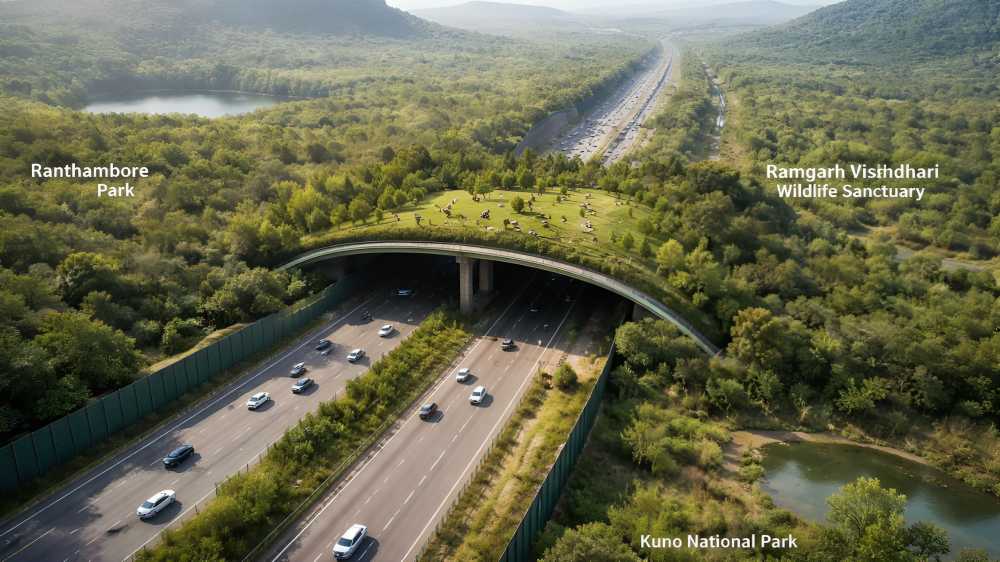
A key feature is a 3.5 km-long wildlife overpass—the largest in India—divided into five segments of 500 metres each. These elevated green bridges allow animals to cross above the highway safely, completely isolated from traffic below.
Dedicated Underpasses for Wildlife
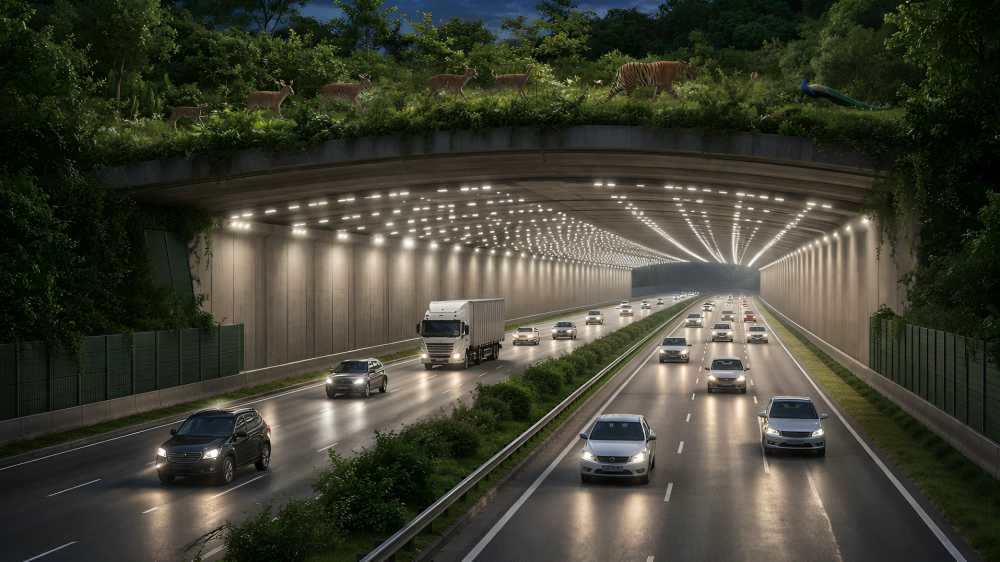
Complementing the overpasses is a 1.2 km wildlife underpass, offering an alternative route beneath the highway. The combination of overpasses and underpasses ensures safe movement for a wide range of species, from small mammals to larger animals.
Reconnecting Critical Habitats
The project plays a vital role in linking fragmented ecosystems. It reconnects Ranthambore National Park with Ramgarh Vishdhari Wildlife Sanctuary, Mukundra Hills National Park, and Kuno National Park, forming a crucial wildlife corridor. This connectivity supports genetic diversity, particularly for species like tigers, aiding their long-term survival.
Nature-Inspired Design
Engineers have covered the overpasses with soil and native vegetation, creating a forest-like environment. This “green bridge” design encourages animals to use the crossings naturally, without hesitation.
Enhanced Safety Measures
To prevent wildlife from straying onto the expressway, high boundary walls have been installed, along with sound barriers to minimise traffic noise. Additionally, covered sections are fitted with around 1,500 LED lights to ensure clear visibility for motorists.
Together, these innovations reflect a thoughtful blend of infrastructure development and ecological responsibility, positioning the expressway as a model for future projects in India.
Source: Delhi Now