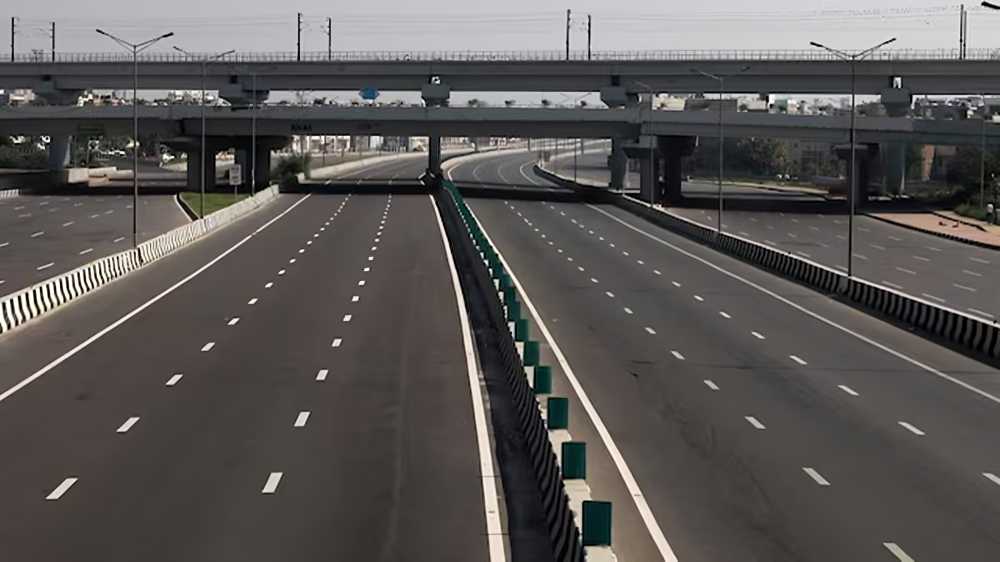

On May 1, commuters will get their first glimpse of the long-awaited “Missing Link” on the Mumbai–Pune Expressway—a stretch that promises not just faster travel, but cutting-edge safety and automation. The project, executed by the Maharashtra State Road Development Corporation (MSRDC), features Asia’s widest twin-bore tunnels, equipped with AI-driven systems that detect, respond, and manage emergencies in real time.
Safety is built into every metre. Embedded sensors detect heat spikes from vehicle fires within seconds, triggering high-pressure water mist systems that release 36.5 litres per minute through nozzles spaced every four metres. Simultaneously, control rooms are alerted, digital signboards display warnings, and traffic is regulated to prevent accidents. Air quality is constantly monitored by overhead jet fans—stretching nearly 200 metres and running at 1,500 RPM—which automatically adjust airflow to expel carbon monoxide and nitrogen oxides, maintaining breathable conditions even under stress.
Multiple redundancies enhance security: emergency push buttons every 60 metres, SOS call boxes every 150 metres, and a dense network of cameras for traffic monitoring, speed enforcement, and real-time visuals. Cross-passages connect the twin tunnels, allowing vehicles to be diverted safely during emergencies. “The combination of width, length, and embedded safety systems makes this globally distinctive,” says Satish Sharma, who oversees tunnelling operations.
The ₹6,695-crore project spans the Khopoli–Lonavala section and will cut travel time by 20–25 minutes while bypassing the hazardous ghat stretch notorious for landslides, sharp curves, and congestion. Initially, only cars and buses will use the tunnels, with heavy vehicles following after six months, allowing operators to fine-tune systems under live conditions.
Above ground, the Missing Link includes India’s highest cable-stayed bridge at 182 metres—part of a redesign near Khandala to ease a historic bottleneck. First proposed in 1995 and approved in 2017, the project reduces a key stretch by 6 km, representing a new era in highway design: faster, safer, and smarter.
Source: Financial Express