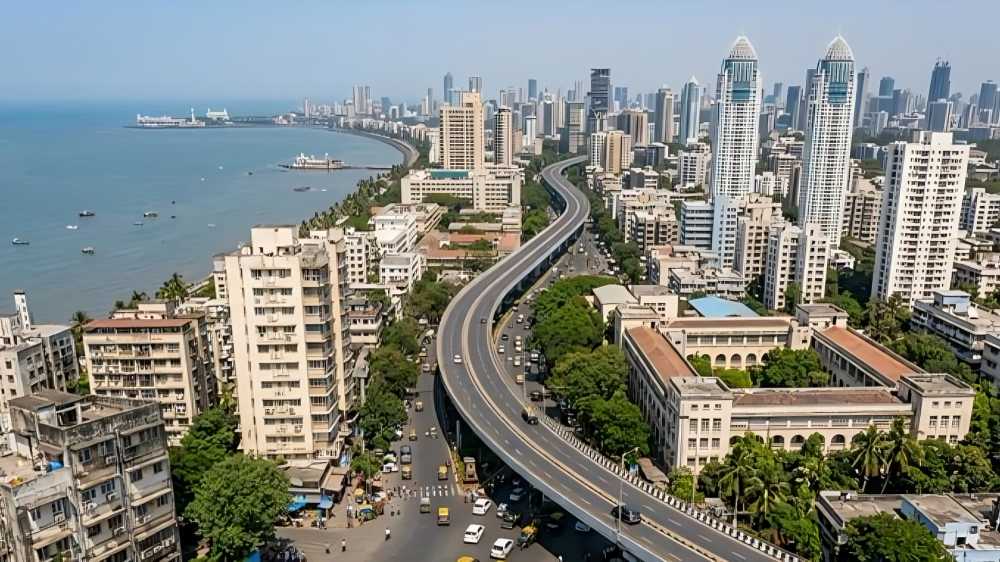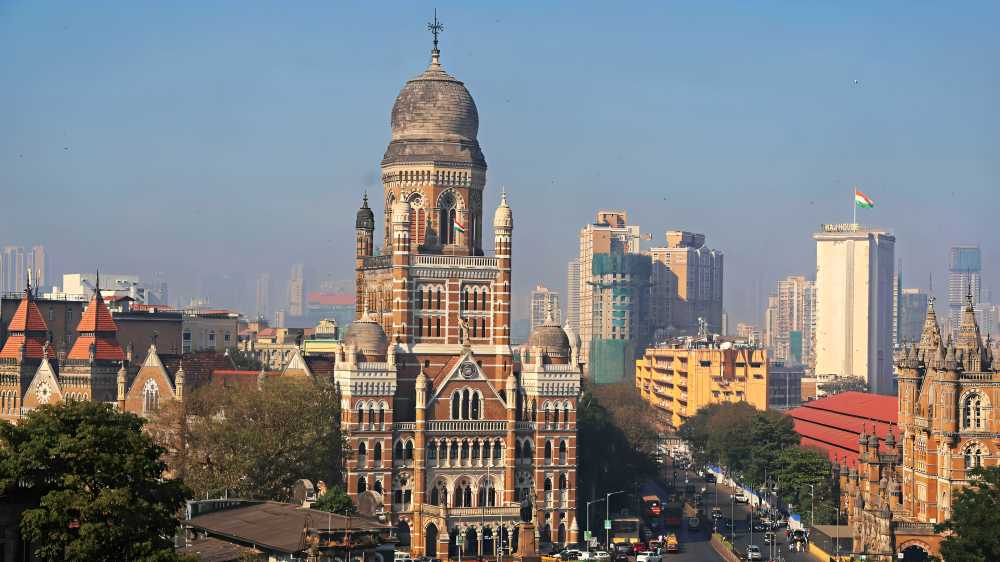

The Brihanmumbai Municipal Corporation (BMC) has informed the Bombay High Court that it now requires the entire land parcel of over 27,000 square metres at Worli for its Sewage Treatment Plant (STP), instead of the earlier permitted 17,756 sq m, citing future capacity expansion needs driven by Mumbai’s growing population.
The submission was made through an affidavit filed by the Deputy Municipal Commissioner (Engineering) in response to a petition by Worli Urban Development Project LLP, which had challenged a stop-work notice issued by the civic body. The developer is executing a slum rehabilitation project on the adjoining land and had raised concerns over BMC’s revised stance.
Earlier, the High Court had permitted BMC to use the available 17,756 sq m area and indicated it would later examine how the original reservation of 27,698 sq m was reduced to accommodate a transit camp for the rehabilitation project. The court had also halted construction of transit buildings after noting that the Slum Rehabilitation Authority (SRA) had permitted work despite objections raised by the civic body.
On March 27, a bench of Justices Makarand S Karnik and Shriram M Modak sought clarification from BMC on the change in its position. In its affidavit, the civic body stated that it is developing a large-scale sewage treatment infrastructure to meet rising demand, including a facility capable of treating up to 500 MLD (Million Litres per Day) of sewage up to tertiary level.
The BMC added that the Worli Waste Water Treatment Facility (WWTF), expected to become partially operational by July 2027, will initially handle 250 MLD, with treated water planned for reuse in non-potable applications. It further noted that infrastructure for the storage and distribution of this treated water had not been accounted for in the current design, necessitating a larger contiguous area of 27,964.04 sq m.
The civic body also emphasised that future expansion would enable full utilisation of 500 MLD capacity and support potable-grade treatment standards to meet long-term urban demand.
BMC further highlighted that the project site contains two major British-era sewer trunk lines located around 30 feet underground and extending approximately 450 metres. These lines serve key city zones, including F/South, G/South, and G/North wards, and also assist in stormwater drainage during heavy rainfall.
It warned that any damage to these critical utilities could trigger severe flooding risks. The matter has been posted for further hearing on April 17, with the court seeking the petitioner’s response to the affidavit.
Source: The Indian Express