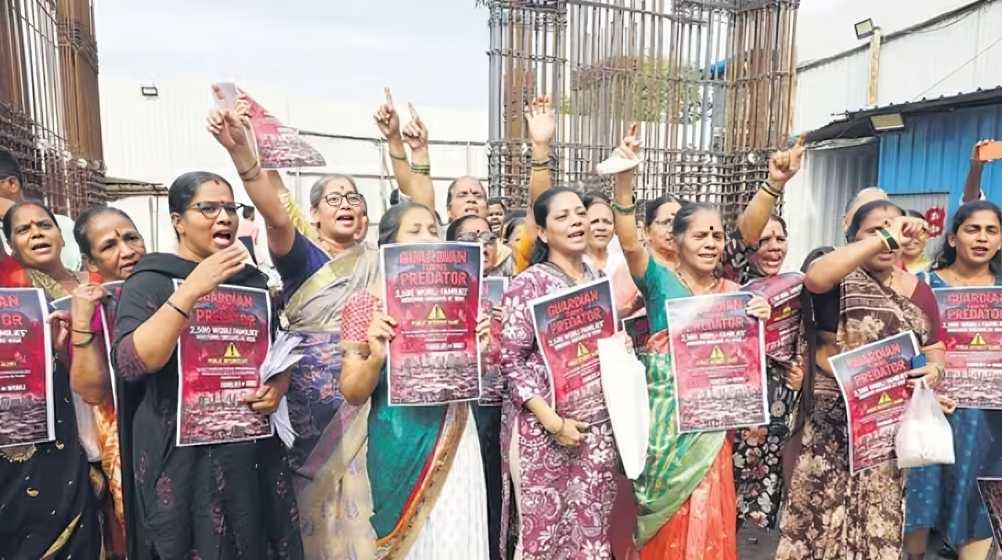

December 23, 2025: Residents of Worli Koliwada in Mumbai have taken to the streets after the Slum Rehabilitation Authority (SRA) issued notices initiating the termination of the developer handling large-scale redevelopment projects on nearly six acres of prime land. The move has triggered strong opposition from locals, who say it threatens housing projects that have been delayed for decades.
The protests centre around two housing societies — Chaitanya Sai Janata Colony, comprising about 2,054 tenements, and Sagar Darshan Co-operative Housing Society, with roughly 265 tenements. According to a Hindustan Times report, the Chaitanya Sai redevelopment has been pending for nearly 30 years, while work on Sagar Darshan began only a few years ago.
The SRA has issued a termination notice and scheduled a hearing under Section 13(2) of the Maharashtra Slum Areas Act, 1971. This provision is invoked when redevelopment projects fail to meet prescribed timelines or deviate from sanctioned plans. The section allows all concerned parties to present their arguments before a final decision is taken.
Residents, however, contend that redevelopment work was actively underway. They claim that both projects had secured all required permissions by October 2024 and that construction had already begun. According to the report, residents argue that the sudden issuance of termination notices, without clearly stated reasons, has created anxiety and uncertainty about the future of their homes.
The issue is further complicated by an ongoing legal dispute. Residents say critical land ownership matters related to the redevelopment are currently being heard by the Bombay High Court. In their view, terminating the developer before the court resolves these issues is premature and risks derailing the entire project.
Fearing prolonged delays, residents have warned that replacing the developer at this stage could push redevelopment back by several years, extending the hardship of families living in temporary accommodations. Some residents have even cautioned that they may intensify protests or seek political intervention if the notices are not withdrawn.
Defending its decision, the SRA has maintained that until the court rules on land ownership, further construction permissions cannot be granted. An SRA official said, “The notice and hearing were issued to push stalled ground-level work, which has been progressing slowly.”