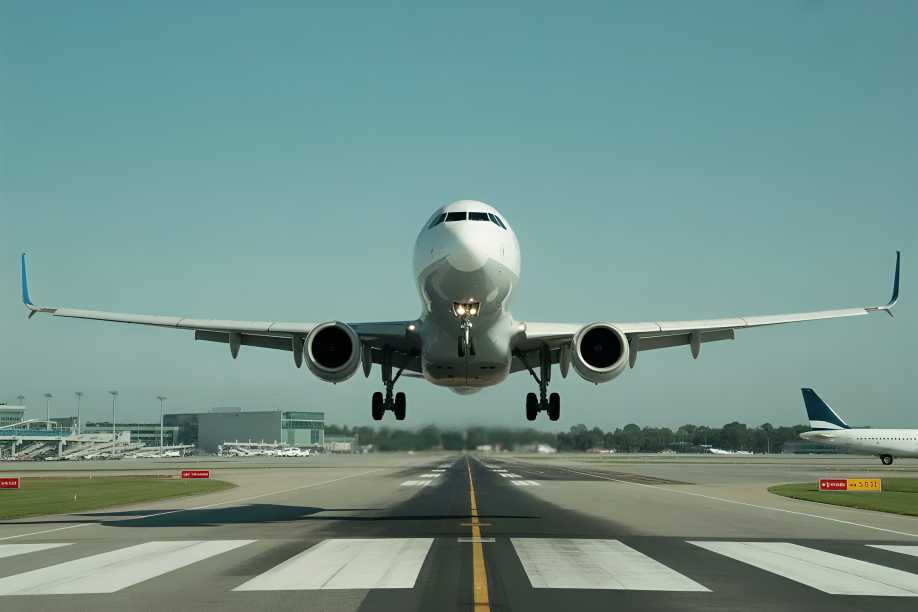

January 2, 2025: Mumbai has formally entered a dual-airport phase with the operationalisation of Navi Mumbai International Airport (NMIA), becoming the first Indian city to function with two full-scale commercial airports. The commissioning of NMIA is a defining moment for the Mumbai Metropolitan Region’s aviation and infrastructure landscape, addressing long-standing capacity constraints while setting the stage for future growth.
Situated in Navi Mumbai, NMIA is among India’s largest greenfield airport developments and reflects the rapid expansion of the country’s aviation sector. Union Minister of Civil Aviation Kinjarapu Rammohan Naidu described the airport as a critical intervention to ease mounting air traffic pressure in the region. Developed by Adani Airports Holdings Limited, a subsidiary of Adani Enterprises Limited, the airport has been planned to handle up to 20 million passengers annually, along with 0.5 million tonnes of cargo.
On its first day of operations, NMIA handled 48 flights connecting nine domestic destinations, signalling the beginning of enhanced regional connectivity. Designed with a technology-led and capacity-focused approach, the airport aims to improve operational efficiency while offering a modern passenger experience. It is expected to emerge as a significant domestic and international hub over the coming years.
NMIA is positioned as a complementary facility to Chhatrapati Shivaji Maharaj International Airport, which has faced sustained congestion due to rising passenger and cargo volumes. The dual-airport model is expected to enable smoother traffic distribution, faster turnarounds, and more reliable connections across Mumbai and western India, supporting economic activity across sectors.
According to the Adani Group, airlines such as IndiGo and Akasa Air have commenced operations from NMIA, with additional routes planned. More than 4,000 passengers were handled on the opening day, underlining immediate demand. On the logistics side, the airport’s cargo handling capacity is expected to strengthen supply chains and trade flows, reinforcing Mumbai’s role as a national commercial gateway.
Beyond aviation, NMIA is expected to provide a significant boost to tourism in Maharashtra by improving domestic and international access to Mumbai and the surrounding regions. Increased connectivity is likely to support growth in hospitality, retail, and allied services.
Aligned with the government’s broader infrastructure modernisation agenda, NMIA, along with parallel investments in road and rail connectivity, is set to play a pivotal role in supporting Maharashtra’s expanding economy. As Mumbai adopts its dual-airport identity, it stands better positioned to consolidate its status as a global centre for trade, travel, and investment.