
January 12, 2026: The long-awaited redevelopment of Dharavi has re-entered the spotlight amid Mumbai’s civic election campaign, with confirmation that the project’s foundation stone will be laid after the Brihanmumbai Municipal Corporation polls on January 15. The announcement was made at a political rally in Dharavi, bringing renewed attention to what is being projected as a major urban renewal initiative for one of India’s most densely populated neighbourhoods.
Dharavi has remained a focal point of Mumbai’s political and planning debates for decades. With elections underway, the redevelopment has assumed added significance, particularly in light of recent voting trends in the area, which have favoured opposition parties in both parliamentary and assembly elections. The timing of the announcement has therefore placed the project at the centre of electoral discourse.
It has been stated that the redevelopment will be carried out by Navbharat Mega Developers Private Limited through a structured partnership involving state authorities and statutory agencies. Claims that Dharavi’s land has been handed over to private corporate entities have been denied. Instead, it has been asserted that ownership rights will eventually rest with residents, framing the project as participatory in nature.
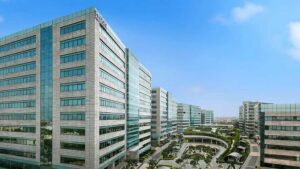
Officials have said that residential buildings developed under the plan will include modern amenities such as landscaped open spaces and recreational areas. Residents eligible for rehabilitation—those occupying structures built before January 1, 2000 and meeting prescribed criteria—will be rehoused within Dharavi itself. The size of rehabilitation units has been fixed at 350 square feet, larger than earlier benchmarks.
The redevelopment plan has also acknowledged Dharavi’s economic character, which includes pottery clusters, leather units, and food-processing businesses. These activities are expected to be accommodated within the same area to ensure livelihood continuity, supported by a proposed tax holiday of up to five years.
Concerns raised by residents who may not meet standard eligibility criteria have also been addressed, with assurances that housing will be provided to them as well. This approach has been positioned as a measure to prevent displacement and the creation of new informal settlements. As campaigning continues, the Dharavi redevelopment is being presented as both an infrastructure project and a social intervention, with its implementation set to be closely watched after the elections.