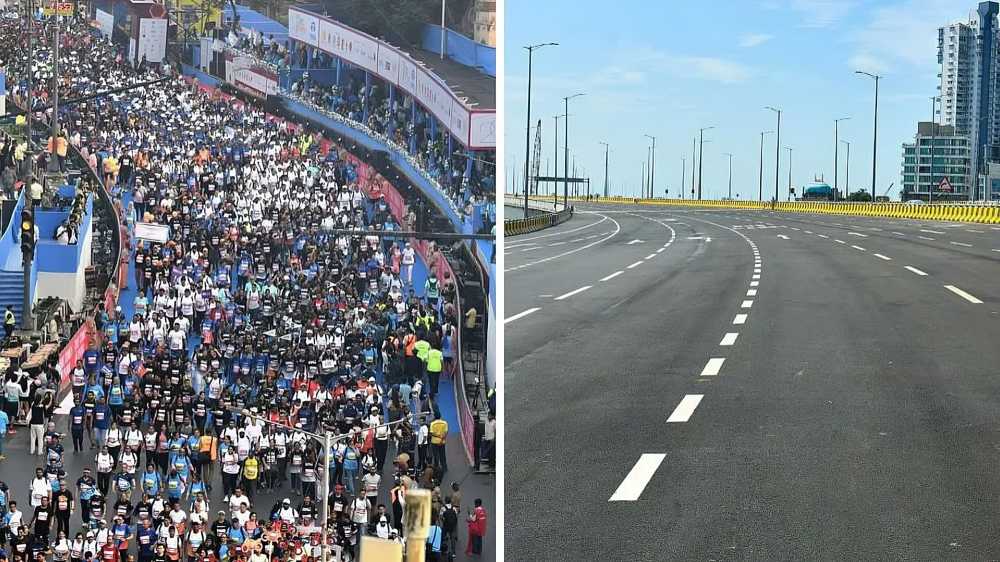

January 12, 2026: Mumbai’s changing transport landscape will be on display this January as the city’s annual marathon incorporates the Mumbai Coastal Road into its race route for the first time. The move places a newly built infrastructure corridor at the heart of a major public event, signalling how large-scale transport projects are beginning to shape Mumbai’s civic and cultural life beyond their core mobility function.
Scheduled for January 18, the revised marathon route will take runners through a mix of historic neighbourhoods and newly developed waterfront stretches, highlighting the city’s transition towards a more connected urban form. Urban planners note that the inclusion of the coastal corridor reflects a broader shift in how infrastructure projects are perceived, moving beyond congestion management to also support social and community engagement.
Under the updated plan, the full marathon will continue to start and finish at Mumbai’s heritage railway terminus, maintaining its traditional association with South Mumbai. Other race categories will branch out through areas such as Mahim, the Marine Drive precinct, and key business districts, before reconverging near established civic landmarks. The Coastal Road segment, with its sea-facing views and relatively flat alignment, is expected to offer smoother race flow and a distinctive experience for participants.
Organisers said the route redesign required extensive coordination among traffic police, municipal departments, and infrastructure agencies. Officials involved in planning indicated that the event will act as a live operational test of the Coastal Road’s readiness to handle large public gatherings, including emergency access, crowd management, and traffic diversions on connecting arterial roads.
Beyond logistics, the marathon’s use of the Coastal Road has broader implications for Mumbai’s global image. City branding experts point out that high-profile sporting events provide a platform to showcase recent urban transformation, including climate-adaptive coastal engineering and public realm development. While the project has sparked debate over environmental impacts, its use during the marathon also demonstrates the potential for temporary, people-first activation of waterfront infrastructure.
Inclusivity remains central to the event, with shorter runs and special categories continuing from central locations to encourage participation across age groups and abilities. Urban mobility advocates say such initiatives underline the importance of accessible, low-emission public spaces, principles that could inform everyday transport planning beyond race day.