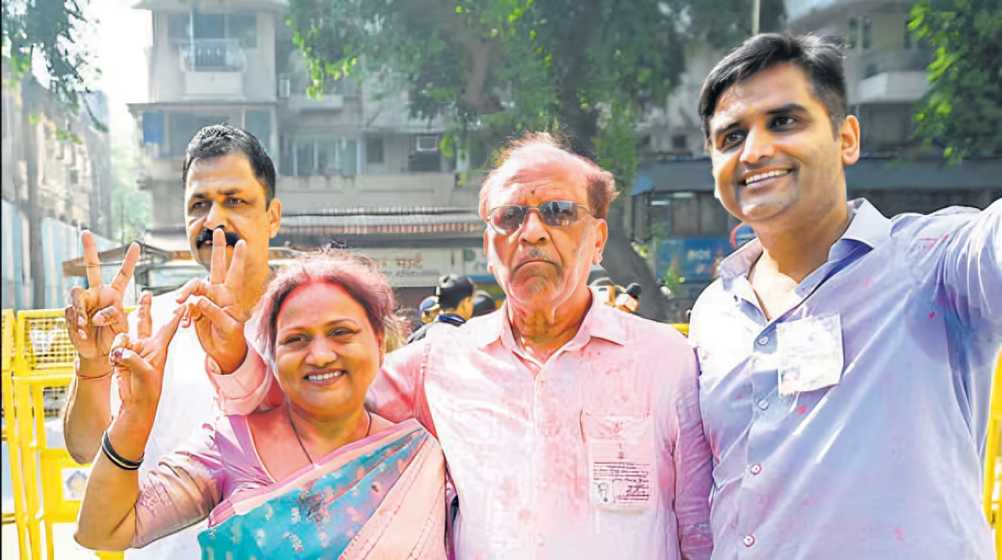

January 17, 2026: The recent civic elections in Dharavi sent a clear message: residents are against the current form of the redevelopment plan that could relocate them to the city’s outskirts. In the seven wards of the sprawling slum, Shiv Sena (UBT) won four seats, Congress secured two, and the original Shiv Sena, an ally in the BJP-led Mahayuti government, claimed one. The BJP, despite contesting four wards aggressively, failed to win a single seat.
Residents HT spoke to after the results emphasized that their votes reflected opposition to a redevelopment plan “imposed on them,” in which they had no say. The BJP-Shiv Sena alliance fielded candidates in all seven wards—BJP four, Sena three—but the electorate preferred local voices with promises aligned to residents’ needs. The Sena’s lone victory went to sitting corporator Bhaskar Shetty (ward 188), whose personal rapport with the community, rather than party affiliation, secured his win.
A total of 83 candidates contested across the wards, including representatives from BJP, Congress, Sena, Sena (UBT), MNS and AIMIM. Voter turnout was 65%, with nearly 1,38,099 residents casting their votes, highlighting the significance of the election.
Social worker Sanjay Bhalerao, active in Dharavi’s health and education sectors, described the results as a “decisive vote against the present form of the Dharavi redevelopment project.” He said, “We are not opposed to development itself but against forced development. The people want a redevelopment process where every Dharavi resident is relocated within Dharavi.”
Residents echoed similar sentiments. Shankar Dabhade of Kumbharwada said, “We were against candidates imposed on us, especially outsiders to Dharavi. We are also not happy with the redevelopment project forced on us by the government.” Former corporator Babbu Khan added, “People are unhappy with the way redevelopment is being planned.”
Sena (UBT) winner Harshala More, victorious in ward 189, said the mandate supports residents’ rights. “Not a single person will be shifted out of Dharavi during the redevelopment process. We will demand that the government consider the C2 redevelopment model for all Dharavi residents,” she stated. The results reflect strong local opposition to top-down redevelopment while reinforcing the demand for inclusive, community-focused urban planning.