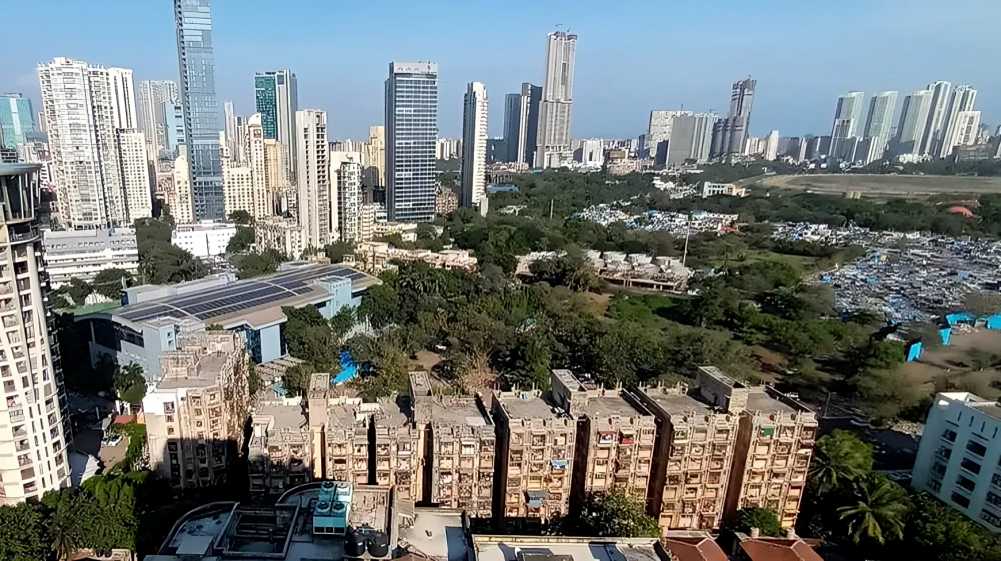

Mumbai’s housing future is no longer defined by expansion into open land alone. With easily developable Greenfield land largely exhausted, the city’s next wave of supply will come primarily from redevelopment and slum rehabilitation. Current construction activity shows this trend: redevelopment initiatives under the Slum Rehabilitation Authority (SRA) and MHADA are driving the majority of new housing, while true Greenfield opportunities are increasingly confined to peripheral pockets of the Mumbai Metropolitan Region.
The SRA’s ambitions highlight the shift. The authority has set out to deliver over 5 lakh homes by 2030, more than double its output since inception, as part of a concerted push to transform slum clusters into formal housing. About 3.34 lakh units are already under construction toward this target, reflecting the scale of redevelopment activity underway.
Alongside slum rehab, MHADA is moving aggressively on redevelopment and cluster renewal. Joint MHADA–SRA projects, plus society redevelopment on MHADA land, are expected to generate hundreds of thousands of new homes across the city. One projection estimates MHADA-linked initiatives alone could deliver over 5.3 lakh homes in the next five years, spanning rehabilitation units, free-sale apartments and lottery-allocated flats, illustrating the depth of redevelopment’s role in adding supply.
Society redevelopment is also making a measurable dent in Mumbai’s pipeline. Knight Frank India estimates that existing society redevelopment projects could unlock more than 44,000 new homes worth around Rs 1.3 lakh crore by 2030, reflecting broad participation by resident associations and private builders in areas long due for renewal.
By contrast, Greenfield opportunities are more limited, even as peripheral regions like Navi Mumbai, Panvel and the extended MMR continue to see land transactions and launches. The region recorded 24 significant land deals covering over 433 acres in the first half of 2025, the highest in India, underscoring ongoing developer interest in land acquisition on the periphery. However, such Greenfield growth often comes with trade-offs in commute times, infrastructure provisioning and integration with jobs.
This dependence on redevelopment is not without risk. Slum rehabilitation and cluster redevelopment remain among the most complex forms of urban housing delivery, involving multiple stakeholders, financing challenges and long approval cycles. Recent assessments show that only about 25% of interim slum rehabilitation targets were achieved over a multi-year period, highlighting persistent execution bottlenecks. Delays in rehabilitation directly constrain supply, while higher FSI and denser redevelopment projects place additional pressure on already stretched civic infrastructure and open spaces.
Greenfield development offers planning flexibility, but its scale remains limited. While the MMR recorded over 430 acres of land transactions in the first half of 2025, much of this activity was concentrated in peripheral zones such as Panvel and extended Navi Mumbai, far from Mumbai’s core employment centres. Despite ongoing metro and road investments, commute times from these locations often exceed 90 minutes one way, reinforcing the reality that Greenfield housing alone cannot absorb Mumbai’s future demand without parallel job decentralisation and infrastructure readiness.
Mumbai may well meet its quantitative goals for new homes, but the qualitative question remains: can this supply be delivered without sacrificing liveability, equity and sustainability? How the next million homes are conceived, approved and built will answer that question over the next decade.