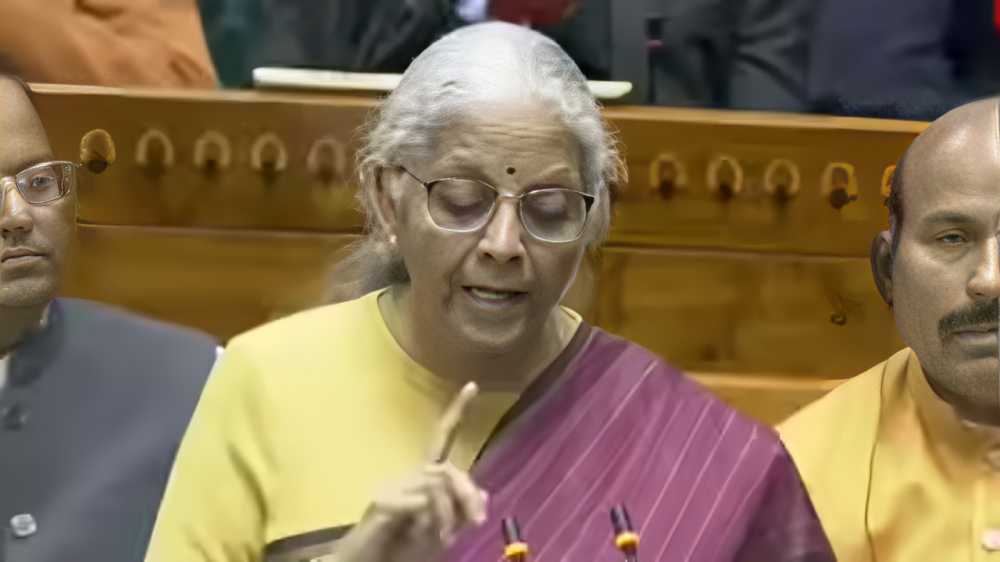

The Union Budget 2026–27, presented by Finance Minister Nirmala Sitharaman in the Lok Sabha, has outlined a policy framework that signals renewed momentum for India’s real estate sector, with a clear emphasis on affordable housing, infrastructure-led growth, and expansion across Tier 1 and Tier 2 cities. The Budget reflects the government’s stated intent to prioritise “reforms over rhetoric” as it advances its long-term vision of building a Viksit Bharat.
One of the most consequential announcements for the real estate and infrastructure ecosystem is the proposal to establish an Infrastructure Risk Guarantee Fund. The fund is designed to provide prudentially calibrated public credit guarantees to lenders, particularly during the high-risk phases of infrastructure development and construction. By mitigating financing risks that often deter private players, the initiative is expected to strengthen lender confidence and encourage greater private sector participation in large-scale real estate and infrastructure projects.
For private developers, this measure could translate into improved access to capital, smoother credit flows, and reduced financing bottlenecks that frequently delay project execution. The move underscores the government’s policy direction of crowding in private investment rather than relying solely on public spending to drive sectoral growth.
Another major thrust area in the Budget is asset monetisation. Over time, rights-based instruments have emerged as an effective means of unlocking value from underutilised assets. The government has proposed accelerating the recycling of significant real estate assets held by Central Public Sector Enterprises (CPSEs) through the creation of dedicated rights structures. This approach is expected to release capital for fresh investments while improving the productive use of existing land and built assets.
Anshuman Magazine, Chairman & CEO – India, South-East Asia, Middle East & Africa, CBRE says, “”The decision to include assets of Central Public Sector Enterprises (CPSEs) into the Real Estate Investment Trust (REIT) structure is a significant shift and is likely to have a multi-layered impact on the asset class from deepening the market, as these entities have large assets, to increasing the participation of institutional investors, including mutual funds. Since CPSEs are often mandated to provide steady returns, their REITs are expected to focus on high-yield, stable income distributions.”
The Finance Minister also highlighted a sharper developmental focus on Tier 1 and Tier 2 cities. As urbanisation increasingly moves beyond major metropolitan centres, this focus is expected to support more balanced regional development, reduce pressure on megacities, and create new hubs for housing, employment, and infrastructure.
Industry stakeholders believe that improved infrastructure spending will have a direct impact on housing demand. Pyush Lohia Director Lohia Worldspace, says, “The Union Budget 2026 is news for the real estate and infrastructure sectors. It tells us that things will be okay. The government will spend money, Rs 12.2 lakh crore on public projects. This should help get things done faster and make it easier to get around and finish projects on time. When infrastructure is good people want to buy houses. So the government spending money on infrastructure is a thing for people who want to buy homes. The Union Budget 2026 and its plans for infrastructure will help people feel confident about buying homes. The government has decided to create companies called REITs for the land owned by Central Public Sector Enterprises. This is an idea because it will help use land that is not being used properly and it will also make the commercial real estate market stronger. The new Infrastructure Risk Guarantee Fund is also a thing. It will help projects that take a long time to complete and need money for a long time.”
Earlier interactions with real estate experts also reflected a consensus that the government should prioritise the development of Tier 1 and Tier 2 cities while ensuring housing affordability. According to Dhruv Sarkar, Chief Business Operations & Sahil Marshall, Chief Wealth Maker at Bhaarat Wealth Group, “This Union Budget, the government should prioritise increasing the overall budget for roads connectivity and accessibility across the country, especially in areas that are in the process of becoming Tier 1 cities. This would not only enhance the land appreciation but also push towards structured infrastructure and facilities can be built around those areas improving the livability. Similarly on one hand connectivity increases the value creation for the society as a whole on the other hand there should be a policy around streamlining the land title clearance paperwork. Due to irregular title of land our government eventually faces a revenue hit from stamp duty, the owner of the land can never actually make the best value out of it, in such cases it is a loss loss scenario for everyone associated with it. Hence, streamlining the title clearances should be considered in the Union Budget of 2026”
Overall, the real estate-related measures in Union Budget 2026 point to a more stable, confidence-driven environment for developers, lenders, and investors. While effective execution will remain critical, the policy direction suggests that affordable housing, infrastructure expansion, and asset monetisation could gather fresh momentum, particularly in emerging urban markets shaping India’s next phase of growth.
Source: The Times of India