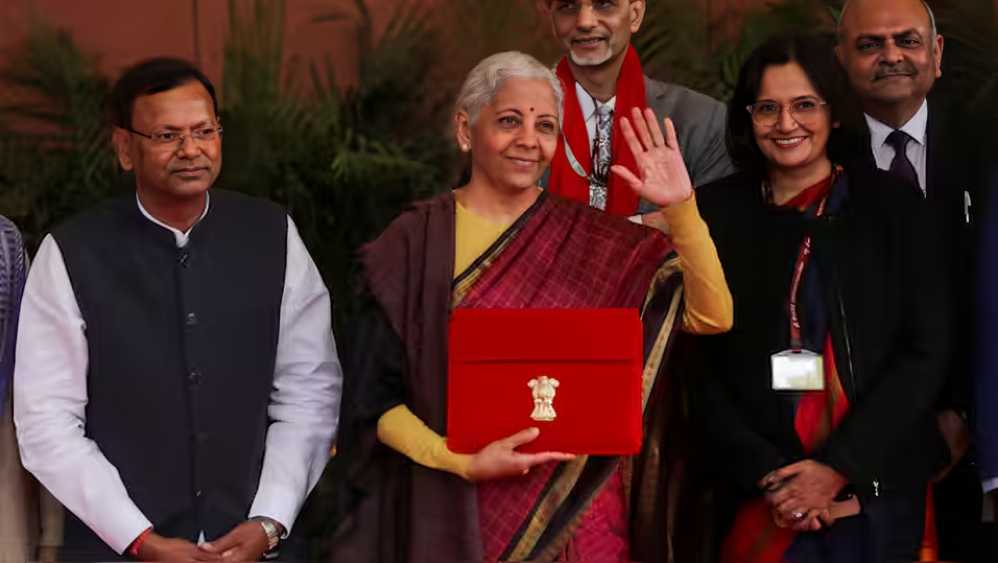

The Union Budget 2026-27 presented by Finance Minister Nirmala Sitharaman on February 1, 2026, delivers a nuanced policy mix for India’s real estate sector. For the Mumbai Metropolitan Region (MMR), a uniquely complex market grappling with supply-demand imbalances and sky-high prices, today’s announcements offer some bright spots, even as significant gaps persist.
The Union Budget 2026-27 has reinforced infrastructure-led growth with a record capital expenditure allocation of Rs 12.2 lakh crore for fiscal 2026-27, about 9% higher than last year. This represents India’s deepest sustained infrastructure push yet and reflects a near six-fold increase from about Rs 2 lakh crore in 2014-15.
For Mumbai and its wider metropolitan belt—from Navi Mumbai to Thane, Kalyan-Dombivli, and Virar, such infrastructure investment could be a game-changer over time. Logistical improvements, rail-led connectivity upgrades, and enhanced urban links can unlock latent residential and commercial demand, particularly where transit accessibility has been a historic constraint.
The Infrastructure Risk Guarantee Fund, introduced in this Budget, aims to offer prudentially calibrated partial credit guarantees to lenders during the high-risk phases of infrastructure construction. This is designed to reduce lender hesitation and crowd in private capital for long-gestation projects. For MMR, often finance-strained developers, especially those engaged in large mixed-use schemes or urban redevelopment, this could reduce execution risk and financing costs.
Similarly, the Budget’s announcement to accelerate the recycling and monetisation of significant real estate assets held by Central Public Sector Enterprises (CPSEs) via dedicated REIT structures triggered a positive market response, with listed REITs gaining as much as 3% on the budget day. This boost reflects improved investor confidence in income-producing assets.
For a city like Mumbai, which hosts a large share of India’s office stock and sees robust demand for grade-A commercial space, strengthened REIT interest can support liquidity and institutional capital inflows. These flows may eventually help balance pricing disparities between commercial and residential segments.
Even so, one of Mumbai’s most pressing problems, housing affordability, was met with only partial support. The Budget reiterated policy anchor schemes like the Pradhan Mantri Awas Yojana (PMAY), but the real highlight was a sharp increase in housing allocations: the PMAY-Urban outlay rose to Rs 18,625 crore from Rs 7,500 crore, and PMAY-Gramin jumped to Rs 54,917 crore from Rs 32,500 crore, underlining the government’s intent to support broader housing goals.
Yet, for MMR, where the cost of even modest housing often exceeds Rs 1 crore and supply in the sub-Rs 75 lakh segment is dwindling, it is not clear whether these allocations will directly improve affordability for middle-income buyers. Industry bodies like CREDAI have criticised the Budget for offering “nothing concrete” to revive affordable housing supply, highlighting the persistent challenge.
One area that did catch Mumbai’s attention is the emphasis on urban development beyond Tier-1 metros, particularly cities with populations above five lakh. This broad infrastructure focus aims to deepen growth in emerging urban corridors, something that satellite towns around Mumbai have been pushing for years. Enhanced capex for urban infrastructure can make places like Panvel, Kalyan, and Ulhasnagar even more attractive to both residents and investors, fostering a more balanced real estate ecosystem.
However, even with strong macro infrastructure backing, the devil remains in the details. Mumbai’s regulatory bottlenecks, sluggish approvals, high compliance costs, and strained land supply still merit bold reform. Without faster clearance processes and targeted incentives for mid-segment housing, the current momentum may disproportionately benefit high-end developments while leaving entry-level buyers on the sidelines.
With India’s ageing population driving demand for senior living, developers in this segment had sought infrastructure status to improve access to long-term and affordable financing. They had also pitched for pension-linked, tax-efficient products that could convert retirement savings into predictable monthly payouts, along with a dedicated nodal agency to bring policy coherence across states. However, these proposals did not find explicit mention in the Union Budget 2026.
While the Budget reinforces infrastructure-led growth, it fell short on key real estate expectations. There was no revision in the affordable housing definition, no enhancement of the Rs 2 lakh home loan interest deduction, and no concrete push for a National Rental Housing Mission. For high-cost markets like Mumbai and MMR, the absence of direct demand-side incentives means immediate affordability and rental housing challenges remain unresolved.
In sum, Budget 2026 provides direction and deepens long-term structural support for real estate. For Mumbai and MMR, it could be the nudge needed to pivot towards broader investment, liquidity, and urban decentralisation. But without a sharper focus on affordability and rental housing, the city’s core challenge, making homeownership accessible to more residents, remains a work in progress.