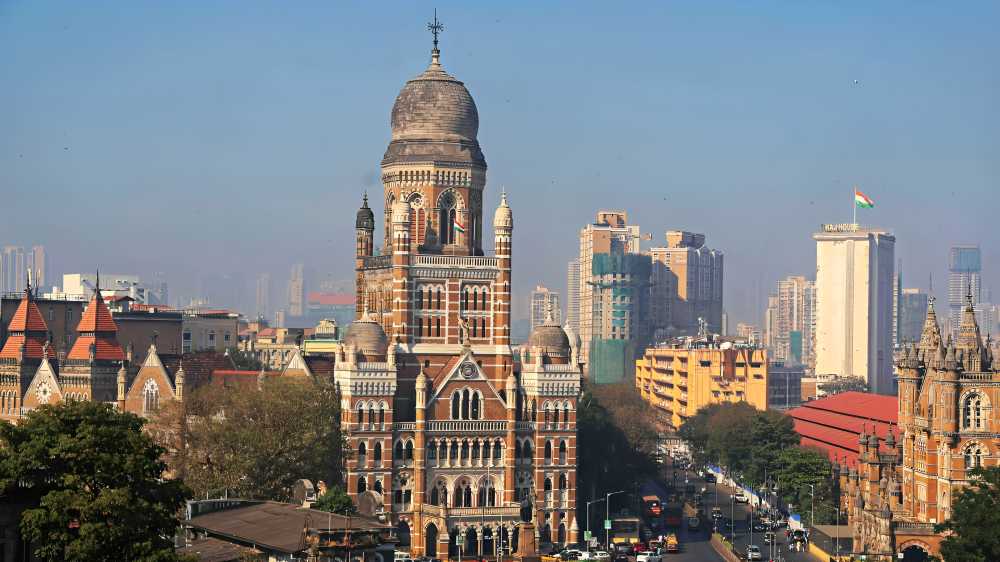

A combination of tighter property tax reforms and expanded access to municipal bonds could offer much-needed fiscal relief to the Brihanmumbai Municipal Corporation (BMC), which is facing mounting infrastructure costs and a shrinking pool of usable reserves. The Union Budget presented by Finance Minister Nirmala Sitharaman, together with the recommendations of the Sixteenth Finance Commission, lays out a roadmap to strengthen urban local bodies (ULBs) by boosting their own-source revenues, tapping capital markets, and enforcing greater financial transparency.
For Mumbai’s civic body, these measures come at a critical juncture. The BMC is currently executing infrastructure projects worth nearly Rs 1.5 lakh crore, almost double its total reserve corpus of Rs 81,774 crore. With only about half of these reserves actually usable for capital expenditure, officials have warned of potential liquidity constraints in the coming years.
Focus on strengthening property tax collection
The 16th Finance Commission, in its report tabled on Sunday, has emphasised the urgent need to augment property tax collections across ULBs and outlined several guidelines for state governments to follow. Property tax remains one of the BMC’s largest and most stable revenue streams, with Mumbai having among the highest property tax rates in the country.
In the 2024–25 financial year, which ended on March 31, 2025, the BMC collected Rs 6,172 crore—nearly 99.54 per cent of its estimated target of Rs 6,200 crore. To further strengthen collections, the Finance Commission has recommended the adoption of a Geographic Information System (GIS)-based digital property tax register, linked with a GIS-based master plan. This integration would ensure automatic updates to property records whenever land use plans are revised.
“The register hence will reflect accurate current land use enabling upward revision of property tax,” the report states.
The commission has also called for periodic enumeration of properties and regular updates aligned with changes in guidance values under state laws. Another key recommendation is the creation of an online common property database that can be linked with utilities and civic services. “This property database may be appropriately linked with other data bases like water, sewerage, electricity, trade license and building permission for automatic verification of property attributes and assessment records,” the report adds.
Civic officials say the BMC has already begun moving in this direction. “Besides carrying out GIS tagging of properties we are also developing a 3D mapping feature of all the existing properties and structures that are assessed by BMC… if the property owners make any changes in them it will get caught in the system easily, allowing us to proper assessment,” an official from the BMC’s property tax department told The Indian Express.
Municipal bonds to fund infrastructure
Alongside tax reforms, the Union Budget has sought to encourage municipal borrowing. Sitharaman announced a Rs 100-crore incentive for municipal corporations that issue bonds exceeding Rs 1,000 crore. Municipal bonds allow ULBs to raise long-term capital for infrastructure projects while spreading repayment over time.
With its current project pipeline far exceeding usable reserves, the BMC has revived plans to tap the bond market. “Out of the Rs 81,000 crore reserve that we have, only 49% or Rs 39,500 crore could be used for the infrastructure projects… This clearly indicates that in the next few years, there is going to be a liquidity crisis in the BMC,” said a civic official on condition of anonymity.
Officials confirmed that the corporation is working towards meeting credit rating requirements. “The Union ministry’s announcement to incentivise municipal bonds comes at a time when we are already working towards fulfilling the credit rating criteria,” an official said. Initially, the BMC is considering bonds of up to Rs 12,000 crore to fund projects such as sewage treatment plants and water conveyance tunnels. Toll-backed bonds are also being explored for the Mumbai Coastal Road, with repayments linked to toll collections.
Push towards transparency
The Finance Commission has tied financial support to stricter transparency norms. One key condition is the mandatory publication of audited financial statements of ULBs in the public domain. The report also stipulates that urban bodies must achieve at least a 5% annual increase in own-source revenue to qualify for grants, reinforcing the push for sustainable and accountable urban finances.
Source: The Indian Express