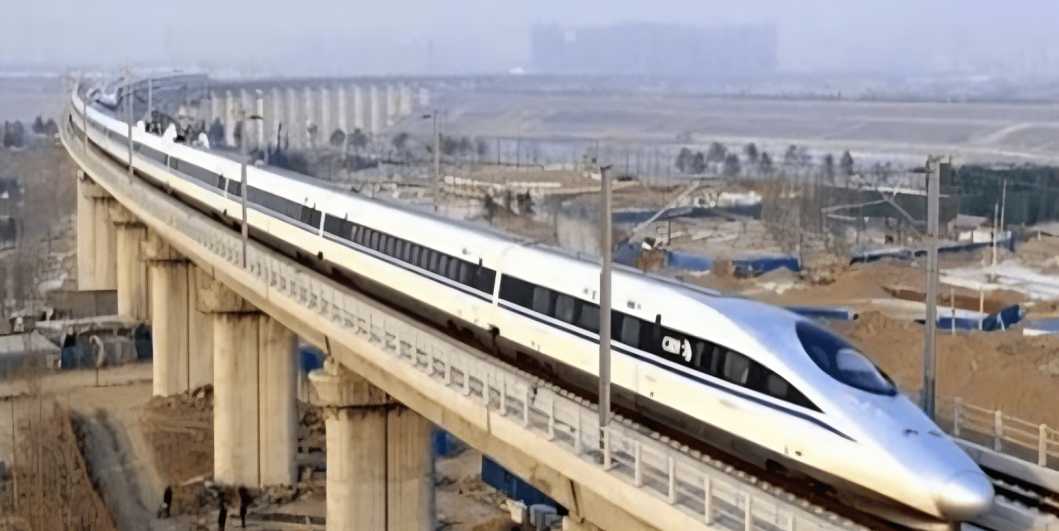

India’s first high-speed rail project has crossed another crucial engineering landmark with the successful completion of the second mountain tunnel on the Mumbai–Ahmedabad High-Speed Rail (MAHSR) corridor. The breakthrough, achieved in Palghar district of Maharashtra, marks steady progress on the ambitious bullet train project and reinforces confidence in its construction timeline.
The milestone was announced on February 3 by Union Minister Ashwini Vaishnaw, who highlighted the pace and scale at which work is advancing on the country’s maiden high-speed rail network. The newly completed tunnel will play a vital role in ensuring seamless, high-speed travel across challenging terrain, helping create a fast, efficient and reliable rail link between two of western India’s most important economic centres.
About the Mumbai–Ahmedabad High-Speed Rail Project
The Mumbai–Ahmedabad High-Speed Rail Corridor spans approximately 508 kilometres, connecting Mumbai in Maharashtra with Ahmedabad in Gujarat. Designed for train speeds of up to 320 km per hour, the corridor is expected to drastically reduce travel time between the two cities while introducing global standards of rail technology to India. Once operational, the project is expected to redefine intercity travel, improve regional connectivity and support economic growth along the route.
Details of the Second Mountain Tunnel Breakthrough
The tunnel that has now broken through is Mountain Tunnel-6 (MT-6), located in the Palghar region. It measures 454 metres in length and 14.4 metres in width and is designed to accommodate both the ‘up’ and ‘down’ tracks of the bullet train. This allows uninterrupted high-speed movement through the mountainous stretch.
Notably, this is the second mountain tunnel in Palghar to be completed within a month. The earlier tunnel, Mountain Tunnel-5 (MT-5), achieved breakthrough on January 2, 2026, reflecting the accelerated pace of construction in this critical section of the corridor.
Technology and Safety Measures
Construction of MT-6 was carried out using the New Austrian Tunnelling Method (NATM), a modern technique that relies on controlled drilling and blasting. NATM is particularly suited to complex geological conditions where traditional tunnel boring machines may not be effective. The method allows engineers to adapt construction in real time based on ground conditions, improving structural stability and safety.
Advanced geotechnical monitoring systems, controlled blasting procedures, proper ventilation and strict safety protocols were employed to ensure worker safety throughout the tunnelling process.
Government Perspective and Project Timeline
Union Minister Ashwini Vaishnaw praised the project teams for their engineering expertise and speed of execution. He also pointed out that several advanced machines and technologies being used in the project are manufactured domestically, aligning with the government’s push to strengthen India’s manufacturing and engineering capabilities.
According to official projections, the Gujarat section of the MAHSR corridor could begin commercial operations next year. High-speed rail services are expected to reach Thane by 2028, with full connectivity up to Mumbai planned by 2029.
Regional Impact and Wider Connectivity
The rapid infrastructure development in Palghar has also been highlighted by Member of Parliament Hemant Vishnu Savara, who underscored the strategic importance of the region. Alongside the bullet train tunnels, projects such as the Dedicated Freight Corridor and the proposed Vadhvan Port are positioning Palghar as a major transportation and economic hub.
Once completed, the Mumbai–Ahmedabad bullet train is expected to boost trade, tourism and industrial development across western India, while offering passengers a world-class, high-speed travel experience.
Source: Indian Masterminds