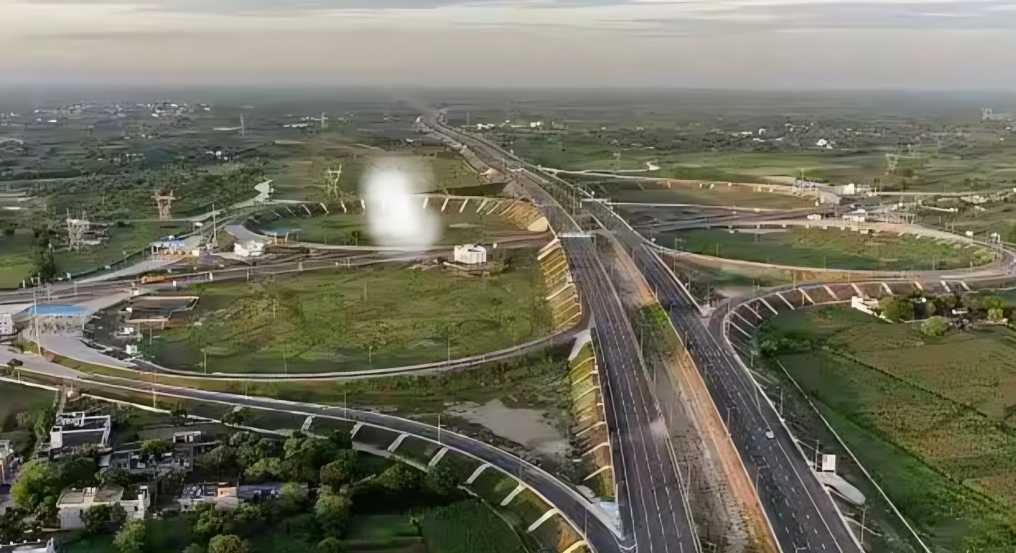

The final stretch connecting central Delhi to the Delhi–Mumbai Expressway is nearing completion, bringing the ambitious national highway project a step closer to full operational readiness. According to the government, the crucial 9-kilometre section between the DND (Delhi–Noida–Direct) Flyway junction and Jaitpur is in the advanced stages of construction and is expected to be operational by June 2026.
This segment is considered vital as it will provide seamless access from the heart of the national capital directly onto the Delhi–Mumbai Expressway, eliminating bottlenecks and significantly reducing travel time for commuters and freight traffic. Once opened, motorists will be able to transition smoothly from Delhi’s arterial roads onto the country’s longest greenfield expressway network.
Union Minister for Road Transport and Highways Nitin Gadkari, in a written reply to the Lok Sabha, stated that construction on the DND–Faridabad–Sohna corridor, spanning 59 kilometres, is being executed in three distinct packages. This corridor forms an essential feeder route, linking Delhi to the broader expressway system and ensuring uninterrupted connectivity toward western India.
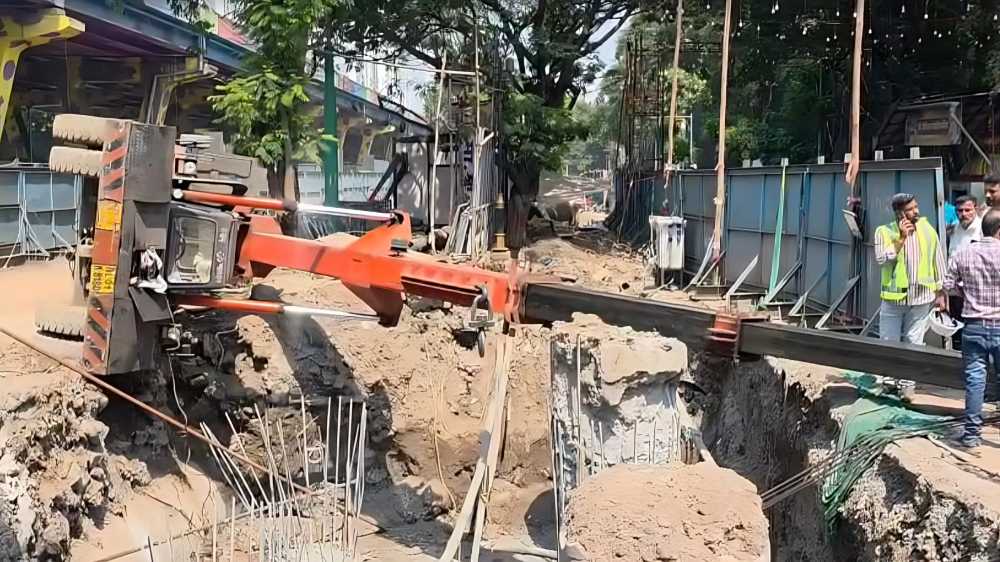
Of the three packages, two phases have already been completed and opened to traffic. The remaining phase includes the critical 9-km DND–Jaitpur stretch, which is now over 94 per cent complete. Officials confirmed that the remaining works—largely related to finishing, safety installations, and final testing—are progressing rapidly, keeping the project on track for its June 2026 deadline.
The Delhi–Mumbai Expressway is one of India’s most significant infrastructure undertakings, with a total length of approximately 1,350 kilometres. Designed as an eight-lane, access-controlled highway, the expressway has been planned for a design speed of up to 120 kmph. Provisions have also been made for future expansion to 12 lanes, depending on traffic growth and demand.
Once fully operational, the expressway will dramatically cut travel time between Delhi and Mumbai, reducing the journey from over 24 hours to nearly 12 hours. The corridor is expected to play a transformative role in boosting logistics efficiency, regional connectivity, and economic development across the states it traverses—Delhi, Haryana, Rajasthan, Madhya Pradesh, Gujarat, and Maharashtra.
The government has so far incurred an expenditure of ₹71,718 crore on the Delhi–Mumbai Expressway project, underscoring its scale and strategic importance. Beyond faster travel, the expressway is also expected to decongest existing highways, improve road safety, and lower vehicle emissions by enabling smoother traffic flow.
With the completion of the DND–Jaitpur link, commuters from central Delhi will gain direct access to the expressway network, marking a major milestone in India’s highway modernisation drive. The final inauguration of this phase will symbolise the closing of a critical gap in the corridor, bringing the vision of high-speed, long-distance road connectivity closer to reality.
Source: DNA India