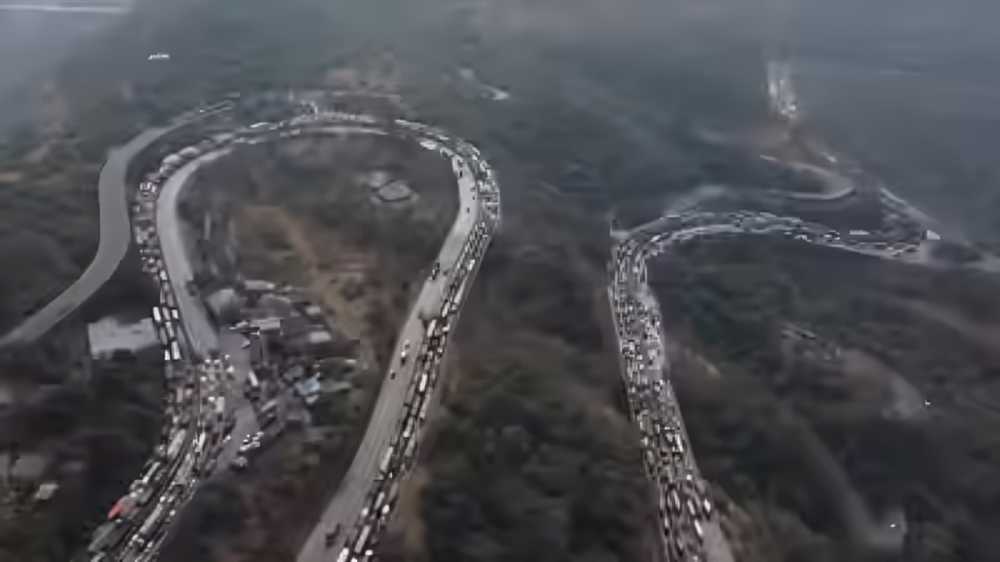

The long-pending 13.3-km ‘missing link’ on the Pune–Mumbai Expressway has returned to the spotlight following a 32-hour traffic paralysis caused by an overturned gas tanker in the accident-prone Khandala ghat section earlier this week. The incident has intensified public and political scrutiny of the project, which is designed to bypass the steep and hazardous ghat stretch and is now slated to open on May 1.
The missing link, located near Lonavla, is expected to reduce travel time by at least 30 minutes while significantly improving safety on one of Maharashtra’s busiest corridors. Maharashtra State Road Development Corporation (MSRDC) joint managing director Rajesh Patil said the project is nearing completion. “The missing link project near Lonavla is nearing completion and we have a firm target to open the stretch on May 1, coinciding with Maharashtra Day. Safety standards will not be compromised,” Patil said.
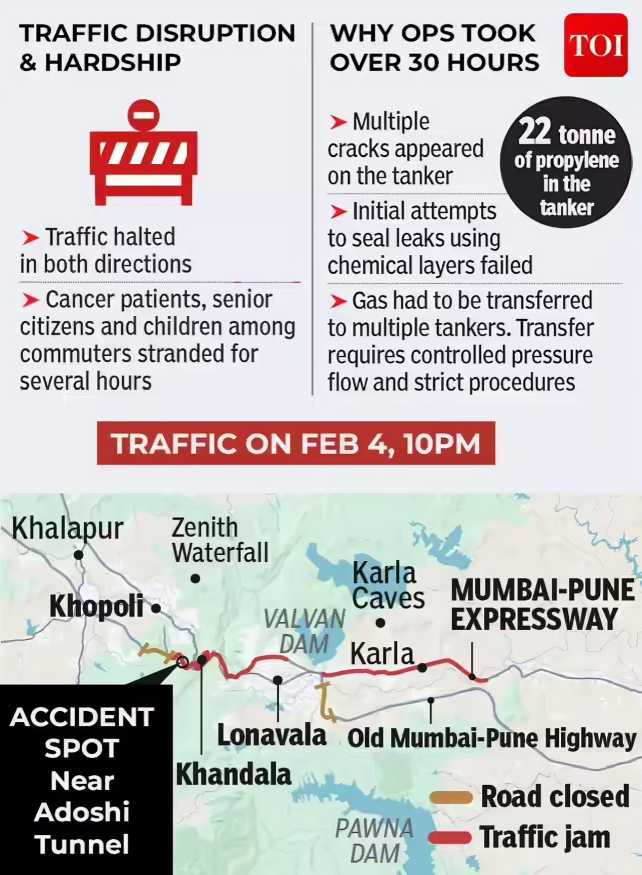
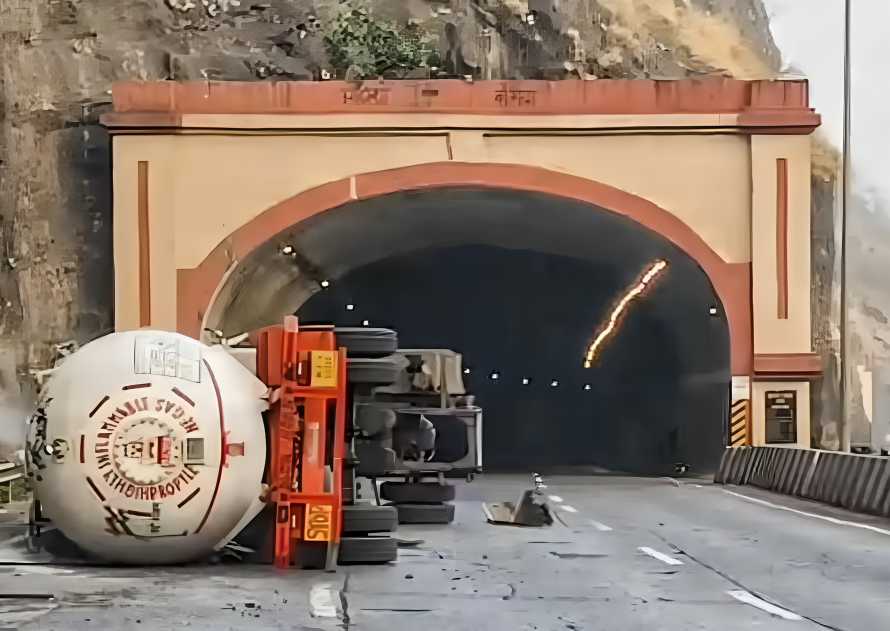
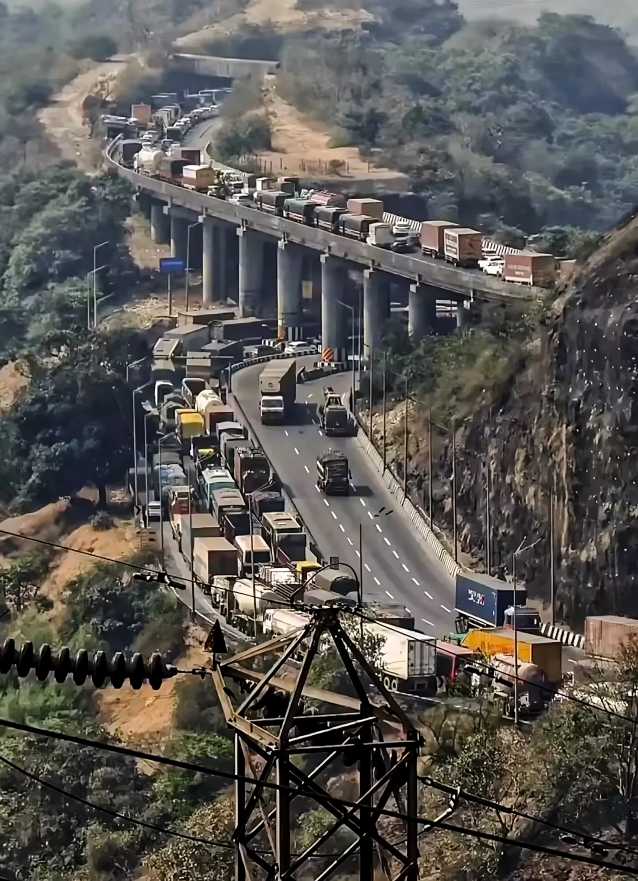
The renewed focus follows Tuesday evening’s accident, when a tanker carrying highly flammable propylene gas overturned near the Adoshi tunnel in the Borghat section. Gas leakage forced authorities to shut traffic in both directions as a precaution, triggering one of the longest traffic jams the expressway has witnessed in recent years.
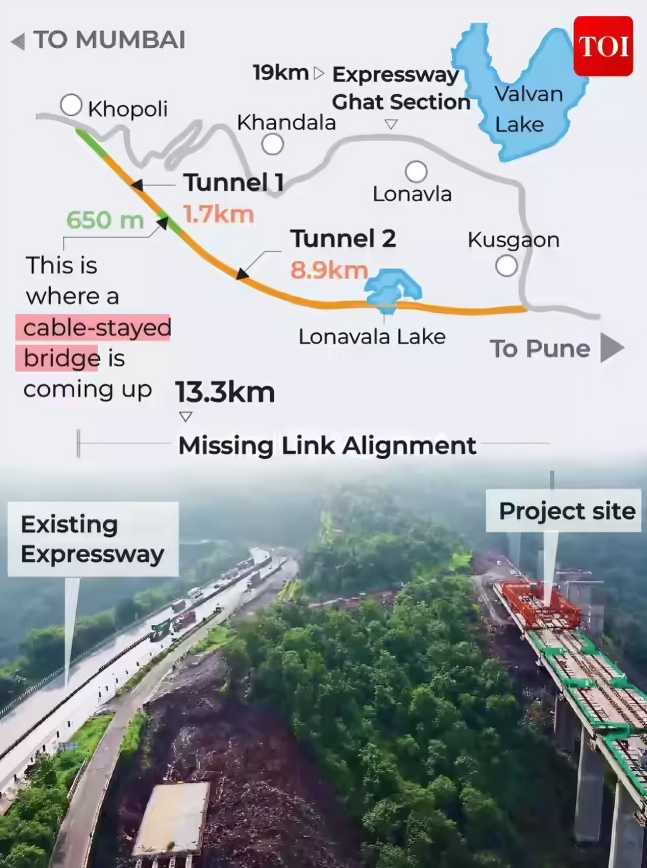
Currently, vehicles must navigate nearly 19 km of sharp curves, steep gradients and tunnels through the ghat section, an area notorious for accidents, landslides and prolonged traffic disruptions, particularly during emergencies and the monsoon. The missing link aims to bypass this stretch through two tunnels measuring 8.9 km and 1.9 km, a 900-metre viaduct, and a 650-metre cable-stayed bridge over Tiger Valley at a height exceeding 180 metres. The bridge will feature India’s tallest road pylons at 182 metres, taller than those of the Bandra–Worli Sea Link. The Rs 6,695-crore project is being executed by Afcons Infrastructure Ltd and was initially scheduled for completion in December 2025 but faced delays due to adverse weather and safety concerns. “There are past instances of hurried infrastructure projects leading to mishaps. We did not rush the work,” a senior MSRDC official said.
The tanker accident occurred around 4.45 pm, barely 50 metres from a tunnel on the Mumbai-bound carriageway. As gas continued to leak, traffic came to a standstill, with congestion eventually stretching up to 50 km. Thousands of commuters, including children, senior citizens and patients travelling for medical treatment, were stranded overnight.
ZN Gawade, technical director of Mec Elec Industrial Services, described the situation as “extremely volatile and critical.” He explained that liquid propylene was leaking from multiple damaged valves, with dangerously high explosion risk readings recorded even 500 metres from the site. Emergency teams, including the NDRF, police and fire brigade, worked for over 32 hours to decant the gas into empty tankers and remove the overturned vehicle, averting what officials said could have been a major disaster.
The disruption rippled across transport systems, with MSRTC cancelling 139 trips, goods movement affected, and Pune–Mumbai intercity trains witnessing unusually heavy crowds as travellers abandoned road travel. For many stranded commuters, a routine three-hour journey stretched to eight hours or more.
Disaster management experts warned that the episode exposed gaps in hazardous material response preparedness. A senior industrial safety consultant cautioned, “You don’t see flames, but you’re standing inside a potential fireball.” Retired major general P K Shrivastava termed the incident a “wake-up call,” urging the deployment of dedicated HazMat units along high-traffic highways.
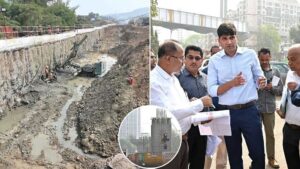
Deputy Chief Minister Eknath Shinde ordered a special emergency traffic management plan and reviewed the missing link project, directing officials to expedite its completion as a critical alternative route during emergencies. Toll collection on the expressway was suspended until traffic normalised.
Traffic was finally restored in the early hours of Thursday, but for many commuters, the missing link now represents more than reduced travel time—it symbolises a long-awaited safety upgrade that could prevent future crises on the expressway.
Source: The Times of India