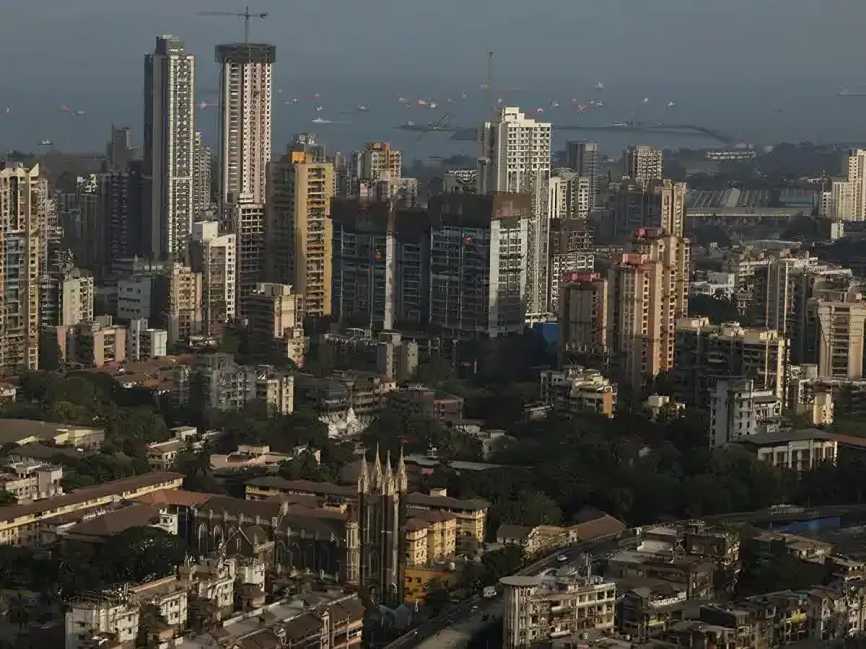

Mumbai, India’s largest and costliest property market, recorded its highest-ever stamp duty collections for the month of January, driven largely by an increase in higher-value residential transactions, even as overall registration volumes declined.
According to data from the Inspector General of Registration (IGR) and Controller of Stamps, Maharashtra, the city logged 11,219 property registrations in January, generating over Rs 1,012 crore in stamp duty revenue for the state government. This marks the strongest January performance on record in terms of revenue. While registrations were down 8% year-on-year, the month still ranked as the second-highest January historically, underscoring the resilience of market activity.
“While registration volumes eased, this partly reflects typical January seasonality and some operational disruptions toward month end. The resilience in revenue points to a sustained end-user confidence, supported by stable economic conditions and ongoing infrastructure development. The growing share of premium home purchases, indicate a structurally healthier market,” said Shishir Baijal, CMD, Knight Frank India.
Stamp duty collections rose 2% compared to last year, highlighting a growing preference for larger-ticket transactions. Residential properties dominated the market, accounting for nearly 80% of total registrations during the month.
Sequentially, registrations declined 22% and revenue collections fell 19%, a trend largely attributed to the customary slowdown seen in January following a typically strong December. Historically, both volumes and collections soften during this period due to seasonal factors.
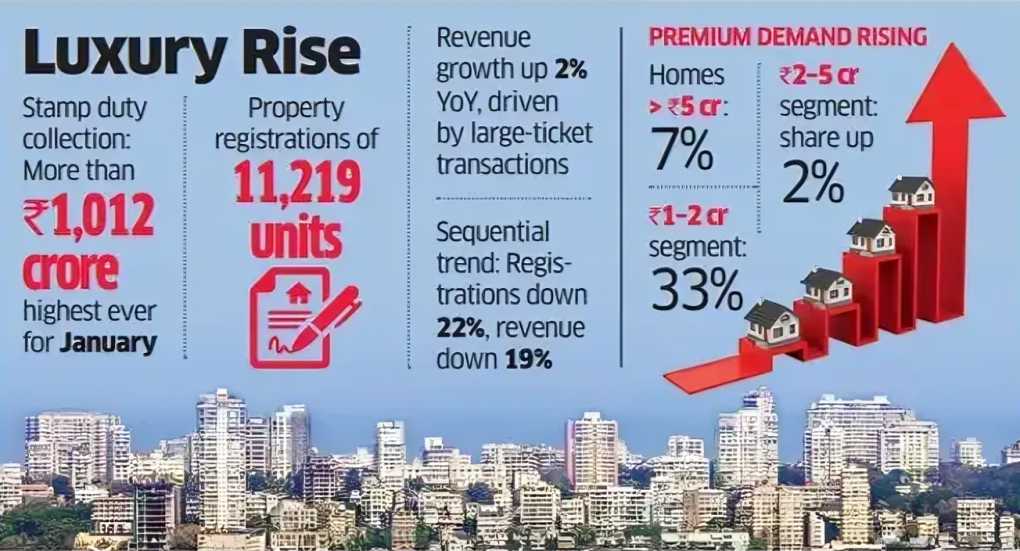
The market continues to skew towards higher price brackets. Homes priced above Rs 5 crore made up 7% of registrations in January, up from 6% a year earlier. The Rs 2–5 crore segment also gained share, while the Rs 1–2 crore category rose to 33% from 30%. In contrast, properties priced below Rs 1 crore saw a decline in share, reflecting affordability pressures.
“Buyers are increasingly prioritising quality, connectivity, and infrastructure upgrade over entry pricing. We are seeing stronger traction in mid-to-premium projects, especially in metro-linked micro-markets and business districts. End-users and upgrade buyers now account for a larger share of bookings, supporting better realisation and more stable demand for developers,” said Parthh K Mehta, CMD, Paradigm Realty.
Apartments up to 1,000 sq ft continued to dominate registrations, contributing 83% of the total, with western and central suburbs together accounting for 87% of market activity.
Source: The Economic Times