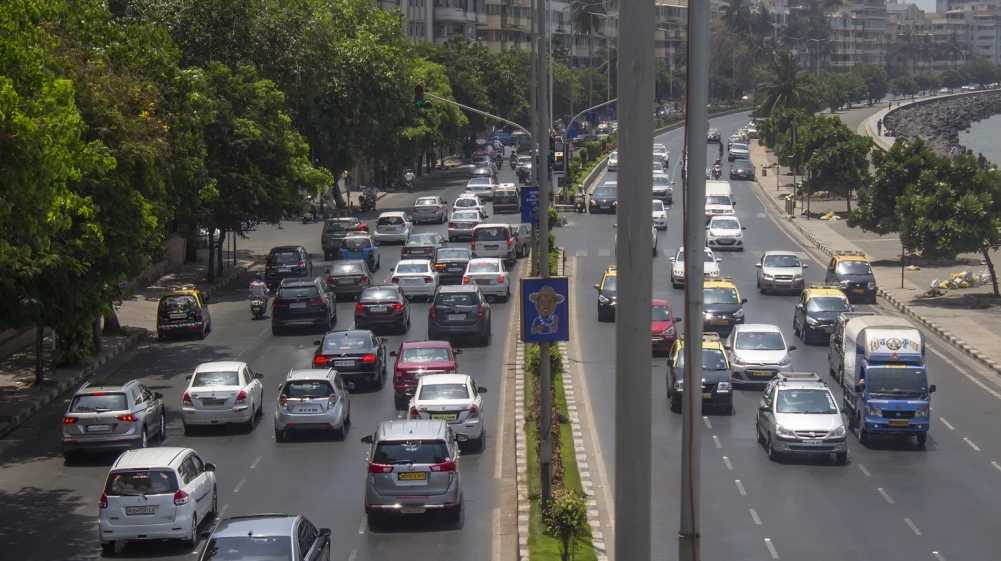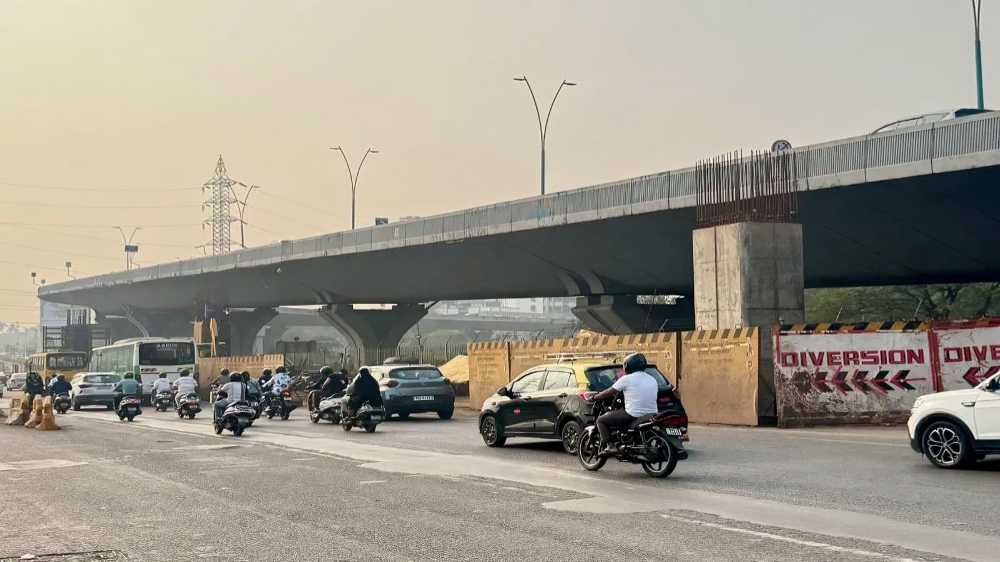

Traffic congestion intensified on Wednesday along Mumbai’s key central corridors, particularly the Wadala–BKC stretch and the Chunabhatti flyover, disrupting peak-hour movement and exposing ongoing mobility constraints in the city.
The affected routes serve as major east–west connectors, linking residential zones and suburban areas with the Bandra–Kurla Complex (BKC), one of Mumbai’s principal business districts. During morning and midday hours, vehicles were seen lined up across multiple junctions and flyover approaches, leading to extended commute times for office-goers and motorists.
Transport observers note that the elevated corridor connecting Wadala, BKC and Chunabhatti was originally developed to ease congestion and provide direct access to the commercial hub. However, rising vehicle volumes — especially private cars and app-based taxis — have exceeded the corridor’s intended capacity. As a result, the route has increasingly experienced slowdowns during peak periods.
Traffic management measures in surrounding areas have also contributed to network strain. Restrictions on certain categories of vehicles at key junctions may improve safety but can divert traffic onto parallel roads that already operate near capacity. This has led to spillover congestion at feeder roads and signalised intersections.
Officials from the Mumbai Metropolitan Region Development Authority (MMRDA) and traffic authorities have acknowledged the stress on the corridor. Measures under consideration include improving signal coordination, adjusting lane configurations and widening select arterial stretches. Discussions have also explored repurposing underutilised infrastructure in adjoining areas to increase roadway capacity.
Urban planners emphasise that infrastructure expansion alone may not resolve recurring congestion. They advocate complementary strategies such as strengthening public transport services, deploying smart traffic management systems and encouraging flexible work timings to reduce peak demand.
For daily commuters, repeated bottlenecks translate into longer travel times, higher fuel consumption and increased emissions. Authorities are expected to integrate corridor-level traffic management with broader mobility and climate planning objectives in the coming months.
Source: Urban Acres