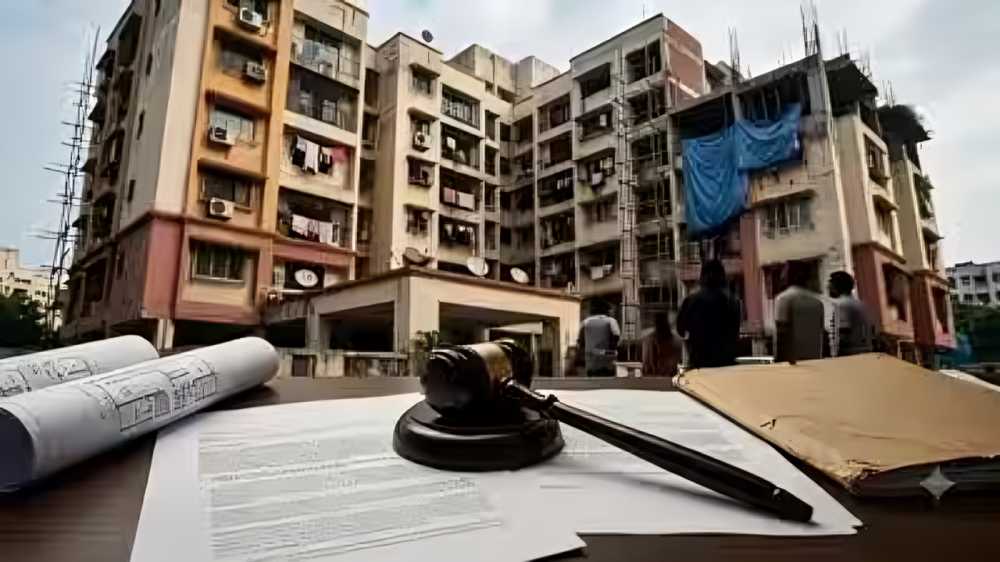

Thousands of homebuyers waiting for refunds and compensation from defaulting developers may soon see progress after the Maharashtra Real Estate Regulatory Authority (MahaRERA) issued instructions to district administrations to strictly implement recovery warrants issued against errant promoters.
In a communication addressed to district collectors across Maharashtra, MahaRERA chairperson Manoj Saunik noted that several recovery warrants issued by the authority were being returned without fully utilising the legal provisions available under the Real Estate (Regulation and Development) Act, 2016 and the Maharashtra Land Revenue Code, 1966. The letter stated that such lapses have allowed some developers to avoid compliance for extended periods, leaving homebuyers without relief.
The communication was obtained under the Right to Information Act, 2005 by housing rights activist and advocate Godfrey Pimenta, who regularly represents homebuyers before MahaRERA.
The directive also follows concerns raised at the national level. During a review meeting held under the PRAGATI platform in May 2025, Prime Minister Narendra Modi reportedly expressed concern about delays in recovery proceedings in Maharashtra. Following this, the state’s chief secretary instructed district collectors to expedite enforcement actions.
According to MahaRERA, district revenue authorities had in some cases returned recovery warrants without invoking the legal mechanisms available under revenue laws. Under Section 40(1) of the Real Estate (Regulation and Development) Act, outstanding amounts can be recovered as arrears of land revenue.
The Maharashtra Land Revenue Code provides collectors with powers to attach movable and immovable assets, auction properties and take other enforcement actions to recover dues. In certain cases, recovery proceedings may also be transferred under the Revenue Recovery Act, 1890, allowing authorities in other districts to carry out enforcement.
Officials have also been advised to follow procedures similar to execution proceedings under the Code of Civil Procedure, 1908. These include directing promoters to disclose assets through affidavits, attaching debts or receivables and selling properties to recover outstanding amounts.
Authorities have additionally been instructed to trace attachable assets belonging to defaulting developers as well as their directors or partners. This may involve verification of land ownership records, property registrations, transport department records and corporate filings. Financial records may also be examined to identify company charges, receivables and other assets.
Information may also be sought from the Income Tax Department to detect undisclosed assets, while civil or criminal action may be initiated if developers are found to have made false disclosures.
Reacting to the development, advocate Godfrey Pimenta said the step could provide relief to homebuyers but warned that delays often arise during execution.
“The circular directing district collectors to execute recovery warrants is a welcome step to ensure homebuyers get relief. However, delays often occur as unscrupulous developers, allegedly colluding with corrupt tahsildar officials, obstruct the process. Such stalling undermines the regulatory framework and erodes homebuyers’ confidence. Monitoring, with periodic status reports from collectors, and a transparent tracking mechanism with consistent follow-up, will ensure accountability and prompt execution of recovery warrants.”
According to MahaRERA data, the authority has registered 53,434 real estate projects and received 33,806 complaints so far. Of these, 27,582 complaints have been resolved, while 6,224 cases remain pending.
Source: Mid-day