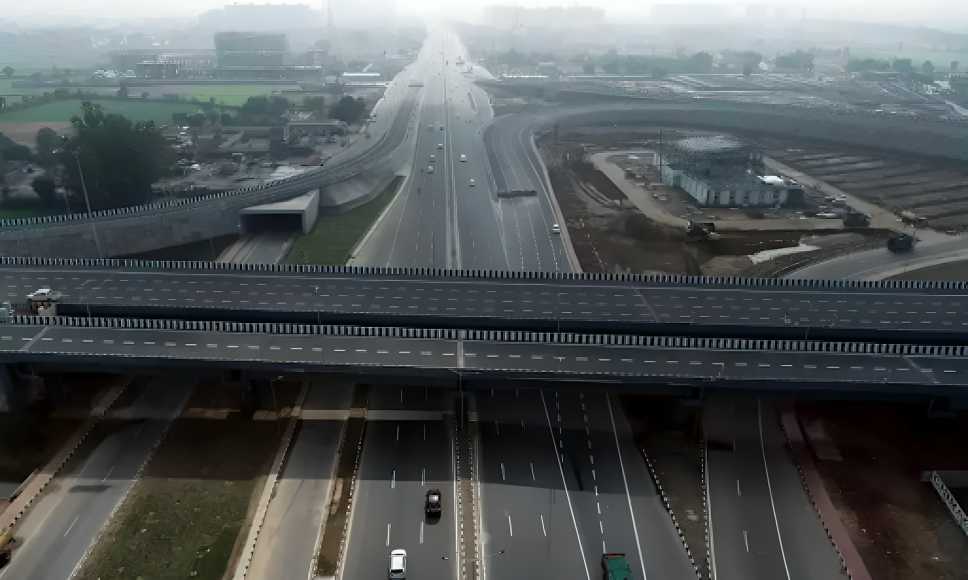

A key underground stretch of the Delhi–Mumbai Expressway is nearing readiness in Rajasthan, marking a significant milestone in the country’s largest highway project. The nearly five-kilometre tunnel near Kota is expected to streamline travel between northern and western India while preserving a sensitive wildlife zone.
Designed as part of the 1,300-kilometre greenfield corridor linking the National Capital Region to Mumbai, the tunnel ensures uninterrupted movement beneath forest terrain without disturbing the surrounding ecosystem. Officials say the subterranean alignment allows the expressway to maintain its high-speed design while safeguarding wildlife habitats.
Engineers highlight that the expressway is being developed as an access-controlled corridor with limited entry and exit points, enabling vehicles to maintain consistent speeds and avoid interference from local traffic. Once fully operational, the route is expected to sharply reduce travel time between key cities such as Gurugram and Vadodara compared to existing highways.
The Kota section posed unique engineering challenges due to its location within a protected landscape. Instead of routing the road through the area, planners opted for an underground passage, reflecting a growing emphasis on balancing infrastructure expansion with environmental protection. Experts note that modern transport projects increasingly incorporate tunnels, elevated corridors, and wildlife crossings to limit ecological disruption.
Beyond its environmental design, the expressway is poised to transform connectivity across multiple industrial and urban clusters. Improved logistics efficiency, faster freight movement, and better access to employment hubs are among the expected benefits.
With several stretches already operational and handling substantial daily traffic, the remaining sections—particularly those connecting Gujarat to Mumbai—are progressing steadily. Once completed, the corridor could nearly halve travel time between the two regions, marking a major leap in India’s road infrastructure landscape.
Source: Urban Acres