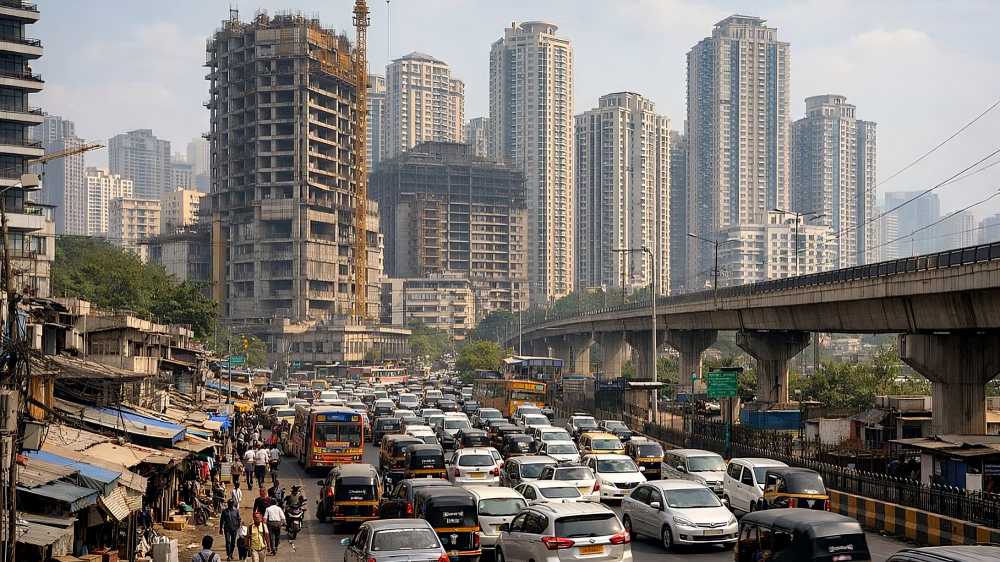

Powai, once envisioned as a well-planned township, is increasingly being cited as an example of how unchecked vertical development without parallel infrastructure upgrades can strain urban ecosystems. The area’s evolution over the past two decades reflects broader planning concerns across Mumbai.
“I shifted to Hiranandani Gardens, Powai in 2007–08. I had seen its transformation from a simple green place to an overcrowded suburb, with small bungalows and buildings making way for tall 7 to 12-floor buildings without commensurate widening of roads.”
Today, many parts of Mumbai face similar pressures, where rising Floor Space Index (FSI) and redevelopment have led to dense construction without adequate civic planning.
“Today, several areas in Mumbai have become concrete jungles because FSI was sold or ‘gifted’ to builders without any thought about infrastructure. This is the worst example of ‘vertical growth’ of a city that urban planners are selling to us.”
The situation draws parallels with earlier redevelopment in Lower Parel, where large-scale construction transformed industrial land into commercial hubs, often leading to congestion and displacement.
“We saw the same disaster when the Lower Parel industrial belt was thrown open to builders with unimaginable FSI, without any setback even in mill lands that measured in 1000s of sq meters, not feet.”
Powai, particularly Hiranandani Gardens, was once known for its greenery, wide roads and planned layout. However, increasing commercial activity and redevelopment have gradually added pressure on existing infrastructure.
“There have been at least two serious attempts to hand over these footpaths to hawkers, but citizens of the locality fought back and stopped it.”
Subsequent developments, including new commercial complexes, additional floors on existing buildings and proposals such as redeveloping ‘Citipark’ into an 18-storey structure with significant parking capacity, have raised concerns about traffic congestion.
“Was the traffic police consulted?”
Further concerns have emerged over a proposed 30,000-seater Global Capability Centre (GCC), which could significantly increase daily footfall and vehicle movement in the area.
“This means around 100,000 people will be coming to this complex in around 30,000 cars/buses/autos every day.”
Residents say traffic bottlenecks, ongoing construction and limited civic response have worsened living conditions.
“Who is answerable to the citizens of Mumbai?”
The situation in Powai underscores a larger debate on balancing urban growth with infrastructure planning in Mumbai’s rapidly densifying landscape.
Source: The Free Press Journal