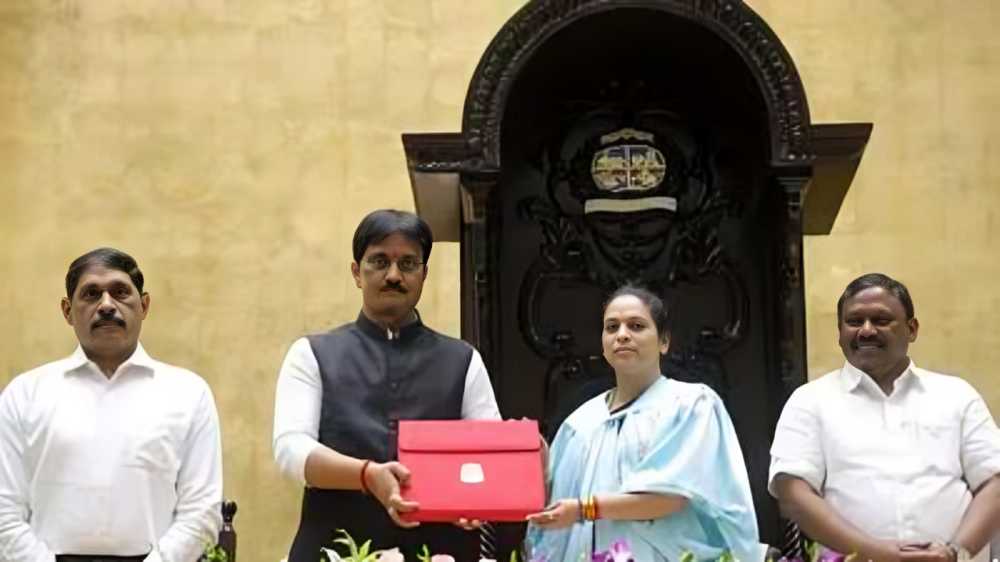

The Navi Mumbai Municipal Corporation (NMMC) on Monday presented a Rs 6,704.82 crore budget for 2026–27, outlining an infrastructure-led growth plan that prioritises revenue generation without imposing new taxes. This marks the civic body’s first full budget after six years of administrator-led governance.
Presented by Standing Committee chairman Ashok Patil at a special meeting chaired by mayor Sujata Patil, the budget reflects a revised process where the standing committee finalises estimates before tabling them before the general body, replacing the earlier commissioner-driven system.
The total outlay includes Rs 1,265.83 crore as the opening balance and Rs 4,337.82 crore in revenue income, forming the largest share. Additional inflows comprise Rs 491.79 crore in government grants, Rs 104.99 crore in capital receipts, Rs 400 crore via bonds, and Rs 100 crore through loans.
Patil reiterated the civic body’s long-standing policy under senior BJP leader Ganesh Naik of avoiding extra tax burden. “There will be no increase in taxes, and development will continue without burdening citizens,” he said. To strengthen finances, NMMC plans to improve tax recovery, review levies in industrial and commercial sectors, and explore public-private partnerships alongside municipal bonds.
A significant Rs 3,551.65 crore has been allocated for capital expenditure, compared to about Rs 3,239 crore for revenue spending. Key projects include decongesting major roads such as Palm Beach Road and Thane-Belapur Road through flyovers, redesigned junctions, and signal-free corridors. “We are focusing on reducing congestion and improving connectivity across the city,” Patil said.
Flood control measures, including stormwater drain upgrades, desilting, and lake interlinking, are also prioritised. “These works will help prevent flooding during heavy rains,” he said.
The budget emphasises water management through new supply projects, regularisation of connections, and reuse of treated wastewater. It also positions Navi Mumbai as a growing data centre hub. “In today’s era, data is a new industry, and we will ensure infrastructure keeps pace,” Patil said.
A long-term “One Time Planning” framework linked to Ganesh Naik will guide development over 25–50 years. Environmental initiatives, digital governance, improved parking systems, and a Rs 2,192 crore waste management project further underline the focus on sustainable, citizen-centric growth.
“This is a roadmap to transform Navi Mumbai into a global-standard city with sustainable and citizen-centric development,” Patil said.
Source: Hindustan Times