
A long-persistent rail infrastructure issue in Mumbai’s Bandra corridor has finally been resolved, bringing much-needed relief to millions of suburban commuters who face annual disruptions during the monsoon. The upgrade is expected to significantly curb flooding along a crucial stretch of the Western Railway, one of the city’s busiest transport networks.
The improvement centres on the Mahim–Bandra section, a flood-prone area due to its proximity to the Mithi River and surrounding low-lying neighbourhoods. Authorities have replaced an outdated, narrow drainage pipeline with a much larger conduit, enabling faster and more efficient discharge of rainwater that previously accumulated on tracks and disrupted train services.
For decades, waterlogging in this stretch caused repeated delays, affecting daily operations on a corridor that carries nearly three million passengers. Even brief interruptions would lead to overcrowding, longer commute times, and economic setbacks for thousands of travellers.
Experts highlight that drainage infrastructure is a crucial yet often underestimated component of urban transport resilience, especially in coastal cities like Mumbai. “Upgrading legacy systems is essential as rainfall patterns become more erratic due to climate change. Without such interventions, even modern transport networks remain vulnerable,” said a senior planner familiar with urban flood management.
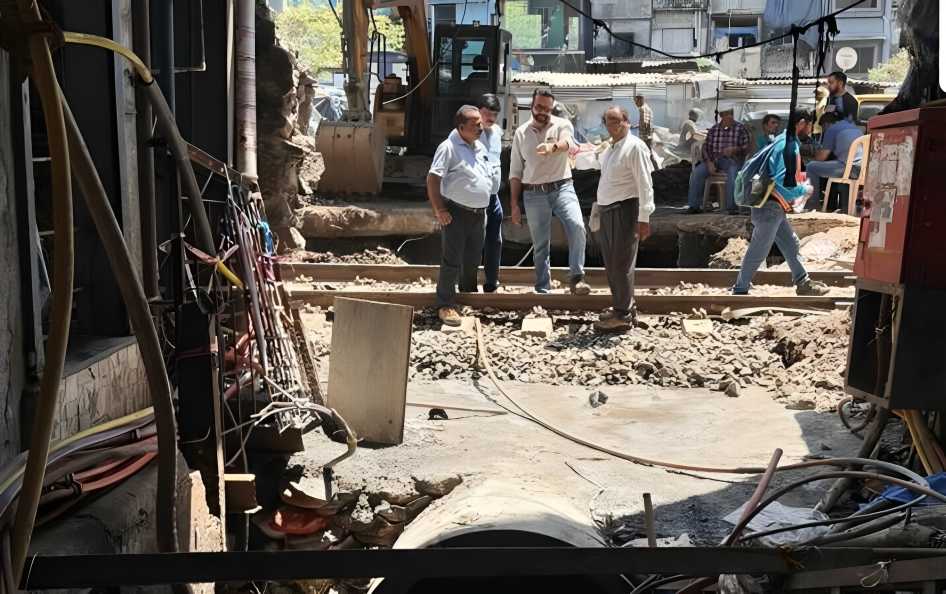
The bottleneck was traced back to a drainage system installed in the early 1990s, which had become ineffective due to clogging, encroachments, and limited maintenance access. Fixing the issue posed significant engineering challenges, as the work area runs through densely populated settlements, lies adjacent to a road overbridge, and sits beneath active railway tracks.
Engineers adopted a phased strategy, temporarily removing a section of track to carry out excavation and install the upgraded pipeline. The large-scale intervention, covering several hundred metres, is expected to substantially enhance drainage capacity and prevent track flooding.
This development signals a broader push toward climate-resilient infrastructure in Mumbai, as authorities increasingly focus on safeguarding transport systems against extreme weather events.
Source: Urban Acres