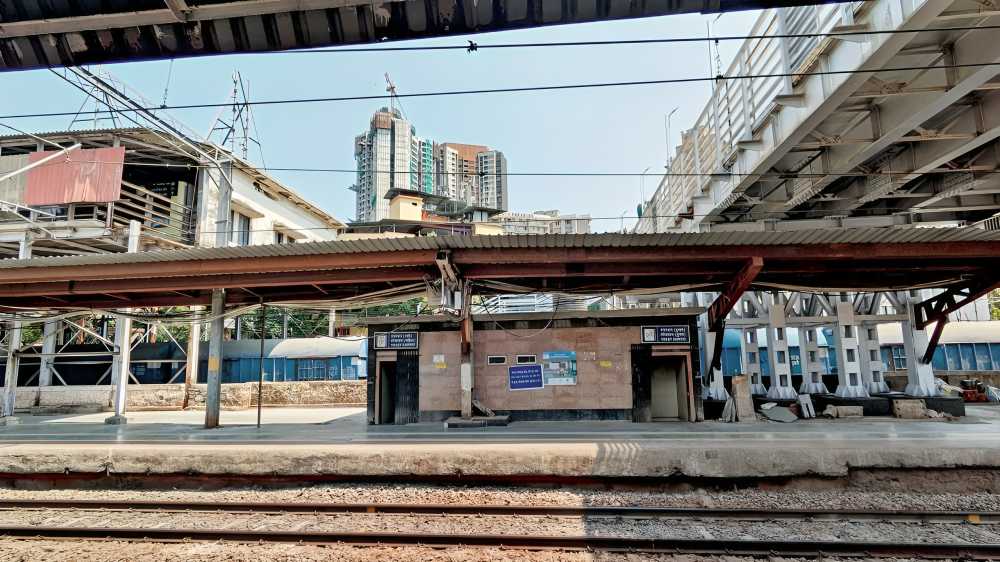

Mumbai’s Mulund railway station is nearing completion of its modern “jodi” foot overbridges (FOBs), but a crucial connectivity gap has sparked concern among commuters. Despite upgraded infrastructure, the new bridges currently lack a direct connection to the ticket booking office, raising questions about planning and usability.
Under the redevelopment plan, the new FOBs have been constructed roughly 10 metres away from the elevated booking office. Unlike the earlier setup—where the footbridge seamlessly connected to the ticket counter—commuters will now have to take a detour or walk extra distance to access tickets. This has led to criticism from daily users who see it as a setback in convenience.
The project is part of a broader infrastructure upgrade involving the Prime Minister’s Gati Shakti initiative and the Mumbai Railway Vikas Corporation. The plan includes twin “jodi” bridges for smoother passenger flow, an elevated deck, 14 staircases, seven escalators, two elevators, and a redesigned station entrance. The project is expected to be completed by April 2026.
Railway officials explained that the earlier FOB alignment ran adjacent to the booking office, ensuring direct access. However, after the old bridge was dismantled, the alignment of the new structure was straightened, placing it at a distance and leaving it disconnected from the booking office. Authorities have acknowledged the issue and said it is being addressed in coordination with MRVC.
The original 50-year-old bridge had been declared unsafe in 2023 due to corrosion and structural damage and was eventually demolished in 2024.
Commuters and residents have voiced strong concerns. ‘Mulund gets a new FOB but it’s not connected with the booking office. Though it is intended to decongest the coaches at CSMT end, accessibility remains an issue’, said resident Gandharva Purohit.
‘What’s the point of a bridge that doesn’t take you where you actually need to go? This is planning without thinking. Earlier, everything was connected and seamless. Now we will be forced to walk extra just to buy a ticket – how is this progress? Looks like decisions are being made on paper, not on the ground. Daily commuters are the ones paying the price’, said activist Sagar Devre.
Source: Mid-day