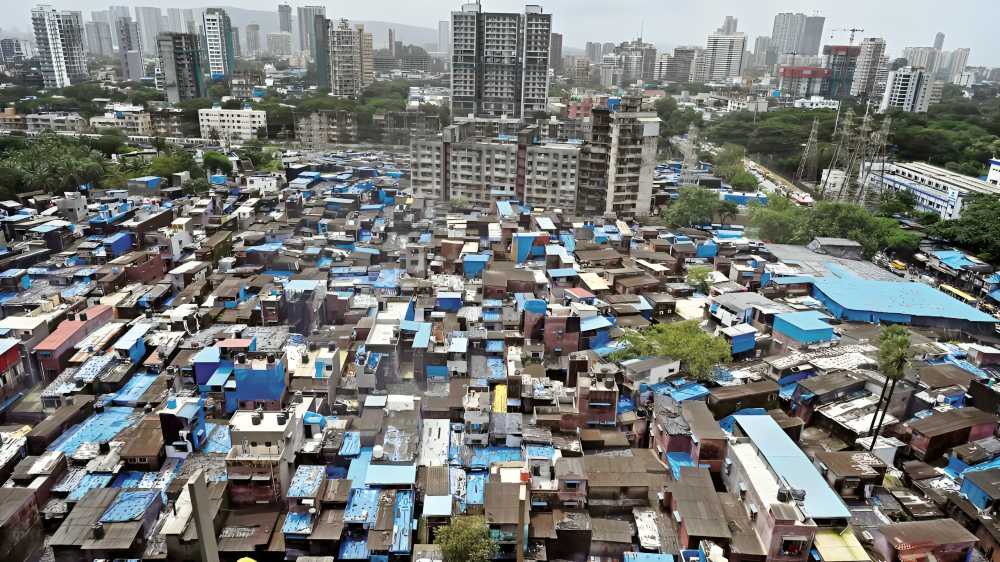

In a major policy move, the Government of Maharashtra has proposed enhanced rehabilitation benefits for residents under the Dharavi Redevelopment Project. The draft notification suggests increasing the minimum housing entitlement and introducing an additional 35% fungible carpet area to improve living standards.
Currently open for public feedback, the proposal aims to provide more spacious and functional homes to eligible residents of one of Asia’s largest informal settlements. Activist advocate Godfrey Pimenta has welcomed the move and urged that similar provisions be extended to schemes under the Slum Rehabilitation Authority.
Under the revised framework, the minimum rehabilitation unit size will increase from 300 sq ft (27.88 sq m) to 370 sq ft (34.37 sq m). While the maximum entitlement remains linked to the occupant’s original space, residents will also receive an additional 35% fungible carpet area over their base allotment. This extra space is meant exclusively for rehabilitation and will not be considered for incentive calculations.
As per the cost structure, units up to 70 sq m will be provided free of cost under the Rehabilitation and Resettlement (RRC) component. Any area beyond this limit will be treated as additional construction, with costs determined by planning authorities and payable by the occupant.
The proposal is intended to improve housing quality, offer more usable living space and ensure better rehabilitation outcomes.
Industry expert Pankaj Kapoor, founder and managing director of Liases Foras, said, “When the Dharavi redevelopment was conceptualised, the earlier planning envisaged a total built-up development potential of about 10 crore sq ft, of which roughly around 4-4.5 crore sq ft was expected to be rehabilitation component, with the balance free sale component and with the latest announcement, the rehabilitation component will go up from 4 to 5.4 crore sq ft and this will reduce the free sale component which may come down from six crore sq ft to 4.6 crore sq ft. Moreover, if rehabilitation requirements increase, the balance between rehabilitation and saleable components will need to be recalibrated to maintain the overall financial viability of the project.”
Advocate Shreeprasad Parab of the Maharashtra State Co-operative Housing Federation said, “The proposed amendment is a positive step toward providing larger, more dignified homes, especially in redevelopment projects like Dharavi, reflecting the state’s commitment to better living standards. However, its success depends on transparent, fair, and strictly monitored implementation. Authorities must prevent misuse by developers through cost inflation, delays, or poor construction quality. Clear guidelines on eligibility, carpet area, and timelines, along with strict penalties, are essential. An independent monitoring and grievance redressal system should protect residents'”
Source: Mid-day