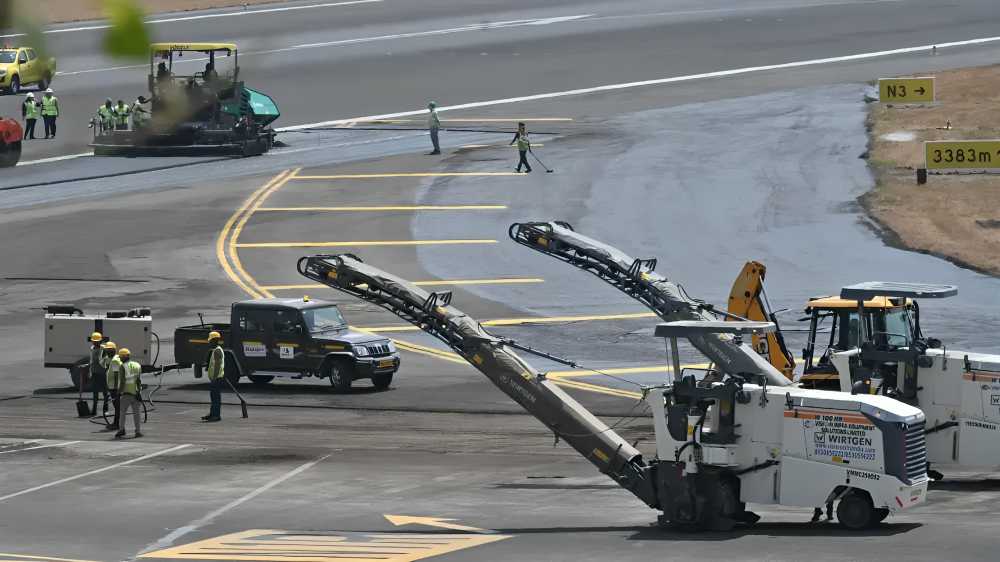

Mumbai’s Chhatrapati Shivaji Maharaj International Airport (CSMIA) has completed an extensive pre-monsoon maintenance exercise aimed at enhancing runway safety and ensuring uninterrupted operations during the city’s upcoming monsoon season.
As part of the annual preparedness programme, flight operations at the airport were temporarily suspended for six hours while engineering and technical teams carried out critical inspections, repairs, and upgrades across key airside infrastructure. The exercise reflects increasing focus on climate-resilient infrastructure management in Mumbai, where heavy rainfall frequently impacts transport systems between June and September.
Airport operations resumed on Thursday evening after maintenance work was completed on both operational runways, which together handle close to a thousand aircraft movements every day.
A major component of the exercise involved removing accumulated tyre rubber deposits from runway surfaces. Aviation experts note that such deposits can reduce runway friction during wet weather, increasing the possibility of hydroplaning during aircraft landings. Authorities also carried out surface repainting and friction restoration measures to improve aircraft braking efficiency under heavy rain conditions.
Technical teams additionally conducted detailed inspections of thousands of runway and taxiway lighting systems. Reliable airfield lighting remains essential during monsoon months, particularly when low visibility, dense cloud cover, and heavy rainfall affect flight operations.
The airport’s drainage infrastructure was also cleaned and evaluated to ensure efficient stormwater discharge during intense rainfall and cloudburst events. Urban infrastructure specialists have repeatedly highlighted the importance of drainage preparedness in safeguarding transport hubs within flood-prone coastal cities such as Mumbai.
Officials associated with the operation said underground cable networks supporting navigation systems, communication equipment, and IT infrastructure were also tested to minimise the risk of weather-related disruptions.
The maintenance work was reportedly planned several months in advance to reduce inconvenience to passengers and airlines. Aviation experts say such proactive scheduling has become increasingly necessary at high-density airports, where even brief operational interruptions can impact domestic and international flight networks.
The large-scale exercise also underlines the growing challenge faced by ageing urban infrastructure amid intensifying climate conditions. Experts believe resilient aviation infrastructure is critical not only for passenger movement but also for maintaining trade, tourism, and economic activity in Mumbai, one of India’s busiest transport and commercial centres.
Source: Urban Acres