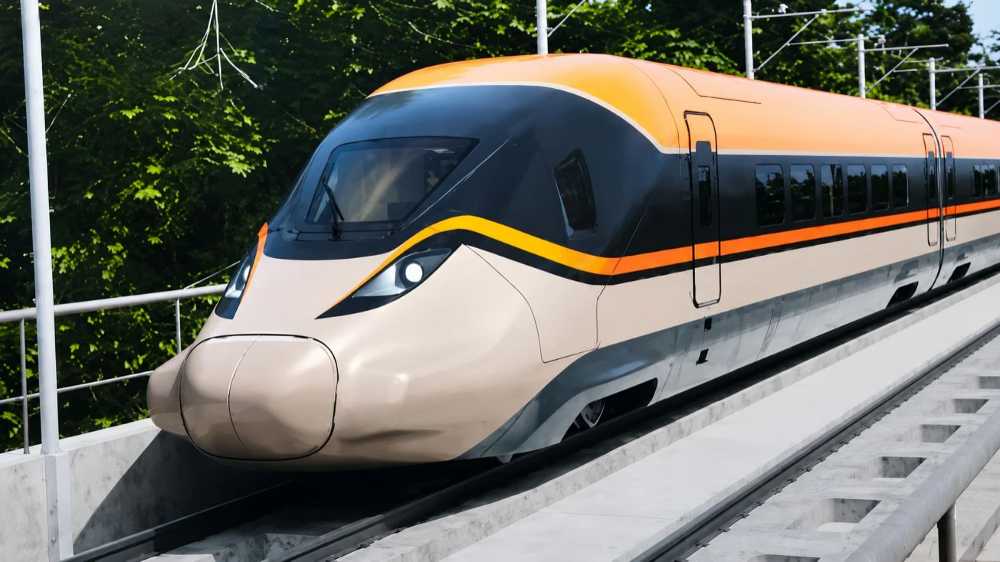

India’s first high-speed bullet train for the Mumbai-Ahmedabad High-Speed Rail Corridor has been officially showcased at the Ministry of Railways in New Delhi, marking a major milestone in the country’s ambitious rail modernisation programme.
According to reports, the first visual display of the upcoming bullet train has been installed at Gate No. 4 of the Railways Ministry building. The Mumbai-Ahmedabad Bullet Train project is targeted for launch on August 15, 2027, and is expected to drastically reduce travel time between the two cities once operational.
The 508-km Mumbai-Ahmedabad High-Speed Rail (MAHSR) corridor is currently under rapid construction, with work progressing simultaneously on bridges, stations and the under-sea tunnel section. The project passes through Maharashtra, Gujarat and the Union Territory of Dadra and Nagar Haveli.
As informed by Railway Minister Ashwini Vaishnaw in the Lok Sabha, the corridor will include 12 stations — Mumbai, Thane, Virar, Boisar, Vapi, Billimora, Surat, Bharuch, Vadodara, Anand, Ahmedabad and Sabarmati.
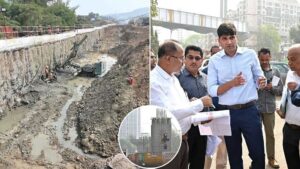
Foundation work has already been completed at eight stations in Gujarat, including Vapi, Surat, Vadodara and Ahmedabad, while construction activities are ongoing at Thane, Virar and Boisar in Maharashtra. Excavation work at the Bandra Kurla Complex (BKC) station is nearing completion.
Railway authorities stated that 17 river bridges have already been completed, while major bridges over the Narmada, Mahi, Tapti and Sabarmati rivers are at advanced stages of construction. The under-sea tunnel project has also made progress, with around 4.8 km completed between Ghansoli and Shilphata.
The project is being developed under the Make in India initiative, with Integral Coach Factory and BEML Limited jointly developing train sets designed for speeds of up to 280 kmph.
According to Vaishnaw, the entire 1,389.5 hectares of land required for the corridor has already been acquired, while rehabilitation and compensation measures were carried out under applicable laws and state policies.
The high-speed rail corridor has been developed with technical support from Japanese Railways and adapted to suit Indian climatic and operational conditions.
Source: Financial Express