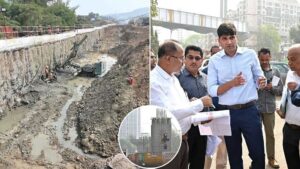

The Mumbai Metropolitan Region Development Authority (MMRDA) has initiated a large-scale monsoon preparedness and emergency-response strategy across all ongoing metro and infrastructure projects in the Mumbai Metropolitan Region ahead of the southwest monsoon season.
Officials said strict Standard Operating Procedures (SOPs), emergency coordination systems and continuous monitoring mechanisms have been introduced to ensure commuter safety, uninterrupted infrastructure work and smooth traffic movement during heavy rainfall.
The authority has directed all contractors and project agencies to submit Site-Specific Monsoon Preparedness Plans (SMPP) within the stipulated timeline. These plans are required to include flood-prevention systems, waterproofing arrangements, dewatering mechanisms, drainage management, labour safety measures and emergency material stockpiles.
MMRDA warned that failure to submit or implement the preparedness plans would be treated as a contractual violation and could invite action from the Contract Management Committee. Project Directors and Chief Engineers have also been instructed to strictly monitor compliance across all construction sites.
As part of the monsoon safety measures, contractors have been asked to deploy emergency-response teams and equipment, including dewatering pumps, pothole-repair vehicles, CCTV surveillance systems, emergency lighting, barricading safety infrastructure and drainage-cleaning mechanisms.
The authority has also instructed agencies to remove debris, repair damaged drains and footpaths, inspect electrical systems and secure construction structures against strong winds and waterlogging risks.
High-risk activities such as girder launching will be suspended during red alerts issued by the India Meteorological Department (IMD) or civic authorities. Labour camps situated in flood-prone areas will also be relocated before peak monsoon conditions.
A 24×7 Disaster Control Room will operate between May 25 and October 15, 2026, to handle emergency coordination, complaints and communication with agencies, including the Brihanmumbai Municipal Corporation (BMC) and the police department.
According to MMRDA, agencies have already deployed 49 ambulances, 431 dewatering pumps, 544 CCTV cameras and 55 emergency control rooms across project corridors.
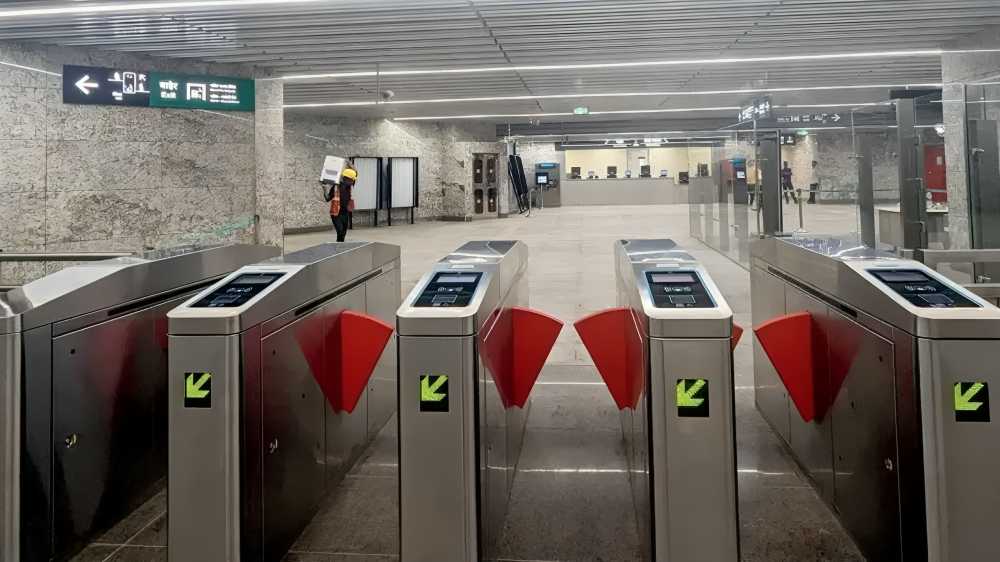
Special focus has been placed on operational metro lines, including Metro 2A, 7, 2B and 9, with inspections underway for station waterproofing, drainage systems, viaduct infrastructure and electrical equipment.
Devendra Fadnavis said preparedness and rapid response remain critical given Mumbai’s challenging monsoon conditions, while Eknath Shinde stated that strict coordination and safety mechanisms have been activated across all project zones.
Source: Mid-day