
Mumbai’s redevelopment cycle continues at a rapid pace, with ageing low-rise buildings across the city making way for taller residential towers. However, urban planners and industry observers increasingly argue that replacing individual buildings without upgrading surrounding infrastructure offers only a limited solution to the city’s long-term challenges.
Against this backdrop, MHADA’s recent decision to appoint developers for three large-scale redevelopment projects has drawn significant attention. The Adani Group emerged as the selected developer for the Worli and Bandra Reclamation projects, while a consortium comprising the JSW Group and Chandak Developers secured the redevelopment project in Andheri West.
Among the three, the Bandra Reclamation redevelopment is expected to be the largest in scale, covering an area comparable to nearly 75 football fields. Even the relatively smaller Worli project is larger than any single mill land redevelopment undertaken in Mumbai so far.
Industry observers noted the limited participation in the bidding process, with only four developers competing despite the scale and strategic importance of the projects. Several major real estate players remained absent from the bidding exercise.
Experts argue that standalone redevelopment often improves living conditions within individual buildings but fails to address broader urban infrastructure requirements. Roads, drainage networks, sewage systems, schools, hospitals and public spaces frequently remain unchanged despite a substantial increase in population density.
Cluster redevelopment has partially addressed this issue by enabling the redevelopment of multiple buildings together, often resulting in gated residential communities. However, large-scale neighbourhood redevelopment is increasingly being viewed as a more comprehensive model capable of transforming entire urban precincts.
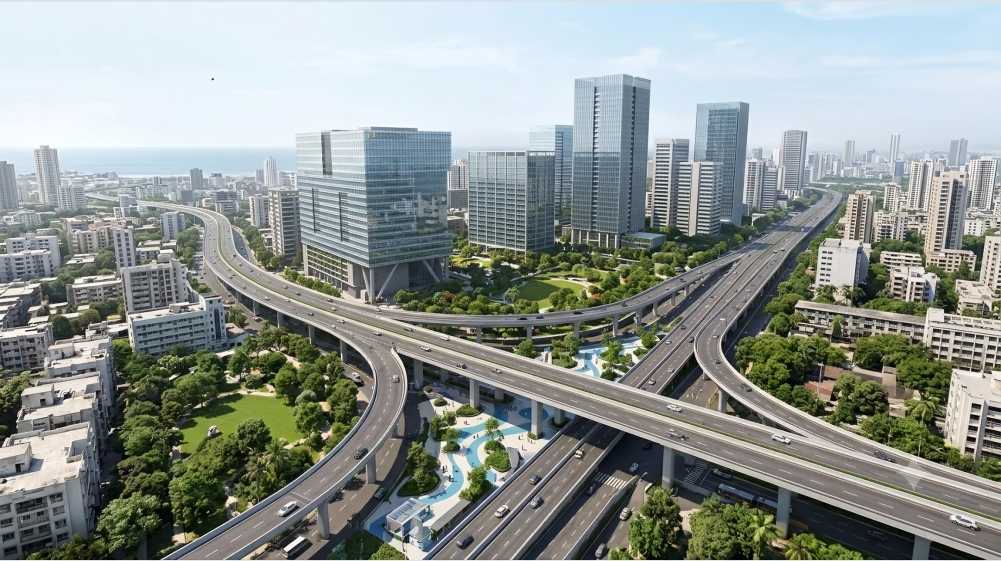
Such projects create opportunities to redesign roads, public amenities, open spaces and civic infrastructure while accommodating future growth. Urban experts believe these developments could effectively create planned micro-cities within Mumbai, offering integrated ecosystems that combine residential, commercial, educational and healthcare facilities.
The model could also help address the persistent demand-supply imbalance that drives housing prices in well-planned townships and gated communities. By increasing the supply of large-scale planned developments, redevelopment-led urban renewal may offer a more sustainable path for future growth.
While concerns remain regarding project execution and market concentration among a handful of large developers, proponents argue that experienced players may be better equipped to deliver complex, city-shaping redevelopment initiatives at scale.
Source: Mumbai Mirror